


IX. Tables
Description
This section is from the book "Colonial Furniture In America", by Luke Vincent Lockwood. Also available from Amazon: Colonial Furniture In America.
IX. Tables
MANY of the facts already noted regarding chairs are applicable also to tables, as almost every form of chair has its corresponding table. During Saxon times England did not know or use the word table, but designated what the Normans called tables as "bordes," and that with reason, for their tables were long, narrow "bordes," to be placed on trestles or frames when in use, and it was not until about the year 1600 that standing and dormant tables were freely mentioned.
More early tables have survived than early chairs. The reason is perfectly obvious, as the former were intended to hold dead weight and the chairs were put to the strain of live weight.
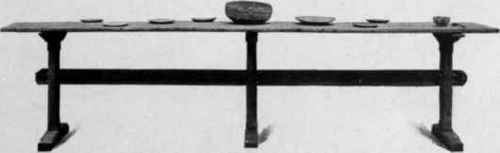
Figure 672. Table Board and Frame, about 1650.
The oldest American table known and the only example of a table board found in this country is shown in Figure 672 and is from the Bolles Collection. It consists of a loose board 12 feet 2½ inches long and 2 feet wide which rests on three trestles held by a central brace which passes through the trestles and is held firm with wooden pegs. These tables are frequently mentioned in the inventories of the seventeenth century - "1 table board and joyned frame," at Plymouth, in 1638; " 1 long table board and frame," at Salem, in 1647; "a great table board and frame," at New York, in 1677; and "a table board," at Philadelphia, in 1687, are some of the items regarding them.
It is not surprising that these table boards did not survive, for they were crude and when no longer used were too bulky to preserve. The only reason that this example has survived is that it had been put in the attic of an old house. The attic had then been partitioned and the table was forgotten until it was discovered a few years ago, when, with great difficulty, it was removed.
Tables referred to as long tables, great tables, and standing tables were probably not made with the frame separate. They are usually accompanied in the inventories with long and short forms, just such benches and tables, no doubt, as those shown in Figure 158, above referred to. At Plymouth, in 1638, there is mention of "1 table and joyned form," and in 1639, "a framed table"; at New York, in 1669, "1 longe table"; at Salem, in 1673, "a longe table and formes"; at Boston, in 1669, "1 long cedar table"; at Yorktown, in 1647, "1 long framed table"; in 1657, "1 table, 7 feet"; in 1660, "1 long table" - showing that early in the history of the colonies standing tables were also in use.

Figure 673. Wainscot Table, about 1650.
Figure 673 shows one of these tables in the possession of Mr. H. W. Erving. It is made of American oak. The legs are turned in an early form and the under-bracing is very massive and heavy. Each corner of the legs is finished with a bracket, and on the rail is a moulding on which is carved a series of vertical parallel cyma curves above which are carved squares with stars.
Figure 674 shows an English frame table belonging to the Metropolitan Museum of Art which is in striking contrast to the simple American frames above shown. The six legs are bulb-turned and at the top of each is carved a crude Ionic capital. The upper part of the bulb is godrooned and below is a grape-and-leaf design. The underbrace is enriched with a dog-toothed inlay and on the rail is carved a flowing pattern of grapes and leaves.
After the table became settled as a distinct piece of furniture, the devices for making it adjustable in size for various occasions came into being. The first of these devices seems to have been the drawing-table, so called because the table was furnished with leaves at the ends which drew out. These leaves were arranged to fold back onto or under the main table when not in use, and when drawn out were supported by wooden braces which drew out from the frame and held the ends firmly on a level with the table.

Figure 674. Carved Oak Dining-Table, first quarter seventeenth century.
Another method was to have the centre slab of wood held in place by a vertical strip of wood set in a slot which allowed the slab to rise and fall. The two ends were each about half the length of the centre slab and lay under it. They were made to run on a slide tilted toward the centre. The result was that when the slabs were pulled out the centre slab fell into place, making a large table. The frames of drawing-tables were made after the fashion prevailing in the long tables: square and plain, legs slightly turned, or with a large bulb or acorn forming the centre portion.
They are mentioned as follows in the inventories: at Boston, in 1653, "In the parlour, a drawing table £2"; in 1669, "A drawing table and carpett £2 10s"; and at New York, in 1697, "an oak drawing table."
Figure 675 shows a drawing-table preserved at the rooms of the Connecticut Historical Society which is made of English oak, and although the leaves are missing, the place they occupied shows them to have been 2 feet 6½ inches in length, while the top is 6 feet 1 inch in length and 2 feet 11⅜ inches in width. The table, therefore, when opened to its full length, would have been a little over 11 feet long. The rails are ornamented with rectangular bosses with chamfered edges.
Drawing-tables were never common in the colonies if we may judge from the inventories, for they are comparatively seldom mentioned.
Long tables and joined tables continue to be mentioned as late as 1775. They were, it is perhaps needless to say, the dining-tables of their day, and smaller tables made after the same fashion are occasionally found.
Carpets are frequently mentioned with the long tables and were what we should speak of as table-covers or spreads. "A table with a table carpet," in 1690; "a long table and carpett," at Boston, in 1652, are characteristic entries.
Continue to:


My Books

