


III. Chests Of Drawers. Part 17
Description
This section is from the book "Colonial Furniture In America", by Luke Vincent Lockwood. Also available from Amazon: Colonial Furniture In America.
III. Chests Of Drawers. Part 17
Figure 135 shows a reverse serpentine low chest of drawers; that is, the outer curves are convex and the centre one concave; the drawers are flush and the piece Stands on bird's claw and ball feet. At the centre of the skirt is carved a small shell.

Figure 135. Reversed Serpentine-Front Chest of Drawers, about 1780.
Figure 136 shows another reverse serpentine low chest of drawers of a little later date. The edges of the stiles are recessed and quarter-round columns are inserted. The feet are of the ogee bracket type and the handles are bails supported by posts and oval plates.

Figure 136. Reversed Serpentine-Front Chest of Drawers, 1780-90.
After about 1780 the low chests of drawers became almost universally used, and the cabinet designers of the period - Shearer, Hepplewhite, and Sheraton- give many examples. They were commonly inlaid, and the majority found in this country have swelled rather than serpentine fronts.
A fine example of a serpentine-front chest of drawers is shown in Figure 137 and is the property of Mr. John H. Buck, of Hartford. On each drawer is inlaid a delicate rope border. The corners are chamfered and have inlaid panels. The feet are of the straight bracket type and the handles are oval, of the Hepplewhite school.
Figure 138 shows a swell-front low chest of drawers. Each drawer is inlaid about an inch and a half from the edge with a narrow band of walnut, and the edge of the top and the frame at the bottom have a border about three-quarters of an inch wide of inlay. The corners are recessed and filled in with fluted quarter columns. The oval brasses, with bails fastened to the outer edge of post, are in the usual form for the period. This piece is the property of Miss E. R. Burnell, of Hartford.

Figure 137. Serpentine-Front Chest of Drawers, about 1780-90.
Figure 139 shows a swell-front low chest of drawers in the Bolles Collection. The frame is of mahogany veneer. There are two long panels and a short panel of satin-wood veneer on each drawer and a small panel of the same is inserted on the skirt. The feet are of the long French bracket type. The handles are oval and on each is embossed an urn. The edges of the drawers are finished with a bead.
Figure 140 shows another swell-front low chest of drawers with square and oval panels of satin-wood outlined with a border of walnut, rosewood, and ebony. An oval panel also finishes the skirt. The piece stands on French bracket feet. One of the characteristics of this style is the fact that there are no mouldings either on the edge of the top or skirt. This piece was the property of the late Mrs. Alexander Forman, of Brooklyn.

Figure 138. Swell-Front Chest of Drawers, 1790-1800.

Figure 139. Swell-Front Chest of Drawers, 1790-1800.

Figure 140. Swell-Front Chest of Drawers, 1790-1800.

Figure 141. Chest of Drawers, Sheraton style, about 1800.
Figure 141 shows a chest of drawers in Sheraton style. There are two narrow upper drawers, and below is a very deep drawer giving the appearance of being a desk drawer (Figure 303), and below that are three long drawers. The edges of the drawers are beaded. At either end is a reeded column which extends to form the feet and the top is shaped to cover the columns. The handles arc oval.
Figure 142 shows a late form of Sheraton serpentine-front chest of drawers of which a number have been found in the vicinity of New York. The drawer fronts are in serpentine form but the stiles are straight with reeded surface. The wood is cherry with a holly inlay about the edges of the drawers, and in the centre of the top drawer is an oval inlay of mahogany, and a border of mahogany is on the top rail below the top. The skirt is cut in ogee curves and the feet are turned. This piece is the property of the writer.
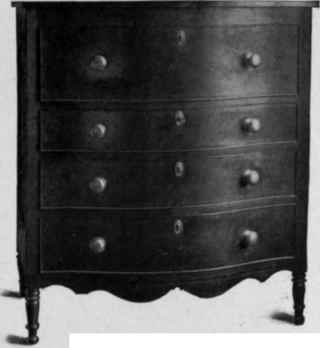
Figure 142. Chest of Drawers, Sheraton style, 1800-10.
The Sheraton style gradually developed into the Empire style, of which many examples are found in this country, especially in low chests of drawers. They were heavy and massive, with reeded columns, claw feet, and coarse but effective carving. Few, if any, mouldings were used, which is one reason they have not the beauty of the earlier pieces. These pieces are erroneously called colonial.

Chest of Drawers, Empire style, 1800-10.

Figure 144. Chest of Drawers, Empire style, 1810-20.
Figure 143 shows an Empire chest of drawers belonging to the writer. The upper part is straight with two drawers, and below are three swell drawers, and the base is again straight. The overhang is supported by two reeded columns and the piece stands on claw feet.
Figure 144 shows a very typical chest of drawers of the period. There are three short drawers at the top and below are four drawers slightly recessed. On the stiles are heavy columns carved in a coarse pineapple pattern and the feet are carved animals' claws.
Continue to:


My Books

