


Seventeenth Century (Flemish). Part 9
Description
This section is from the book "Dutch And Flemish Furniture", by Esther Singleton. Also available from Amazon: Dutch and Flemish Furniture.
Seventeenth Century (Flemish). Part 9
During the Spanish dominion in the sixteenth century, the chair in which great personages sit for their portraits has a high straight back with the side posts usually ending in carved lions' heads, straight or scrolled arms and carved or plain straight legs connected by stretchers. The feet are sometimes carved with the heads or feet of animals. The back and seat are upholstered with velvet or stamped leather fixed to the frame with large brass-headed nails. This "Spanish chair" was common in Spain, Italy, France and England, as well as in the Netherlands. We find it in the pictures of the great portrait painters of the Renaissance - Raphael, Titian and Velasquez - as well as the great Dutch and Flemish masters. Fig. 36 shows a fine solid and simple example of this style of chair of Flemish workmanship. It is well-proportioned; both front and back legs and the arms are turned, and the stretchers are grooved and shaped. When in use, of course, the seat would be comfortably cushioned. The back, seat and arms are covered with leather.
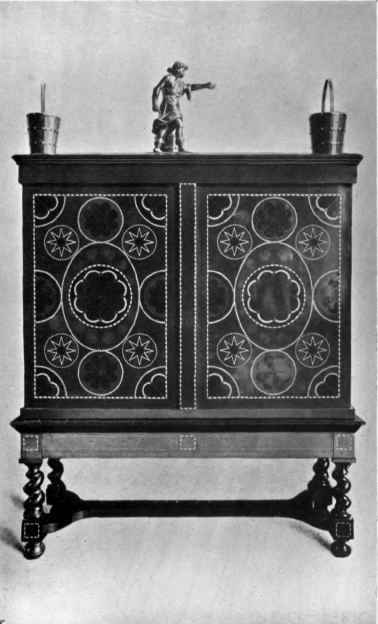
PLATE XXXI. - Marquetry Cabinet. RIJKS MUSEUM, AMSTERDAM.
The most common chair of the seventeenth century, however, is one without arms. It is rather low and is a simplified form of the above "Spanish chair." A fine early example of this model is represented in Plate XXVIII, now in the Cluny Museum, Paris. It will be noticed that the heads on the back posts are still carved, and that the legs are shaped and turned, while the rails are grooved. The Cluny Museum has a considerable number of Flemish chairs of this style and period. One of them, stamped with the monogram of Christ and the date 1672, probably belonged to an ecclesiastic. The ordinary form of this chair appears on either side of the chimney-piece in Plate XXIV.
The low-backed chair without arms is very common in interior scenes by Dutch and Flemish masters. Sometimes we see guests seated on them at the table; and sometimes it will serve as a seat for a lady as she takes a music-lesson. (See Plate XXXIX.) It is found in various dimensions and proportions. Sometimes it has one set of rungs and sometimes two; sometimes the legs are plain, and sometimes elegantly turned. Sometimes the back posts have lions' heads and frequently not. (See Plates XXXV and XXXIX. and Fig 35.) The design by Crispin de Passe, Fig. 32, shows the style for an armchair of the middle of the century. Here the centre of the top back bar is raised with ornamental carving and the lions' heads are suppressed. A variety of the same style of chair fashionable during the period of Louis XIII is represented by the handsome piece of Flemish workmanship in Plate XXIX, also in the Cluny Museum. The arms and bars and front legs are turned in elegant spirals effectively relieved. The back posts do not rise above the top rail, and have no lions' heads, but finely carved heads terminate the arms. The back and seat are covered with gilt leather stamped with a beautiful floral design and fastened to the frame with the usual large-headed nails.
Sometimes instead of lions' heads, we find carved heads of other animals and of women. Besides leather and velvet, this style of chair was frequently covered with embroidered material and tapestry.
A Dutch chair of this general form, though with sloping and scrolled arms, is in the Rijks Museum. (See Plate XXXIII.) The legs are turned in spirals; and the back and seat are upholstered with a rich material figured with large flower forms - tulips, roses, irises, etc.
Still another model of this style of armchair with spiral rungs and supports, scrolled arms, carved top and leather back and seat, appears on Plate XXXIV. This V is also a Dutch chair in the Rijks Museum. It is interesting to compare it with another armchair on the same plate. This, of carved oak, turned back posts, front legs of carved heavy scrolls, diagonal connecting rails also formed of heavy scrolls, and scrolled front bar, is an interesting example of an armchair of the Dutch work of the Louis XIV period. The back has a central panel with a scrolled frame, elegantly carved. It is filled with woven cane instead of leather, or other upholstery. The seat is cane also. A chair without arms, which looks as if it might have belonged to the same set, though it is now preserved in the Cluny Museum, Paris, is shown in Plate XLV. Another armchair of the same period and general style (see Plate XXXIII) has a carved panel filled with cane, cane seat, scrolled arms, turned rails and legs, and carved front bar. Chairs of this fashion were extremely popular in the Low Countries and in England during the second half of the seventeenth century.
In all probability, they originated in the Netherlands, and became familiar and favourites with the exiled Cavaliers between 1640 and 1660; and at the Restoration the style was imported into England. However this may be, this well-known carved oak chair, with cane back and seat, is still popularly known as the "Charles II Chair." A light Dutch model of this type, with elegantly carved front bar, turned rails and posts and scrolled front legs, is shown in Plate XXXIV. It has no arms and the back panel is divided into two narrow panels of cane, producing a very light and elegant effect. The scrolls of the feet are much lighter and more graceful than those of the armchair at its side.
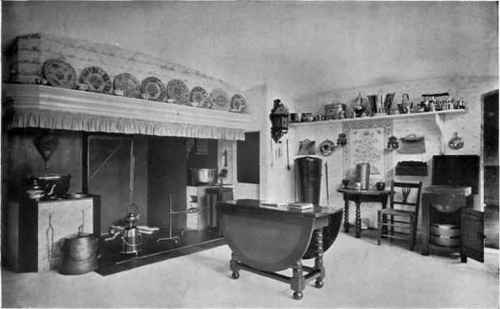
Plate XXXII. - Kitchen. STEDELIJK MUSEUM, AMSTERDAM.
An armchair of the same style and period, also from the Rijks Museum, is in the centre on Plate XXXV.
The central panel of the back is gracefully treated with open carved and turned work. The panel proper is framed with heavy scrolls, and the central bar is pierced and carved with graceful bell-flowers running downwards and upwards. This chute of the bell-flower now becomes a very favourite ornamentation in decorative art, and Berain, Marot and other artists of the period make free use of it. The curved stretchers with the vase ornament in the centre is very characteristic of Dutch, English, and French furniture of the second half of the seventeenth century. It occurs in ordinary tables, dressing-tables, stands for cabinets, and, in fact, every piece of furniture that stands on four legs. The arms and legs consist of the usual scroll, and the feet of carved bulbs.
A chair with the characteristic scrolled stretcher just alluded to occurs on Plate XXXIII. It is richly carved, and has turned and carved straight legs, with bulbed feet. The back is a richly carved frame, filled with cane. The top is crowned with delicate ribbon and foliage carving, and the shape of the back is a favourite one for the mirrors of the period. The proportions of the seat, which is stuffed and covered with velvet fastened with small brass nails is quite modern. This chair, however, belongs to the end of the seventeenth century. The affinities between the chairs we have been describing and the designs by Marot, which were so popular in Holland, may be studied in the next chapter.
Continue to:


My Books

