


Seventeenth Century (Flemish). Part 8
Description
This section is from the book "Dutch And Flemish Furniture", by Esther Singleton. Also available from Amazon: Dutch and Flemish Furniture.
Seventeenth Century (Flemish). Part 8
Mortlake had closed when William III ordered his victories to be commemorated in woven pictures. The cartoons for The Battle of Bresgate, The Descent on Tor bay and The Battle of the Boyne, were drawn by Jean Lottin, the painter, and made by Clerck, Vander Borcht, Cobus and De Vos of Brussels.
Flemish tapestry-weavers settled in Sandwich, Canterbury, Maidstone, Norwich and Colchester in 1567-8, after the persecutions of the Duke of Alva; but notwithstanding the good work produced in England, Admiral Howard ordered the famous set of six pieces to commemorate the destruction of the Spanish Armada from the painter H. Cornells de Vroom of Haarlem and Franz Spierinx of Delft. These fine pieces hung in the House of Lords, London, until destroyed by the fire of 1824.
Religious, mythological and allegorical subjects continue in favour during the seventeenth century; and subjects inspired by contemporary history are also popular. The cartoons by Rubens, however, take precedence of everything; and his History of Achilles, History of Constantine, Scenes from the Old Testament, Triumph of the Church, etc., are reproduced in every workshop in Europe. His most famous work, The History of Marie de' Medici, was finally completed at the Gobelins manufactory during the reign of Louis Philippe.
In furniture, during the seventeenth century, it may be said that carved figures gradually gave way to turned supports, and uprights; and the surfaces depended for decoration on panelling of geometrical designs and applied ornaments of real or imitation ebony. Another favourite way of decorating the broad surfaces was to inlay them in various designs with wood of different colours. The latter taste rapidly advanced during this century with the constantly increasing importation of the beautifully coloured woods of the East and West Indies. As the Flemish artists, moreover, went so often to Italy for inspiration, Flemish marquetry, doubtless, took its first stimulus from Italian taste. To quote a learned critic1:
"The Italians of the Decadence had a passion for ebony and coloured woods, and theatrical and complicated decorations. Furniture completely changed its physiognomy 5 the decorative panels with all their ornaments, are renounced for plain surfaces on which marquetry can be displayed to advantage. Forsaken by fashion, walnut drops out of use; profiles are multiplied; the fine cuirs that were cut in solid bosses sprawl about in an enervated, weakened fashion; the straight, firm and springing Classic column now becomes twisted and distorted; and the stale and banal decoration has neither sinews nor youth. The sculptor yields his place to the marquetry-worker and the carpenter (menuisier) becomes a cabinet-maker (ebeniste)." 1
1 Bonaffe. 158
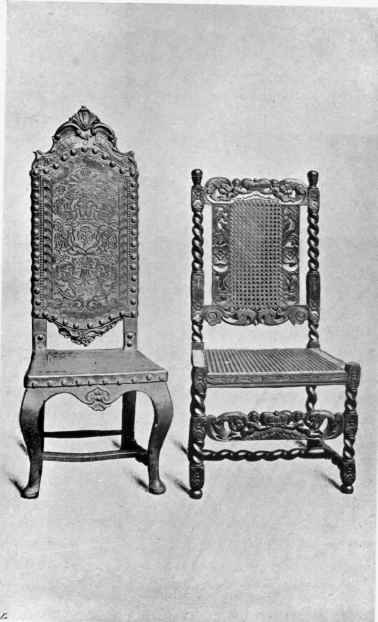
Plate XXX. - Chairs. CLUNY MUSEUM, PARIS.
Until the sixteenth century, marquetry seems to have chiefly consisted of ivory and ebony; but at this period exotic woods began to be employed. Beautiful marquetry was a mark of luxury; for example, in the famous pamphlet L'Isle des Hermaphrodites, directed against Henri III and his Court, the author says: "As for the furniture of wood, we should like to have it all of gold, silver, and marquetry, and the pieces, especially the canopies of the beds, if possible, of cedar, rose, and other odoriferous woods unless you would rather have them of ebony and ivory."
In this century Italy carried to perfection, the inlay of rare and polished marbles, lapis-lazuli, agates, pebbles, etc., called pietra-dura, and this style was imitated in other countries.
During the Decadence, the old marquetry of wood gave place to incrustations of mother-of-pearl, shell, precious stones and coloured marbles, and the furniture was made even more sumptuous by the additions of chiselled mounts, key-plates, handles, feet, etc., of silver or gilt bronze. Painted glass was also a popular kind of inlay. A good example of this work is in the hospice of Liege - a walnut cabinet with plaques of painted glass in many colours in imitation of what the Italians call mille fiori.
1 A literal translation is more to the point: the carpenter becomes a worker in exotic woods, ebony, etc.
A new kind of marquetry, however, made its appearance in the seventeenth century and gained in popularity. This consisted of large designs of flowers - particularly the tulip - birds and foliage represented in very gaily-coloured woods of many varieties and dyes, and bits of ivory or mother-of-pearl are added to the eyes of birds, or petals of flowers, to give a touch of brilliancy. Cabinets, bedsteads, writing-desks, china-cupboards, tall clocks, the frames of chairs - in short every piece of furniture was subject to this style of decoration. This kind of marquetry was popular in England during the reign of William and Mary, when everything Dutch was the rage. It is well known that the Dutch were even fonder of marquetry than the Flemings. A Dutch cabinet, which depends for its decoration entirely on the contrasted colours and shapes of its inlaid woods, standing on a low frame with spiral legs and knob feet connected by a plain stretcher {see Plate XXXI), is in the Rijks Museum, Amsterdam. This is a good specimen of geometrical inlay.
Motives of marquetry of a formal floral nature are reproduced in Fig. 37.
Continue to:


My Books

