


Tables
Description
This section is from the book "English Furniture", by Frederick S. Robinson. Also available from Amazon: English Furniture.
Tables
In his first edition Chippendale makes a great display of 'French commode tables.' These are mostly chests of drawers upon low cabriole legs. They have bombe and other shaped fronts, and vary considerably in elegance of design. Occasionally there is a cupboard front flanked by three or four small drawers round or concaved at each corner, but on the whole they are pretty closely modelled upon the French commode shape. The example illustrated, with gilt mouldings and well-carved cabriole legs, is the property of Mr. Henry Lowe, of Grantham (Plate CVII.). The most dainty of all are the little delicately made occasional tables, of which a good many remain. These are called china, breakfast, and supper tables, and so on, according to their purpose. A breakfast table has four legs and folding top with shaped edge. There is a single drawer in the frame, and the legs are braced by a strong X-shaped stretcher of half-inch mahogany shaped and pierced. The design for this in Chippendale's first edition has somewhat term-shaped legs and a species of claw and ball foot. Lord Barnard, Raby Castle, has one with tapering legs and pad feet. The example which is illustrated (Plate CX.) has straight legs with a pretty moulding running all down their fronts.
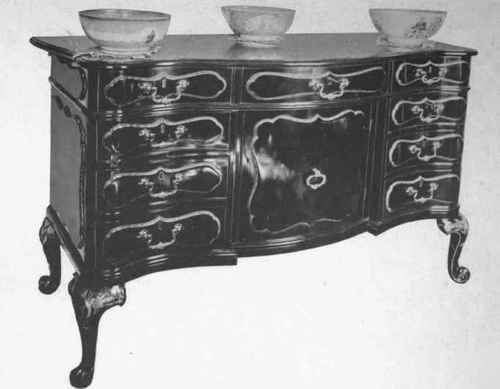
Plate CVII. Mahogany " Commode Table" With Gilt Mouldings Chippendale
CVII. 'Commode Table,' mahogany, with gilt mouldings. Chippendale. H. Lowe, Esq.
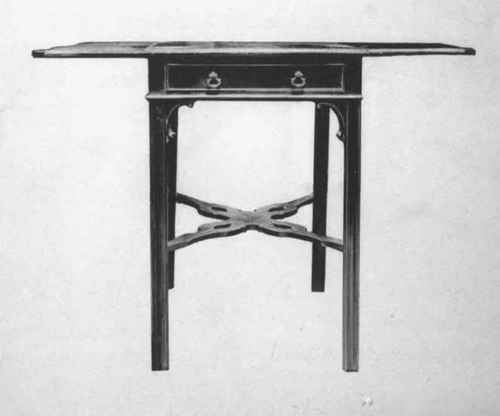
Plate CX. Breakfast Table, Mahogany Chippendale
XC. Breakfast-Table, mahogany. Chippendale. Sir Charles Robinson, C.B.
Dimensions : Height 27⅜, Length of top 36, Width 27 inches.
There is a C-curved bracket at the angle of leg and frame, and neat little brass drop handles to the drawer. It is a charming specimen of excellent unobtrusive design and workmanship. Another pattern has a rectangular top, no X-stretcher, but fretwork closing it in halfway down the legs.
More slender and delicate still are the china tables, or, as some now call them, tray tables, on account of the bulwark which runs round the top slab, ostensibly to prevent the china from slipping off, but also to provide an additional ornamental feature in the open fretwork composing its sides. Many of these tables are distinctly in the Chinese style. Their little thin legs, grouped in pairs or threes, sometimes imitate the joints of the bamboo (Plate CXI., I and 2). Other china tables are more French in design, with cabriole legs and elaborate X-stretchers curved and risen high to a finial in the centre. The Earl of Coventry possesses at Croome Court a table with these stretchers, but the legs in this instance are severely straight. Supper tables rest upon one central pillar branching into three legs, which end in claws or claw and ball. The tops of these are often variously shaped, and have a low moulding rising above the surface of the table to give a finish and protect the plates. There is a slight acanthus-leaf carving usually upon the upper curve of the S-shape legs. A table in the possession of the Earl of Dysart, Ham House, has a top mainly circular, but scalloped on the edge by projecting parts of eight circular places made to fit the plates.
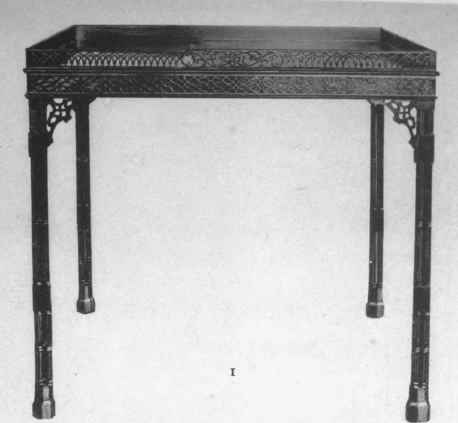

Plate CXI. I - Fretworked Cluster-Leg Table Mahogany Chippendale 2 - Cluster-Leg Table, Mahogany Chippendale
CXI. (1) Table, fretworked cluster-leg, mahogany. Chippendale. Mrs. C. W. Cobb.
(2) Table, cluster-leg, mahogany. Chippendale. Messrs. Barker and Co.
In the centre there is a circle for a large dish. Each of these places shows a part of its circumference on the edge of the main 'circle.' It is said that these tables are to be found with their china to match, but such survivals must be excessively rare. They were used for informal meals on returning from the play. Some have mainly square tops with a fretted edge.
Such tables appear to have been at one time painted, as we may conclude from a curious passage in J. T. Smith's Nollekens and his Times (vol. i. p. 255, edition 1829). Referring to a general improvement of taste, he speaks of those who in his boyish days were content to 'admire a bleeding-heart cherry painted upon a Pontipool tea-board, or a Tradescant strawberry upon a Dutch table,' and who 'now attentively look, and for a long time too, with the most awful respect at the majestic fragments of the Greek sculptor's art, so gloriously displayed in the Elgin Gallery.' To this he attaches a note: 'This description of [Dutch] table, the pride of our great-grandmothers, in which the brightest colours were most gorgeously displayed, was first imported from Holland into England in the reign of William and Mary. The top was nothing more than a large oval tea-tray, with a raised scalloped border round it, fixed upon a pillar, having a claw of three legs.'
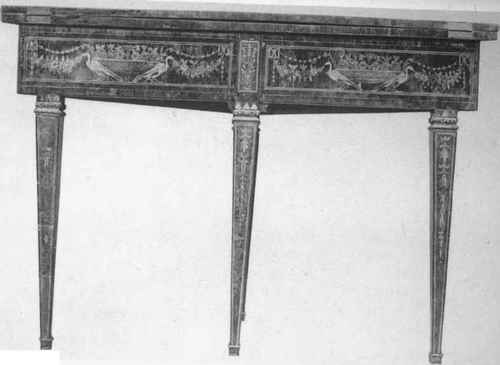
Plate CXLIII. Card Table, Rosewood Inlaid
CXLIII. Card-Table, rosewood, inlaid. V. & A. M.
Dimensions : Height 30¾, Top square open 31 inches.
Upon card tables Chippendale did not lay stress in his book. Specimens are found with straight legs moulded on the front in the same manner as the breakfast table illustrated, and with top edges carved with the egg and tongue ornament or similar patterns. An elaborate 'combination game table' I have seen had cabriole legs, acanthus-carved, and claw feet and a double top. Above was the regular baize-covered card table, with depressions for counters or money, and below this a chess table inlaid. A well below the double top contained a backgammon frame.


Plate CXX. I - Card Table, Mahogany
CXX. (1) Card-Table, mahogany. Adam (?). Sir Charles Robinson, C.B.
Dimensions: Length 36, Height 28⅛, Width closed 17⅜ inches.
(2) Mirror, style of Adam, gilt. The Hon. Sir S. Ponsonby-Fane, K.C.B.
Apart from chairs in the Chinese style, Chippendale devoted his Oriental fancies, as was to be expected, to the designing of china cabinets and hanging shelves for china. The great feature of the former is the pagoda roof with its hollow triangular outline and projecting eaves from which hang little bells. There is, of course, great use of fretwork, and the legs on which the cabinets stand are of the perpendicular kind as a rule, but sometimes recall the style of Louis XIV. Much flower-work, often twisting in wreaths round narrow uprights upon the fronts of cabinets, is purely French in treatment. Birds with long tails and beaks are sometimes perched on the eaves of pagoda roofs. The fine example illustrated is one of a pair in the possession of Sir Samuel Montague. It shows the pagodas, dragons, bells, and fretwork of the style to perfection, whilst a suspicion of Gothic work lurks on the frieze below the cornice (Plate cxiI).
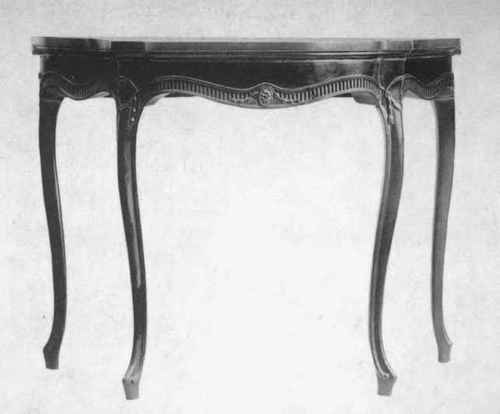
Plate CXXVII. Card Table, Walnut, Inlaid Top About 1780
CXXVII. Card-Table, walnut, inlaid top. About 1780. Henry Willett, Esq. (the late).

Plate CLIII.
I - Toilet Table, Satinwood Inlaid With Walnut Sheraton
2 - Cabinet Washstand, Mahogany Sheraton 3- Cabinet Toilet Stand, Mahogany Sheraton
CLIII. (1) Toilet-Table, satin-wood inlaid with walnut, Sheraton. The interior fittings include a mirror. The Earl of Ancaster.
(2) Cabinet Washstand, mahogany. Sheraton. Opens at the top and in front with flaps and doors. W. H. Spottis-woode, Esq.
(3) Cabinet Toilet-Stand, mahogany. Sheraton. Decorated with inlay of shell ornament, floral wreaths, and foliated scrolls. It opens with two flaps and is fitted with a folding mirror, recesses, and drawers. W. H. Spottiswoode, Esq.
Amongst the bed designs is one in which Chippendale, though he calls it a 'dome bed,' has more Chinese elements than in that which is called Chinese. The 'dome bed' has two dragons on the top similar to those which the younger Cafferi often used in his ormolu work. At the bed-head there is an elaborate pavilion decked with curves and foliage, in which is seated what may be taken for a figure of Buddha. The Chinese bed has a pagoda roof supported by posts, upon which appears the six-sided lattice to be found on Tudor bedposts and chimneys. The rest of the decoration is mainly French. Such Chinese vagaries as these were rarely, if ever, executed by Chippendale, and are less satisfactory than the simpler hanging shelves, in which a plain lattice forms the chief decoration. The same may be said of the console tables, or, as he calls them, 'frames for marble slabs,' in which amidst C-curves disguised with flowers and foliage are uncomfortably seated little Chinese figures. Grandiose and unsatisfactory, too, are Chippendale's Chinese sofas, in which a reasonable settee with waved or bowed back is over-topped by a heavy pagoda roof hung with draperies which are more suitable to the bed-head of a four-poster.

Plate CXLI. Card Table, Satinwood, Inlaid Sheraton
CXLI. Card-Table, satin-wood inlaid. Sheraton. Sir Samuel Montague, Bart.

Plate CXLII. Table, Satinwood Inlaid Sheraton
CXLII. Table, satin-wood inlaid. Sheraton. Sir Samuel Montague, Bart.
It is a relief to turn from these ill-advised monuments to the more practical furniture which Chippendale made for the bedroom and the study. Here are indeed satisfactory examples of his work. He is not above showing plates of clothes-chests of the very plainest and most workmanlike description. These are a box above with a drawer below, like the first step in the evolution of the chest of drawers. The somewhat ornate example illustrated (Plate CVIII.) is communicated by Messrs. Barker and Co.

Plate CVIII. Mahogany Clothes Press
CVIII. Clothes-press, mahogany. Chippendale. Messrs. Barker and Co.
CI X. (1) Chippendale Tall-boy, mahogany. Messrs. Gill and Reigate.
(2) Chippendale Tall-boy, mahogany. Messrs. Gill and Reiegate.
(3) Heppelwhite Tall-boy, mahogany. Mr. Arthur Edwards.
Continue to:


My Books

