


Oriental Influences
Description
This section is from the book "Furniture", by Esther Singleton. Also available from Amazon: Furniture.
Oriental Influences
Here we may perhaps pause to review the effect produced by early contact with the East.
During the Sixteenth Century, while the Portuguese had a monopoly of the trade of the Far East, a great deal of Oriental furniture was brought to Lisbon, and from there carried to Northern Europe. In Elizabethan days also, piratical navigators often brought Portuguese cargoes into English ports, and consequently we find lacquer and porcelain in the inventories of the rich.
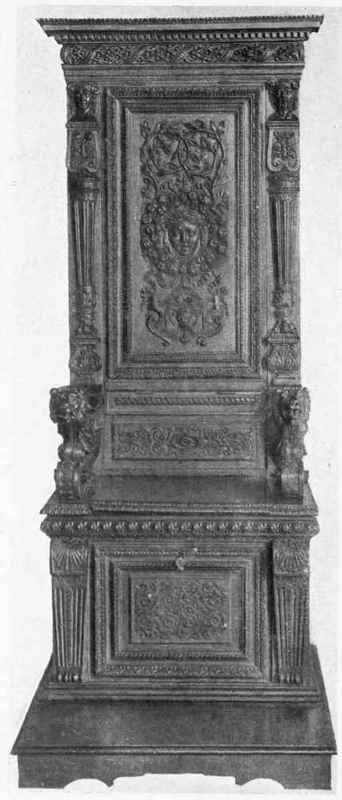
Plate XV Chair. Lyonnais. Sixteenth Century
From 1497, when Vasco da Gama rounded the Cape of Good Hope and discovered the sea route to India, the Portuguese held a monopoly of the trade of the Far East for a hundred years. During that time, a vast amount of Oriental wares was brought into the Tagus and distributed thence through Northern Europe, principally by Dutch ships, but the Renaissance was in full flower, and the exotics made no impression on the style of the period. This is strange, because the importations were considerable. Between 1497 and 1521 Lisbon sent out 220 ships.
Writing in 1601, De Laval informs us that three or four carracks went out from Lisbon every year. They were the largest vessels in the world, being of 1500 and 2000 tons burden, having four decks, and not being able to float in less than ten fathoms of water. It took them three years to make the voyage to Goa, Cochin, Malacca, Sunda, Macao, and Japan, and back. These Portuguese ships therefore brought home all the choice wares and products of India, China, Japan and the Spice Islands.
De Laval says it is impossible to enumerate all the rare and beautiful things imported. Among those he mentions are "great store of gilded woodwork, such as all sorts of vessels and furniture lacquered, varnished and gilded with a thousand pretty designs, all kinds of silk stuffs, much porcelain ware, many boxes, plates and baskets made of little reeds covered with lacquer and varnished in all colors, gilded and patterned. Among other things, I should mention a great number of cabinets of all patterns in the fashion of those of Germany. This is an article of the most perfect and of the finest workmanship to be seen anywhere; for they are all of choice woods and inlaid with ivory, mother-of-pearl and precious stones: in place of iron they are mounted with gold. The Portuguese call them Escritorios de la Chine."
The exclusive right of the Portuguese to the Eastern trade was not always respected by English and Dutch adventurers, for London and Amsterdam sometimes received diplomatic protests against violent intrusion, and irregular trade.
In 1580, Philip II., the master of the revolted Netherlands, seized Portugal, and, of course, closed Lisbon and all other ports against Dutch and English ships. It was not long before depredations by the latter were heard of in the Indian Ocean. In 1598, Cecil's Lisbon agent reports that three carracks have arrived from India, and one was burnt there full laden. They bring news that two English ships in India have taken two Portugal ships rich with treasure that were on their voyage from Goa to China. This gives point to De Laval's remark (1601) that the carracks are sent out "to return if they can."
In 1602, both the Dutch and English East India Companies were established; and for the rest of the century Amsterdam supplanted Lisbon as the emporium of Eastern wares. In the bitter competition that ensued, the Dutch outstripped the English; and the Magazine of the Indies in Amsterdam became the most important mart in Europe for porcelain and lacquer goods. London, however, received large shipments. As early as 1619, the inventory of the Earl of Northampton's effects includes the following articles from Far Cathay: "A China 'guilte cabonett' upon a frame; a large square China work table and frame of black varnish and gold; one fair crimson velvet chair richly embossed with copper and spread eagles and blue and white flowers China work, the frame painted with gold, one small table of China work in gold and colors with flies and worms, a little gilded couch carved and cut, an ebony cabinet inlaid with mother-of-pearl; a very large bedstead with wreathed pillars for head, sides and feet all colored black and gold; a folding Indian screen; a China cushion embroidered with birds, beasts and flowers; and a field-bedstead of China work black and silver."

Plate XVI - Carved Oak Court-Cupboard. Tudor Period - Metropolitan Museum
It was the porcelain and the smooth lacquered surfaces with contrasted colors that appealed to the Dutch and English; at first, they did not care for the designs of the artists of the East. We know this because they sent out patterns for the decorations of both porcelain and woodwork to suit the taste of the home market. The Chinese found it impossible to execute some of the orders. A Jesuit missionary of the day reported: "European merchants often order from the Chinese workmen porcelain plaques to form the top of a table, or back of a chair, or frame of a picture. These works are impossible; the greatest length and width of a plate is about one foot. If they are made larger than that, no matter how thick, they bend."
Continue to:


My Books

