


Tables. Part 5
Description
This section is from the book "Furniture", by Esther Singleton. Also available from Amazon: Furniture.
Tables. Part 5
The round tea-table, supported on a tripod stand, was made of various sizes, from one that could support a tea-tray to one destined to hold merely the tea-kettle. In the latter, case the stand had a little gallery, or high rail, above it. The top of the tea-table was made to revolve and to turn downwards when not in use. Hence it has received the popular name of "tip-and-turn." The edge was frequently bordered with a crinkled moulding, which to-day is often denominated "pie-crust."
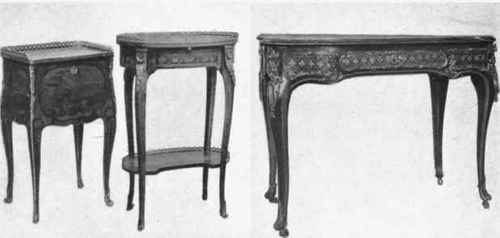
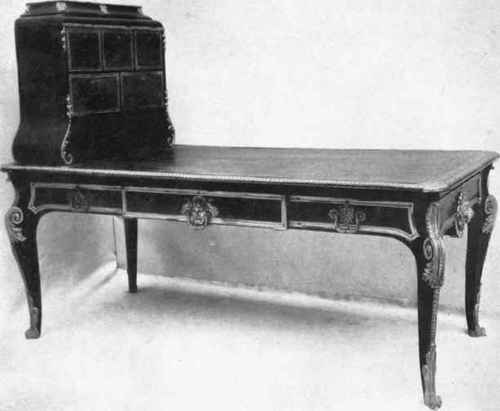
Plate CX - Louis XV. Lady's Tables, Marquetry of Colored Woods. Louis XV. Table with Panels of Lattice-work - Louis XV. Writing-Table and Serre-Papiers - Metropolitan Museum
Chippendale was very adept in the making of tables. His book contains every kind of table. His plates show: china-tables, dressing-tables, bureau-dressing-tables and commodes, writing-tables, library-tables, dressing and writing-tables, with bookcases, pier-glasses, and table frames, frames for marble slabs, sideboard-tables, bason stands, tea-kettle stands, candle stands, terms for busts, stands for china jars and pedestals, etc.
Chippendale's console-tables were derived from the French styles of the day and elaborately carved in the same manner as his picture and mirror frames, with subjects from mythology, or AEsop's Fables, scrolls, leaves, spiky tufts of grass, icicles, birds and Chinese figures. The slab was of marble.
His "buroe tables" are very simple, generally of two square tiers of drawers hollowed out in the centre and covered with a large slab. A little carving sometimes embellishes them.
His writing and library tables are generally "Gothic" in style. One has a writing drawer which draws out at one end and has term feet to support it, and the top "rises with a double horse to stand to read or write upon." They are variously supplied with partitions for books, pigeonholes, drawers, flaps, etc., etc. Recesses are also cut for the knees; and are of a type long popular.
The lady's dressing-table under Chippendale's treatment often is a kind of commode; and, as a rule, he makes it of rosewood and decorates it with drapery. His glasses are made to come forward on hinges. This one, described in his book, is characteristic. "The glass made to come forward with folding hinges, is in a carved frame, and stands in a compartment that rests upon a plinth, between which are small drawers. The drapery is supported by Cupids and the petticoat goes behind the feet of the table, which looks better. The ornamental parts may be gilt in burnished gold or japanned."
Shaving-tables with folding tops and glasses that could be made "to rise out with a spring catch," were also made by Chippendale; and some of these had devices that could bring the glass forward when the gentleman was shaving.
The dining-tables from the beginning of the Eighteenth Century and throughout the Chippendale period consisted of two centre-pieces with wide flaps on either side and two semi-circular end pieces, all four divisions being joined together or separated at will by means of small brass adjustments. Each of the two larger portions stood on four cabriole legs, and the semi-circular pieces on two legs only; the latter, when not in use, were pushed up against the wall and served as side-tables.
These, however, are not to be confused with the sideboard-table, which took the place of the sideboard in Chippendale's day. A typical example is given on Plate CXI. It measures 2 feet 9 1/2 inches high, 5 feet 10 1/2 inches long, and 1 foot, 10 3/4 inches deep, is of oblong form, the corners splayed and slightly shaped to the outline of the legs. The frieze is boldly carved in relief with a lattice and scroll foliage design. The centre ornamented with reversed C-scrolls. The plain mahogany top with moulded border, is supported on cluster column legs of quatrefoil section with moulded tie and plinths and carved acanthus foliage capitals.
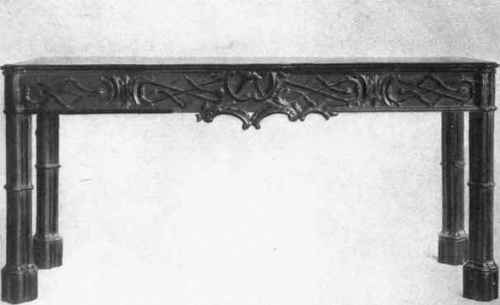

Plate CXI - Chippendale Sideboard-Table - Chippendale Pier-Table
A pier-table of the Chippendale style appears on Plate CXI. It is of oblong form, standing on four beautifully modelled cabriole legs, ending in a fine ball-and-claw. The front is carved with a pendant having a pierced shell in the centre. Arched scrolls and wave ornaments decorate the sides and ends, with corded string line, plain frieze and foliage border. The slab is black and white marble; length three feet.
Hepplewhite's book shows designs for library-tables, card-tables, pier-tables, Pembroke-tables, tambour-tables, dressing-tables and drawers, Rudd's tables, night-tables, candle-stands, terms for busts, and ornamental tops for pier-tables, Pembroke-tables, etc.
"Tables, in general," we learn from this book, "are made of the best mahogany. Their size is various, but their height should not exceed 28 inches.
"Card-tables may be either square, circular or oval: the inner part is lined with green cloth; the fronts may be enriched with inlaid or painted ornaments; the tops also admit of great elegance."
"Pembroke-tables are the most useful of this species of furniture; they may be of various shapes. The long, square and oval are the most fashionable." The tops are "inlaid, painted, or varnished." As a rule, there is a drawer below the top, the leaves or flaps of which fall on either side, as is shown in the example on Plate CXIV. from the Metropolitan Museum.
Heppelwhite's dressing-tables were remarkable for their ingenious arrangements of compartments for pins, combs, essences, jewelry and other articles for beautifying the person. He also had ingenious arrangements for causing the looking-glasses to rise from the slabs and drawers and swing easily on hinges. His shaving-tables were also marvels of convenience.
Continue to:


My Books

