


Chapter XII. The Empire Period. French And English. 1793-1830
Description
This section is from the book "The Practical Book Of Period Furniture", by Harold Donaldson Eberlein And Abbot McClure. Also available from Amazon: The Practical Book Of Period Furniture.
Chapter XII. The Empire Period. French And English. 1793-1830
THE Empire style was a style created by fiat. When Napoleon saw the political necessity of creating a new style of national art and, incidentally thereto, a new style of furniture, he turned the matter over to the care of eminent French artists, chief among whom were Percier, Fontaine, and David - all of them thoroughly saturated with classic traditions and likewise thoroughly imbued with the new political principles. In their labours they were inspired by the pompous military spirit of the time, and as they strove to achieve the heroic, they sometimes fell into mere vainglorious bombast.
"Of all the styles developed in France, that of the Empire period is least interesting and least French. It lacks the dignity of Louis XIV, the originality of Louis XV, and the grace of Louis XVI. It lacks refinement and it lacks spirituality."1 The words just quoted may seem like a wholesale and a scathing condemnation of all the furniture designed in France from 1793 to 1830, but on calm reflection and study it must be admitted that this emphatic verbal castigation is by no means groundless.
At times there were, of course, glimmerings of inspiration and grace, but the prevailing tone is drearily artificial. Contrasted with the preceding Louis XVI style it is appallingly brutal. Though both styles are avowedly of classic provenance, the former is instinct with Greek grace and inspiration, while the latter is wholly vulgar and shows the grandiose brutality of Imperial Rome.
1 George Leland Hunter.
Key Plate XIV. Empire Period, 1793-1830
Material Usually Mahogany
See Text Pages 274-285

Fig. 1. Brass-Inlaid Mahogany Sideboard, Carved Backboard, Gilded Pillars, Ball Feet.

Fig. 2. Brasa-Mounted Mahogany Couch, Swan-neck Finish at Head and Foot.

Fig. 3. Brass-Mounted Mahogany Arm-Chair, Square, Outward-Splayed Legs.
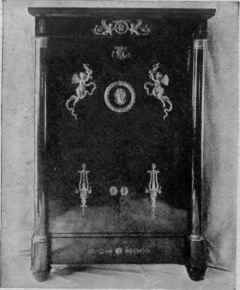
Fig. 4. Brass-Mounted Mahogany Drop-Front Secretary.
The short Directoire epoch succeeding the political murder of Louis XVI was really a period of preparation for the Empire style in its fullest development and was characterised by a more rigid restraint and severity of form than the manifestations which followed. The accredited exponents of the Empire style, Percier and Fontaine, disclaimed any originality for the work they put forth. " The style," they say in their preface to their volume of Empire designs, "does not belong to us, but entirely to the ancients; and as our only merit is to have understood how to conform our inventions to it, our real aim in giving them publicity, is to do everything in our power to prevent the mania for innovation from corrupting and destroying principles which others will doubtless use better than we."
The French Empire furniture depended largely for its effect upon the beautifully chased brass and ormolu mounts with which it was lavishly adorned. Apart from these, the chief characteristic details of ornamentation consisted in lions' or bears' claw feet, wings, cornucopias, conventional classic honeysuckle, the acanthus leaf, pineapples, pillars (plain or carved), and wyverns, or other chimerical beasts. As well as the large bewreathed "N," the Empire star and bees were to all intents the trademark of the Emperor. After the Egyptian campaign, Egyptian architectural contours were introduced. When not painted or gilt, the wood used in Empire furniture was for the most part exceptionally fine mahogany and the effect of the metal mounts against the dark background was impressive.
The English Empire style was but an echo, and often a clumsy echo, of the French Empire. Not all the revulsion of feeling in England at the brutal execution of Louis XVI nor all the hatred and dread of those who rose to the leadership of such government as there was in France could ultimately overcome the old habit, with centuries of precedent back of it, of looking to Paris for direction in matters of style. To meet this renewed craze for "things in the French taste," Sheraton, now in his pathetic decadent stage, contrived designs (Fig. 1) from which all his old spirit of proportion, grace and inspiration was lacking and which for sheer ugliness could compare with many of the contemporary atrocities perpetrated. Thomas Hope likewise designed many monstrous things, while the work of the ordinary chair- and cabinet-maker descended at times to shocking depths (Fig. 2) of banality or pompous ugliness.
Continue to:


My Books

