


Chippendale. C. 1705 - 1779. Part 7
Description
This section is from the book "The Practical Book Of Period Furniture", by Harold Donaldson Eberlein And Abbot McClure. Also available from Amazon: The Practical Book Of Period Furniture.
Chippendale. C. 1705 - 1779. Part 7
Lowboys
Lowboys corresponded exactly with highboys, except that the elaborate scallop-shell ornament, when used, was applied to the small middle drawer. The drawers were differently arranged from the lowboys. In some the body was straight, with drawers of equal depth; in others the middle portion was shaped so that a variation in the size and shape of the drawers was necessary.
Cabinets
The Chippendale period was rich in the variety of cabinets made and decorated in all the four phases of Chippendale styles. Some of them were large and imposing, being made in three sections, of which the middle projected beyond the sides. The lower part was enclosed with doors, while the upper portion was either open with shelves for the display of bric-a-brac, or enclosed in glass doors, which frequently were embellished with elaborate tracery (Plate XVII, p. 166).
Other cabinets were entirely open in front and had tiers of shelves for china or articles of vertu.
A third type of cabinet was supported on legs, either cabriole or straight, and had an upper portion composed of shelves enclosed with glass doors in front. These cabinets were made usually in the English or French phases but also occur in Chinese type.
Console cabinets, sometimes called commodes (Plate XX, p. 180), came into use during the period of French influence.
There were also small low cabinets containing two or three drawers supported on short legs, usually of the square type.
Small hanging cabinets with richly carved framework must be included in the list (Plate XIX, p. 174).
Key Plate VI. Chippendale Period - Continued

Fig. 1. Settee in Chinese Manner, Canted Arms, Fret Brackets, Fretted Legs and Seat-rail.
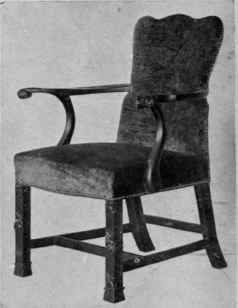
Fig. 2. Upholstered Shaped Back, Straight, Fretted Legs.
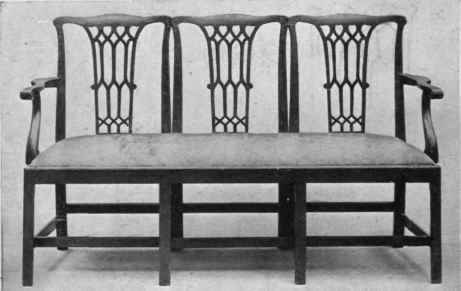
Fig. 3. Triple Chair Back Settee with Gothic Fret Splats.
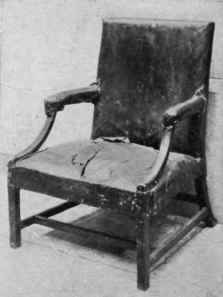
Fig. 4. Square Upholstered Back, Straight Arms, Single Curve Supports.
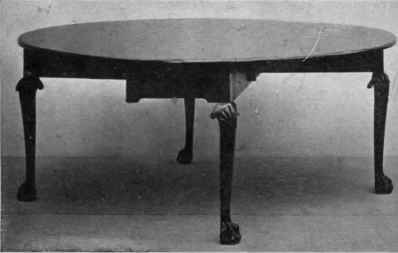
Fig. 5. Cabriole Leg, Drop-Leaf Dining Table.
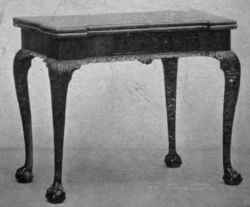
Fig. 6. Card Table, Projecting Corners, Splayed Gadroon Carving in Underframing.
Writing Furniture
Chippendale writing furniture was various in scope, and included the following:
Writing Tables were made rectangular in shape, with tiers of drawers at the ends at either side of the sitter, the middle space being open to accommodate the knees. These writing tables were made in all the phases, and variously ornamented. In the French phase the bombe fronts (Plate XVIII, p. 170) are made with extreme precision and nicety of workmanship, not only the fronts but the inner portion of the drawers as well being cunningly shaped.
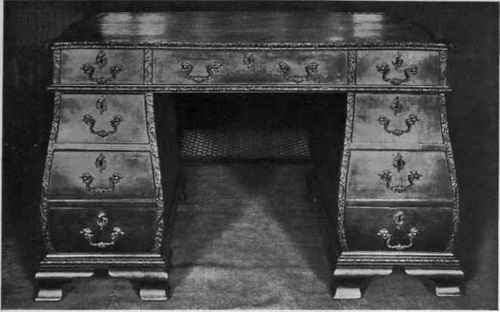
CHIPPENDALE BOMBE MAHOGANY WRITING TABLE(Of authentic Chippendale origin).
By Courtesy of Richard A. Canfield, Esq., New York City.

CHIPPENDALE MARBLE TOP MAHOGANY SIDE TABLE (Of authentic Chippendale origin).
By Courtesy of Richard A. Canfield, Esq., New York City.
PLATE XVIII.
Bureaux, or small secretaries, stood upon legs supporting a low base. The base sometimes contained a drawer, and in the upper portion were two drawers, with a falling slant-top desk which, when open, was supported on two slides which pulled out at the ends of the top drawer. Similar in general design to Key V, 6.
High Chests of Drawers were sometimes made with the top drawer of the lower section having a pull-down front and equipped inside with pigeon-holes, drawers and proper fittings for writing materials. These were combination pieces, evidently intended for use in bedrooms.
Bureau Bookcases (Key IX, 1) either with slant-top desks that pulled down and were supported on slides or with pull-down straight fronts to top drawers, supported by brass quadrants (Key IX, 3), were largely used throughout this period. They had either drawers or cupboards in the lower part, and the upper part had doors enclosing shelves. The tops were either straight or surmounted by pediments. The doors of the upper portion were sometimes glazed and sometimes panelled in wood (Plate XV, p. 154).
Slant-top Secretaries with drawers in the lower part and no superstructure were also in common use.
All the writing furniture not supported on legs rested either upon a solid plinth, shaped bracket feet, or some variety of cabriole ball and claw foot.
In America some of the cabinets, secretaries, highboys, lowboys and other large pieces of furniture, have what are familiarly known as block fronts (Plate XLIII, p. 304). Although these block fronts were peculiarly popular in America they were not unknown in England. It had been positively asserted by recent writers that they were of American invention and originated during the Chippendale period. Beautiful as they are and much as we should like to claim their invention for America, fairness compels us to state that the block front, or the tubbed front, as it is sometimes called, was known in England as early as the second quarter of the eighteenth century, long before its manufacture was dreamed of on our own side of the Atlantic.
Continue to:


My Books

