


Other American Furniture. Part 2
Description
This section is from the book "The Practical Book Of Period Furniture", by Harold Donaldson Eberlein And Abbot McClure. Also available from Amazon: The Practical Book Of Period Furniture.
Other American Furniture. Part 2
New York And Long Island
In New York and Long Island we find mixed Dutch and English influences. The earliest furniture was purely Dutch in type and much of it was actually brought from Holland, as, for example, the gate table in the Manor House at Croton-on-Hudson and numerous other well-known pieces, along with a good deal that has never been written about.
A little after the middle of the seventeenth century, English furniture of Cromwellian pattern began to appear. Whether it was brought by its possessors from England or New England or whether it was made on the spot by local joiners it is now impossible to say. Some of the furniture, which shows a blending of English and Dutch characteristics - such as certain rush-bottomed locustwood or applewood chairs with English legs and unmistakably Dutch backs (Key XVIII, 2, Fig. 1) - was undoubtedly made by local artisans.
With the advent of William and Mary, and later, of Queen Anne fashions in furniture, no really new features were introduced, for bulb turnings (Key XVIII, 1), inverted cup turnings, cabriole legs and hoof feet (Key XIX, 5) were all there before, in the Dutch modes. Between the two types there were only such minor differences of contour as national preference might suggest.
The incoming of Chippendale and other subsequent furniture styles found New York thoroughly English in culture and tastes, and what was said of New England furniture of that date applies equally to the furniture of New York and Long Island.
Philadelphia And Pennsylvania
Owing to Pennsylvania's late settlement by English Colonists (1682) the student of furniture history does not expect to discover many pieces of Jacobean date. Such few Jacobean articles as there are were brought thither among the household goods of early colonists.
William and Mary furniture is met with in far larger quantity. In some of the pieces known to have been brought from England we meet with marqueterie and inlay and other features that savour of the more elaborate work of the period. By far the greater number of William and Mary articles, however, are of plainer type and derive their charm from their graceful proportions and the beauty of the wood employed in their manufacture. It is more than likely that most of this simple William and Mary furniture (Key III, 3) was made in America, either in Philadelphia or in West Jersey, which, by reason of its earlier settlement, had had more opportunity to advance in the domestic arts and crafts. Many excellent pieces of this stamp came out of Jersey, as did originally many families afterwards prominent in Pennsylvania history. Much of it, also, still remains in its original state.
Key Plate XVIII. Other American Furniture - Continued

Fig. 1. Plain Mahogany Fretted Mirror Frame.
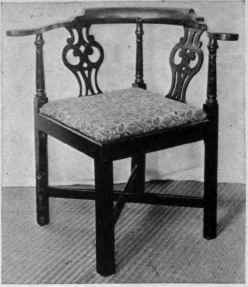
Fig. 2. Mahogany Roundabout or Corner Chair of Chippendale Pattern, Pierced Splats, Saltire Stretchers.

Fig. 3. Philadelphia Fretted Mahogany and Gilt Mirror Frame, c. 1790.

Fig. 4. Mahogany Block-Front Chest of Drawers, Moulded Bracket Feet.

Fig. 5. Pennsylvania Wing Chair, c. 1730, Ogeed Seat-rail, Ringed Baluster Arm Supports.

Fig. 6. Philadelphia Sheraton Card Table, Sprung Front, Reeded Legs.
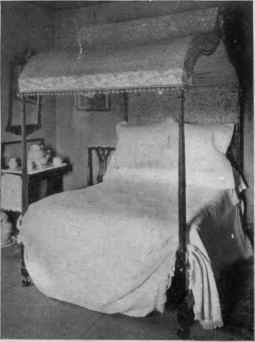
Fig. 7. Philadelphia Field Bedstead, Ogee or Tent Tester, Slender Turned Posts.

Fig. 8. Half-High New England Bedstead, Reeded Posts, Pineapple Tops, Sheraton Influence.
Another reason for the almost universal simplicity of this William and Mary furniture in Pennsylvania and West Jersey is that the majority of the people in those colonies at that time were plain Friends and were not disposed to look kindly upon any sort of elaboration. In point of date it should be observed that in Philadelphia and the vicinity William and Mary patterns continued (Key XVIII, 5) in use well into the forepart of the eighteenth century, for even at that early date the element of conservatism was dominant in the City of Penn.
Queen Anne fashions, notwithstanding the conservative fondness for William and Mary forms, rapidly made their way into favour and very early in the eighteenth century appeared the cabriole leg, hoof foot, ogeed apron (Key XIX, 5) and oftentimes burr walnut veneering on drawer fronts, the stiles and rails of the carcase being of plain wood.
The material used for nearly all of the William and Mary and Queen Anne pieces of native make - and most of them were the work of local joiners - was a singularly beautiful black walnut of deep rich colour that lent a rare distinction to any article for which it was employed. This particular variety of black walnut was found growing along the banks of the Schuylkill, and material of its peculiar richness seems never to have been found anywhere else. The supply was long ago exhausted, so that wood of this sort in any piece of furniture is almost sufficient to stamp its date and place of manufacture. Much of the late Queen Anne or early Georgian and a great deal of Chippendale furniture was made of this same walnut by Philadelphia cabinet-makers.

PLATE XLIV. MAHOGANY SECRETARY OR BUREAU BOOKCASE, AMERICAN, LATE EIGHTEENTH CENTURY.
By Courtesy of Richard A. Canfield, Esq., New York City.
At the same time, while the walnut was enjoying such general favour, mahogany was steadily winning its way into popular esteem. Its employment in cabinet-work seems to have been earlier and was, perhaps, more general than in England. Certain it is that some ten years before the date, 1720, somewhat arbitrarily assigned, for its use as a carcase, cabinet or chair wood in England, it was being used by Philadelphia joiners.

Fig. 2. American Mirror, of Late Eighteenth Century. By Courtesy of Col. W. J. Youngs, Garden City, L. I.
By the middle of the eighteenth century, and from thence onward, Philadelphia cabinet-makers ranked easily first of their craft in America and were quite the peers of their fellow artisans in London. Indeed one of the prominent Antique dealers and cabinet-makers informs us that the American work was generally the better in that the joiners were more liberal in the employment of mahogany, using heavier stock, and that the carcase work was therefore stronger and was better put together. Furniture of the best Chippendale pattern was manufactured in considerable quantity. Some of it was as elaborately carved (Key XVIII, 6 and 7) and ornamented as the generality of that made in England and some of it was plain, but in every case the lines were excellent.

By Courtesy of Mrs. William Charming Russell, Philadelphia.
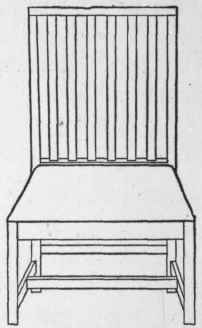
American " Carpenter's Sheraton" Chair.
By Courtesy of Augustus Van Cortlandt, Jr., Sharon, Conn.
Whether the block front (Key XIX, 4; Plate XLIII, p. 304), to the possible American origin of which attention has already been directed in the Chippendale chapter, and which became so popular for secretaries (Plate XLIII, p. 304), highboys, chests of drawers (Key XIX, 4) and lowboys, was first made in Philadelphia or in New England it is impossible to say. We know, however, that it was a popular form with Philadelphia craftsmen.
One peculiarity of American-made chairs, particularly chairs of the Chippendale style, is that the seat rail is mortised and tenoned all the way through the back posts and not merely into them, so that a small portion of the end of the seat rail is visible in the rear surface of the back post.
The more elaborate Adam, Hepplewhite and Sheraton painted pieces were not made in America, but the mahogany furniture in the styles of these designers and the furniture embellished with inlay (Plate XXXV, p. 254), veneer and marqueterie was successfully executed in the metropolis on the Delaware, and nothing can exceed the grace and structural excellence of Philadelphia-made articles of Hepplewhite and Sheraton (Key XIX, 6) pattern. Curly maple often took the place of satinwood.
Continue to:


My Books

