


Chapter III. William And Mary. 1688-1702
Description
This section is from the book "The Practical Book Of Period Furniture", by Harold Donaldson Eberlein And Abbot McClure. Also available from Amazon: The Practical Book Of Period Furniture.
Chapter III. William And Mary. 1688-1702
THIS is a concise and easily understood period - a welcome contrast to the Jacobean. It was of shorter duration and, consequently, styles had not the same opportunity to run through numerous changes. With the names of William and Mary we inseparably associate one clearly defined mobiliary type of unmistakable characteristics - hooded tops (Key III, 2; Plate III, p. 72), ogeed (Key III, 3 and 4; Plates IV, p. 76, and VI, p. 86) and flat arch (Key III, 1) aprons, straight cup-turned legs and shaped stretchers (Key III, 1, 2 and 3; Plate VI, p. 86). What were the derivations and variant peculiarities of these pronounced characteristics we shall soon see. At the same time, there is present a sufficient element of variety and evolution to make the period one of intense interest. Besides being interesting, it is exceedingly important as marking, on the one hand, an almost complete revolution from the forms and principles of preceding times and, on the other, a rapid crystallisation into forms that endured through much of the eighteenth century and left an influence even after they had disappeared.
Key Plate II. William And Mary Period 1688-1702 Strong Dutch Influence
Material Usually Walnut
See Text Pages 71-96
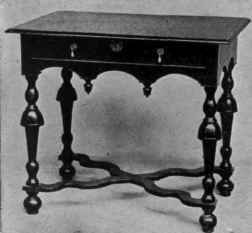
Fig. 1. Table, with flat arches and pendent ornaments.

Fig. 2. Double-hood Cabinet.
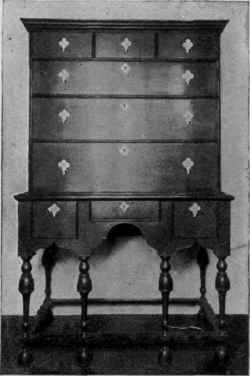
Fig. 3. Flat-top Highboy Inverted-cup legs, ogee arches and scroll stretchers very characteristic of period.
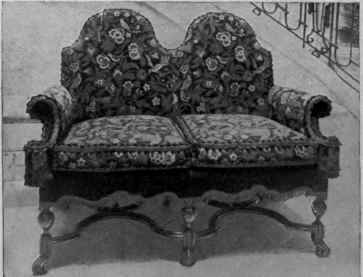
Fig. 4. Settee with double-hood back and characteristic stretchers.
Because of the necessarily rapid transition to the Queen Anne style - the William and Mary epoch lasted but fourteen years - some of the typical forms and processes were of short duration.
There are always overlappings of styles, but there are times when marked changes occur with almost startling rapidity and force even the most unobservant to note the presence of a wholly new influence. Such a time came just after the Revolution of 1688 and in the section on "Contour" we shall learn wherein lay much of the difference from preceding types that then became apparent.
Between the arrival of William and Mary and Queen Anne's accession, we can discern a marked increase in popular appreciation of refinement and simplicity. Queen Mary herself wielded an immense influence upon public taste and she it was who gave the initial impetus to china collecting which, in turn, affected furniture types as well as social customs and brought a whole train of consequences in its wake. By her signal devotion to needlework the Queen also greatly encouraged the fashion for English women to broider elaborate covers in "petit point" (Key III, 4; Plate IV, p. 76) for upholstered chairs, settees and stools.
In this needlework upholstery we find the same strong, exuberant colour that ran riot in the gorgeous imported stuffs and rich fabrics of home manufacture with which men and women of the day were wont both to clothe their bodies and cover their furniture. English colour sense was still fresh and lusty and joyed in broad, vigorous tone effects that would have horrified later generations. The advent of numerous Huguenot textile workers, driven out of their own country by the revocation of the Edict of Nantes, vastly improved the quality and increased the quantity of the output of English looms, and many of the splendid textures they made were designed and woven with special reference to the national chromatic fancy. Marqueterie furniture (Plates V, p. 82, and VII, p. 90) appealed to the same colour sense and was in high favour. Love of colour, too, played not a little part in the fondness for lacquer work, the passion for which had become firmly established by the beginning of the period and retained a strong hold long after its close. Everywhere were found tables, cabinets, cupboards, chests and chairs with intricate and often beautiful gold Oriental decorations on a ground of black, blue, red or green.
The early importation of Oriental lacquer had not only brought about its imitation and extensive manufacture in England but had also stimulated a strong Eastern taste that had led to the introduction, and eventually the domestic manufacture, of wall paper in bold Oriental patterns of landscapes, birds or flowers. All these things combined to give the furnishings of the latter part of the seventeenth century a varied wealth of colour quite unparalleled before or since. Other periods, perhaps, have seen greater magnificence within certain very restricted limits, but during the reign of William and Mary the well-to-do, through much of the country, shared at least some of this sumptuous rainbow brilliancy.

PLATE III. WILLIAM AND MARY WALNUT DROP-FRONT SECRETARY WITH SINGLE HOOD TOP.
By Courtesy of Messrs. Maple & Co., Tottenham Court Road, London.
The Queen had excellent judgment in matters of furniture and interior decoration and her taste, through its dominance in Court circles, had great weight in settling styles for the whole kingdom. Of course with a Dutch ruler on the throne, a consort who had assimilated Dutch ways, and Dutch courtiers attending them, we are not surprised to find Dutch styles everywhere in vogue, importations of Dutch furniture and a powerful Dutch influence governing the designs of English craftsmen. Although the materials used for much of the furniture - lacquer, marqueterie, painting and gilding, and upholstery stuffs - were gorgeous in colour or substance, or both, there was a decided trend toward greater simplicity and purity of line. Colour and form, rather than elaborate scroll work now appealed to popular taste and grace of proportion was held of more account than intricacy or dexterity of carving.
Altogether distinct from the highly ornate and high-priced furniture, which only the wealthiest could afford, was the plain walnut furniture, made in ever increasing quantities to supply the demand among those of lesser means who were now beginning to pay more serious heed to the garnishing and comfort of their houses. Craftsmen kept the same chaste contour in plain walnut or veneer as in the more elaborate creations. The difference lay in material and surface decoration. Carving was often completely absent and the sole embellishment consisted of unostentatious mouldings and gracefully turned legs. It was, as Mr. Macquoid aptly expressed it, "attractive through simplicity of shape and quiet elegance of design."
Continue to:


My Books

