


William And Mary. 1688-1702. Part 9
Description
This section is from the book "The Practical Book Of Period Furniture", by Harold Donaldson Eberlein And Abbot McClure. Also available from Amazon: The Practical Book Of Period Furniture.
William And Mary. 1688-1702. Part 9
Structure
Structure of cabinet work was straightforward and simple. There were no recessed or shaped fronts to complicate the joinery. Chair and table legs were firmly braced with stretchers. In some of the chairs the cresting was tenoned between the uprights which terminated in finials. Others, not as strong construe-tionally, had the cresting dowelled on to the tops of the uprights. In some chairs front legs are mortised to the seat rail, in others their tops are merely set into sockets in the seat framing.
Mounts
Knobs, pear-drop handles and drops of slightly different pattern, bails with plates plain or chased are the forms chiefly met with. Escutcheons and key-plates with cherubs' heads and also other elaborations are found on some of the cabinet work. On lacquer cabinets it was usual to have ornate chased and perforated hinges and key-plates.
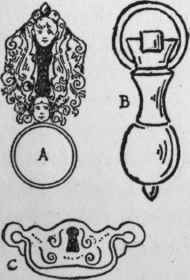
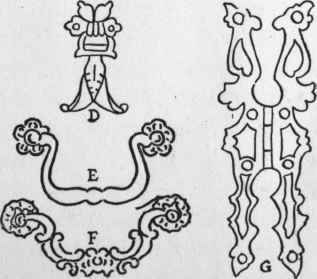
Fig. 8. Characteristic Metal Mounts of William and Mary Period.
Finish
Furniture of the William and Mary period was frequently finished with oil and wax as in the Stuart period. This was especially true of the plainer walnut furniture. Much of the marqueterie furniture was finished by an application of white gum shellac dissolved in alcohol. This dressing was applied with a brush in thin coats and without a previous application of oil to the surface of the wood. After the necessary number of varnish coats had been given, a final polish was effected by rubbing with the mixture of beeswax and turpentine. This finish unfortunately rendered the wood liable to attacks by worms, which were attracted by the shellac. Walnut furniture that has never been treated with this finish or with any sort of varnish is much freer from the ravages of worms than furniture that has been polished with anything else than wax.
Continue to:


My Books

