


South Tyrol. Part 13
Description
This section is from the book "South Tyrol - John L. Stoddard's Lectures", by John L. Stoddard. Also available from Amazon: John L. Stoddard's Lectures 13 Volume Set.
South Tyrol. Part 13
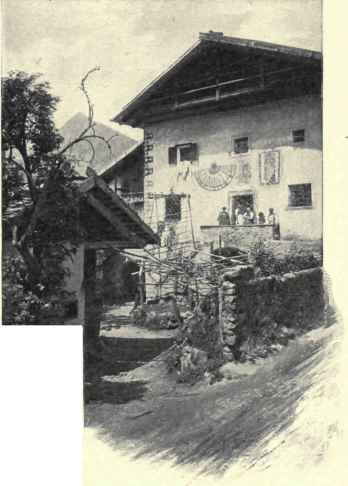
A peasant's house, near meran.
Narrow, of course, the religious vision of these people is, but none can doubt the genuineness of their faith; and few can view without compassion some weary toiler, laying aside a heavy basket from his stooping shoulders, and standing with bowed head and folded hands before the sacred sign of sacrifice or the pathetic emblem of maternal love. One feels that, just as this poor worshiper has temporarily freed his body from its heavy load, he is now seeking to relieve his heart from a still heavier burden, - his share of the inevitable sorrow of humanity. One of the most enjoyable excursions in the vicinity of Meran leads up the picturesque Passeier Thal toward the broad-shouldered mountain range, known as the Jaufen, the Mons Jovis of the Romans. The drive of about three hours along the northern bank of the Passer not only offers to the tourist a lengthened panorama of delightful scenery, but brings him finally to a precious object of historic interest, the birthplace and home of the famous patriot, Andreas Hofer. This hero is to the Tyrolese what Washington is to Americans, and Garibaldi to Italians. Nay, his untimely, tragic end has made him even more beloved, if possible, than they. For Hofer did not live to see the triumph of the cause for which he fought; but perished in the hour of his country's subjugation, having been betrayed by one of his own countrymen, and shot in cold blood by his conquerors. As we drive through the charming valley made illustrious by his birth and battles, the salient points in his career recur to us, and stamp themselves indelibly upon our memories.
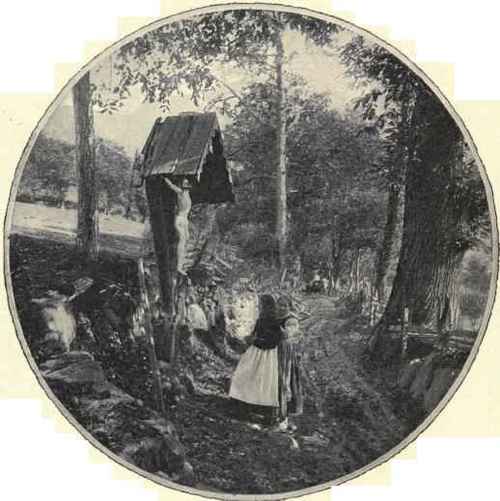
Devout Tyroleans.
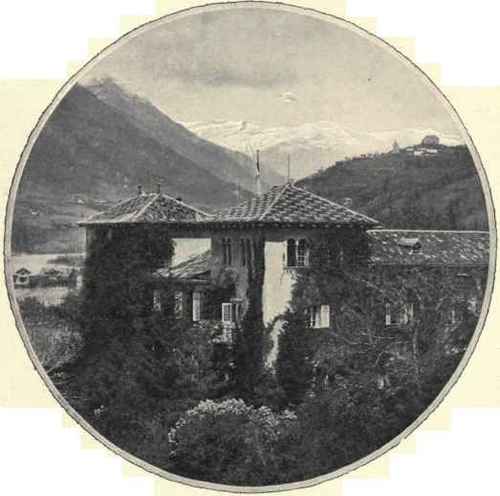
Schloss Rothenstein, The Passeier Thal, And The Jaufen.
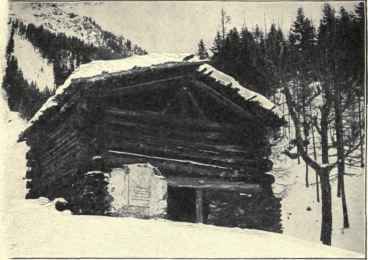
Mountain Hut Where Andreas Hofer Was Captured.
In 1806, when Bonaparte was tracing with his sword new kingdoms on the map of Europe, he stipulated, as one of the results of his great victory at Austerlitz, that the Tyrol, which for four hundred and fifty years had formed a part of Austria, should be transferred to the possession of his ally, the king of Bavaria. The Tyrolese resented this indignantly. For centuries they had been loyal to the house of Hapsburg; and to be suddenly handed over to the ally of Austria's arch-enemy, Napoleon, seemed to them unbearable. Moreover, their new and compatri- ots. The very name, Tyrol, endeared to them for many generations, was changed, and its use forbidden. Henceforth they were to be known as South Bavarians! Under such circumstances, it was natural that the Tyrolese should plot to rise against their oppressors simultaneously with Austria, whenever the latter felt herself strong enough to make the attempt.
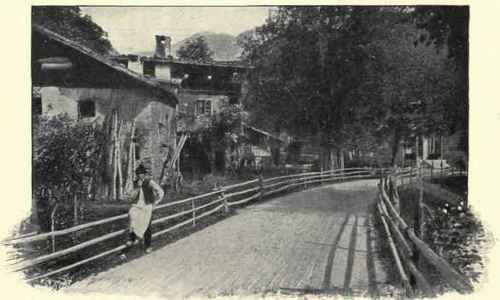
On The Way To Hofer's Home.
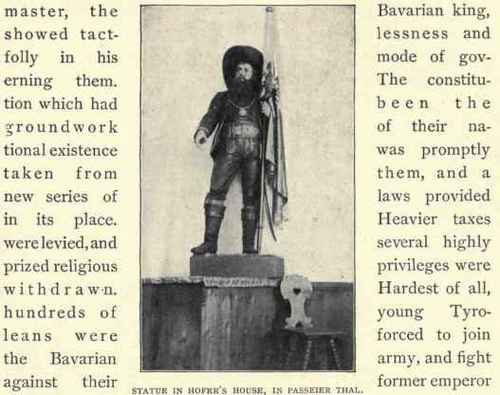
Accordingly, in 1809, when war broke out anew between Napoleon and Franz I., the Tyrolese peasants sprang at once to arms. Andreas Hofer was their leader. Nature had molded him for the part he was to play; for to a figure of unusual strength and size were added iron resolution, dauntless courage, a burning love for the Tyrōl, and a magnetic eloquence that fired his countrymen to deeds of valor. So carefully had he made his preparations, that when the appointed signal came from Austria, he had but to send out through the land the words: "The time has come!" and everywhere the people rose obedient to his call. The record of what followed forms a thrilling story, far too long to be narrated fully in these pages. Suffice it to say that Andreas Hofer and his heroes crossed the Jaufen from this valley, attacked the enemy in the mountain passes, defeated them completely, and pushing on to Innsbruck, took possession of the capital. In little more than a week ten thousand of their foes had been destroyed or routed, and their loved fatherland was freed from foreigners.
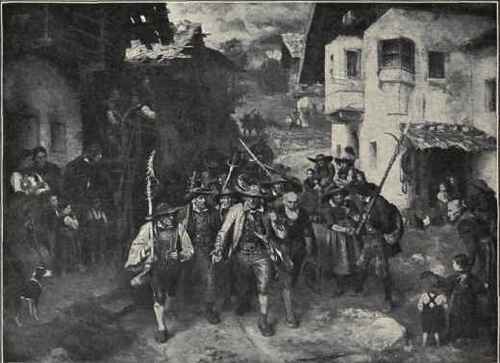
The Last Call To Arms.
But the end was not yet. Napoleon, enraged at this unlooked-for interruption of his plans, dispatched three armies, to enter the Tyr5l at different points, and put down the revolt. Against these forces Hofer fought with skill and bravery; winning, especially in the final battle of Innsbruck, a glorious triumph for the Tyrolese. Again his country was delivered, and not one French or Bavarian soldier remained within its borders. Moreover, a few months later, the enemy having returned to the charge, Hofer and eighteen thousand mountaineers defeated the veteran French marshal Lefebvre and twenty-five thousand allied troops.
Continue to:


My Books

