


Preface
Description
This section is from the book "Honey Getting", by Edward Lloyd Sechrist. Also available from Amazon: Honey Getting.
Preface
A study of the fundamentals of beekeeping as applied to the production of honey has not hitherto been available in compact and usable form. In the belief that a need exists for such a study, Honey Getting is offered to the beekeeping industry. Probably nothing in the book is altogether new. Any originality it may possess lies in the emphasis it places upon the Clear Brood; Nest Method of Apiary Management, and upon Colony Balance in Queen Introduction.
The book presents several systems of apiary management using the clear brood nest method and is based on well-known facts concerning the life-cycle, the behavior, and the habits of the honeybee. It correlates the behavior of bees with the production of a profitable crop of honey and discusses the principles and essential factors on which management for honey production is based.
Such a presentation has been made possible by a study of beekeeping literature; by my lifelong work as a beekeeper; and by the exceptional opportunities I have had for observing and studying the methods of practical honey getters.
It would not be possible to give a full list of those beekeepers who, either personally or through books and magazines, have helped to make this book possible; but I want to express particular appreciation of the value to me of my employment in the United States Bee Culture Laboratories in Washington, D. C. and in California. Without the association with the staffs of these laboratories, and without the opportunities thus given to see and study the methods of most of the best beekeepers of the United States, this book could not have been written.
Edward Lloyd Sechrist,
California.
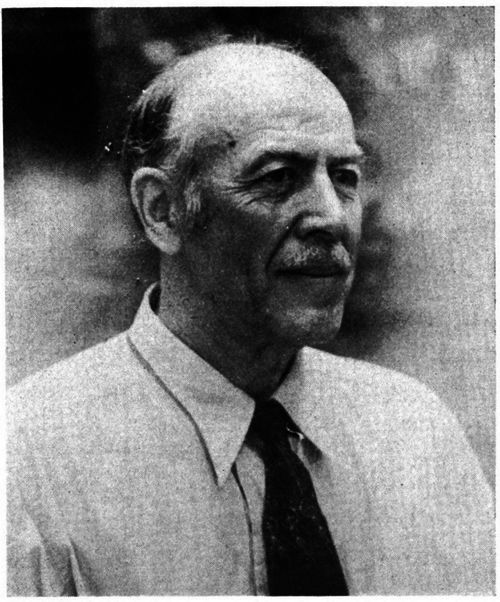
Edward Lloyd Sechrist
An Appreciation
Frequently we do things for others with sentiments as strong as they would be were the performance for ourselves. Perhaps that is the basis by which to determine the eternal quality of our relations. By this measure, whatever part I may have borne in the preparation of this book, has rested on an association with the author that has lasted a quarter of a century and which we certainly expect to continue many years longer.
Edward Lloyd Sechrist has brought to beekeeping all those qualities that make greatness in human accomplishment: a lifetime of experience, close observation, high position, unselfish devotion, and extraordinary analysis. This book sums it all up in a fundamental conception of scientific apiculture so new and refreshing as to be revolutionary. There has been before no written word about bees and honey production like it. Beginners who base their first knowledge on it steer a straight course; experts revise their ways with profit.
The title "Honey Getting" suggests the contents, a descriptive process associated with the prime objective of modern apiary management, the actual obtaining of a crop of honey.
Sechrist is no catch-as-catch-can rambler, but a commercial honey producer who has kept bees for profit under the four suns, California, Ohio, Maryland, Africa, Haiti, and Tahiti in the South Seas; long one of Uncle Sam's beekeeping aces in the Office of Bee Culture, Bureau of Entomology, United States Department of Agriculture; the first to study costs in relation to crops, locations and management.
We recommend "Honey Getting" to beginner and to experienced alike as a new light in their chosen field of agriculture.
G. H. Cale,
Editor American Bee Journal, Hamilton, Illinois, January 1, 1944.
Preface To The Second Edition
The first edition of Honey Getting, issued in 1944 and now exhausted, was copyrighted and published by the American Bee Journal. Because of higher costs at this time, however, a second edition could not be published in the same way, and the American Bee Journal has kindly released the copyright to the author.
On several pages of the book, such as page 14, where the subject of brood rearing as affected by temperature is considered, and on page 34, where wintering temperatures are discussed, and on other pages, there was nothing more to be said at the time Honey Getting was written, because temperature in the bee hive was the one factor over which we had no control, and, therefore, had to leave to the bees-or so we believed. Now, however, as shown in my second book, Scientific Beekeeping*, which is third in the Bee Master series, we have developed practices which make it possible for the beekeeper, wholly or in large measure, to control the temperature within. his hives, and thus to promote the welfare of his bees and their production of honey. *In fact, die beekeeper practically controls bee behavior, not only in wintering, but in all their activities, including that important one of swarm control.
However, it seemed best not to complicate Honey Getting by adding to the basic factors around which the book was built. Accordingly, the text has been reprinted without change, but I have added an appendix, in which I refer to certain pages in Honey Getting, and suggest how supplementary heat may be added to make honey production and queen rearing easier and more profitable. Phases of the use of heat and of air conditioning will be taken up in separate books uniform with this edition of Honey Getting.
A bibliography of books and journals on bees is also appended to this edition.
Edward Lloyd Sechrist, California, 1947.
Published by Earthmaster Publications, Roscoe, Calif.
Success
Forty years ago I saw a wall
In a palace garden in England.
It was a perfect wall, or so it seemed,
Mossy, with twining vines
And gay with flowers in its crannies.
The wall upheld a terrace
Where flowers grew and trees.
I remember it as a perfect wall.
Now I, myself, have built a wall
It is crude and far from perfect
Yet in its curves there is beauty And it upholds a terrace
Where are hives of bees among the trees.
It is a good wall. It is not perfect,
Yet it is a successful wall.
Success lies in remembering perfection.
Bom more than three-score years ago, on a farm in Ohio, I have tried to remember perfection and to leave the place I lived in a little better than I found it
-Edward Lloyd Sechrist
Continue to:


My Books

