


Jiu-Jitsu For Women
Description
This section is from "Every Woman's Encyclopaedia". Also available from Amazon: Every Woman's Encyclopaedia.
Jiu-Jitsu For Women
Author of " Wrestling " and " Jiu-'itsu^ Official Referee, Olympic Games, 1908
Jiu-jitsu an Ideal Form of Self-defence for Women - The Requisite Training Improves the Figure without Creating unseemly Muscle - So me Simple Exercises
Jiu-jitsu may be described as a refined style of wrestling with a very definite purpose in view. Jiu-jitsu, however, is not to be regarded only as a sport; it is a very real and effective system of self-defence, and with jiu-jitsu as an effective method of defensive work this article solely is concerned.
As a means to this end it may well be recommended to the gentler sex, inasmuch as its principle is not the employment of mere muscular strength for the defeating of an assailant, but the use of scientifically executed methods, which require but comparatively little force for their execution, and yet completely negative the opposer's physical advantages.
Why it is Suitable for Women
Jiu-jitsu is emphatically the defence of the weak. Some physical strength, of course, is required, but although her weight and strength may be no more than half that of an opponent, the woman knowing jiu-jitsu will be in an immeasurably superior position. So simple are the moves employed, so easy and natural comes their use to one who has given a little attention to the study of the science, that it is not too much to say the woman acquainted with it will prove herself, should the occasion arise, more than a match for a strong man ignorant of the art.
Before learning the combat tricks of jiu-jitsu, the pupil is strongly recommended to gain the physical fitness necessary for the employment of such tricks by the daily practice of such exercises as will give power, quickness of movement, and suppleness to her muscles. Let it be understood, however, that the practising of such exercises will not lead to such abnormal development of muscle as part 01 the body shall be well developed and in good working order. From this it follows that the exercises must be such as to affect the whole of the body and limbs, for it is obvious that it is but little use being strong and fit in one part and weak in another.
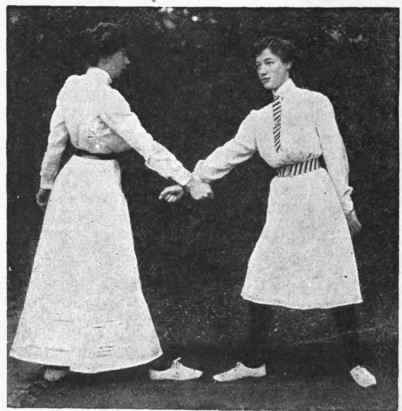
Fig. I. Clench the hands and cross on the inside of the wrists
Recreations may mean any loss of womanly grace. The exact contrary is the fact. The exercises that are to be described will do all that is necessary for the bringing of the muscles into a condition of fitness without interfering in the slightest with the rounded contour and soft outlines of figure which are no small part of womanly beauty. Jiu-jitsu requires that every

Exercises
It is necessary that, in practising some exercises, the help of a companion should be obtained. Both will benefit equally. There are many exercises, however, that may be practised alone.
Let the two students stand at each other's right side, facing each other and a little apart; the right hands are to be clenched, and crossed on the inside of the wrists, about eighteen inches from the body and just below the hip-line (Fig. 1). One then tries to push the other's wrist backward, swinging her as far round as the latter can go without losing her balance. The muscles of the arm engaged should be held as rigidly tense as possible. The assailant - for it should be arranged which is to get the better of the struggle - keeping up the pressure, walks round the other until a half-circle has been formed. The defender should not shift her feet; and against the pressure employed upon her arm, which must be stiff and tensed, she musi resist just sufficiently as not to defeat the attacker's purpose. The half-circle completed, assailant and defendant change places, attacker becoming defender.
The movement with the right arm completed, the same should be gone through with the left wrists crossed.
This exercise, as with all others, must not be kept up too long, two bouts with each arm being, at first, quite sufficient; and between each exercise either student must take half a dozen full, deep breaths - of course, through the nose.
Another exercise is denominated " The Struggle." The parties stand facing each other, eighteen inches apart and the feet about sixteen inches distant. Each then leans forward until the chests touch. The arms are extended sideways, one pointing upwards, the other down, and opposing hands are locked by the intertwining of the fingers. Then, without causing undue fatigue, each presses against the other, striving to force her opponent back against the wall. It will be well if, during the
Recreations struggle, each pair of arms is raised and lowered alternately (Fig. 2).
This exercise strengthens almost every muscle of the body, as well as the heart and lungs.
Another first - class exercise is for the two students to stand facing each other with arms extended and opposite fingers intertwined. Each should bend well forward, and the feet should be wide apart. Then one tries to pull the other forward, the utmost resistance being made to this pull (Fig. 3). One minute of such struggling will be quite sufficient, the attacker taking up the position of defender after a brief rest.
One of the most valuable of all exercises - but it must be employed with caution - is performed thus. The assailant clasps hands across the small of the defender's back, and steps forward so that the back of her right thigh is against the back of the other's right thigh. The defender is then pressed backward as far as possible, and the assailant, stepping forward, lowers the other gradually until her head approaches the floor. She then steps backward, lifting gradually until both are in their original position. This exercise strengthens the whole body from neck to toes. One such feat at a time will be sufficient at first, and the exercise should not be employed more than three times in a week. For those whose strength requires developing, the exercise indicated in Fig. 4 may be substituted for that just described. It is quite safe and simple. First one tries by pressure upon the other's clasped hands to force her to bend backwards from the waist, resistance being made; the original position regained, the attacker then becomes the defender.
For arm and shoulder work use a pole; a broomstick will do. The parties should face each other. Each holds the pole at arm's length above the head, one having her right hand outside the other's left hand and her left hand inside the other's right. The pole should be grasped as near the ends as is convenient. An overhand hold is to be taken (Fig. 5). By-pressing on the pole each student tries to force her opponent over sideways. Which is to be attacker and which defender should be settled beforehand, and the defender must resist as strongly as possible. When the pole has been bent over so as to be almost vertical with the floor, defender and attacker change places, the former forcing the pole upright again and over to the other side. The arm muscles from shoulders to wrist are well exercised thus: The two contestants face each other, right arms extended and fingers intertwined. Then one, stepping a little to the side, brings the other's hand up over her head and twists her over as far as possible sideways. The movement is to be resisted, and as the defender comes back to erect position the assailant resists the return. The left arm must be exercised thus as well as the right.
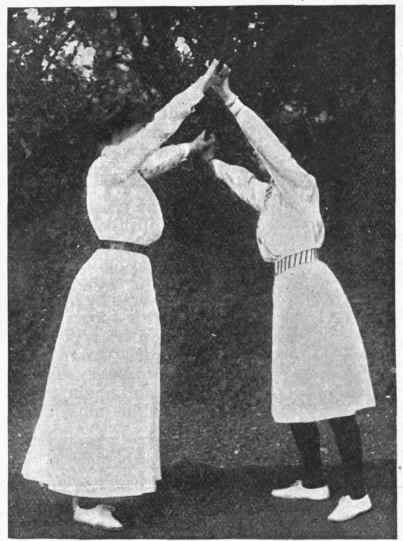
Fig. 5. Use a pole for arm and shoulder work
For the lower limbs, perhaps the best of all exercises is for the two students to sit on the floor facing each other, supported by the hands. The legs are extended, and one, by putting the flat of her own right foot against the inside of the other's right ankle, tries to push her opponent's !eg round to the right, the latter resisting strongly. Then perform the same movement, using the left foot (Fig. 6).
When alone, practise body bending from the waist, with resistance, the hips remaining stationary, and arm movements, Tight working against left, the wrists being crossed, and all muscles tensed.

Fig. 6. The best of all exercises for the lower limbs
Continue to:


My Books

