


The Dutch Home. Part 5
Description
This section is from the book "Dutch And Flemish Furniture", by Esther Singleton. Also available from Amazon: Dutch and Flemish Furniture.
The Dutch Home. Part 5
Plate XXVII, one of Jan Steen's famous interiors, from the Rijks Museum, has several interesting features: the architectural door and the high chimney-piece with stove being the most curious. The bed is dome-shaped and upholstered. A good type of chair stands in the foreground, and a table, on which is a cloth with deep fringe. A beautifully painted birdcage hangs from the ceiling.
Plate XXXVI, known as the Oyster Feast, by Jan Steen, in The Hague, shows an interesting room, which serves as hall, dining-room and kitchen. A large curtain is looped over the balustrade, which runs midway across the hall. This gallery leads from one of the upper sleeping apartments to another. One large window, with four panes, supplies the light. To the left of it is a bed, and next to it a mantelpiece with marble columns. Near this a parrot is sitting in a ring. Next comes the fireplace, where the oysters are being cooked. Waffleirons lean up against the handsome chair in the foreground. Beneath the window a jovial man sits in a low-backed chair, near the group playing tric-trac on the long table, over which hangs a landscape in a handsome frame. Another table with a rich carpet is placed on the extreme right, at which two persons are enjoying their oysters. A clock hangs on the wall, and also a lute and birdcages. A large birdcage, similar to the one in Plate XXVII, hangs before the window.
A dog, a kitten and playful children add a merry touch to the scene.
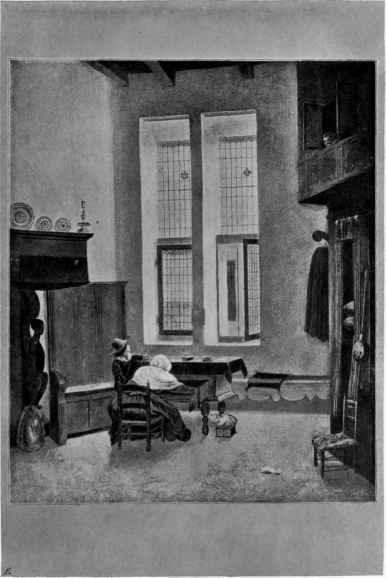
PLATE XXXVIII. - Interior, by J. Koedyck, Brussels.
Plate XXXIX represents The Music Lesson, by Terburg, in the National Gallery, London. Here we have an ordinary sitting or living-room of a well-to-do household. The bed in the background resembles those in Plate XXVI and Plate XXXVII. On the wall hangs a picture in a rich frame. The fair musician sits on a low-backed chair with her foot on a foot-warmer. The table is covered with a very handsome carpet. Upon it stands a handsome candlestick.
Plate XLI, The Breakfast, by G. Metsu (1630-67) (Dresden Gallery), shows us the interior of an inn, with comparatively little furniture. The chair on which the woman is sitting is a good example of the period. The table, on which a "buire" stands, is of the most primitive kind. The birdcage hanging from the ceiling is similar to the one represented in Plate XXVII.
Plate XLII, by Jan Steen, representing a jovial company, is chiefly interesting for our purpose on account of the chair in which the host sits, the tablecloth and the larder at the back of the room, on which stand a mortar and pestle, a vase with flowers, a pot and two plates. In the right-hand corner stands a bed, and from this hangs the legend on a piece of paper: "As the old ones sing, so will the young ones pipe."
Plate XL, by J. B. Weerrix (1621-60), shows a simple interior from the Brussels Museum - a lady at her toilet. The chair on which she sits is very interesting, with its low back, carved top rail and spirally turned stretchers. The "table carpet" is a superb Oriental rug, and the mirror with its massive frame is a magnificent example of carving and gilding. The candlestick is also massive. The windows, flush with the walls, are set with small panes, and are furnished with a curtain.
A very interesting interior of the seventeenth century occurs in a picture by G. Metsu in The Hague Gallery. In a room with a very fine chimney-piece supported by marble pillars, and above which is a fine picture and a beautiful chandelier, a lady is standing improvising upon a lute. Another lady seated at a table is taking down the music, while a man looks over her shoulder. The lady is seated upon a low-back leather chair studded with heavy nails. Her foot rests upon a foot-warmer. The table has heavy ball-feet connected with stretchers, and the heavy cloth or carpet is pushed back carelessly. A tray or "standish," holding the ink bottles, etc., is carelessly placed upon the folds of the cover. The lady holds a quill pen in her hand.
No subject was more congenial to the Dutch painters than scenes of home life and familiar interiors. Not only were Jan Steen, Teniers, Dou, Metsu and others of like rank attracted to the home, but an army of mediocre masters devoted their talents to this subject. If the works of the "Little Masters" found their way into royal and princely collections, the works of more obscure painters decorated the homes of the citizens, country people and colonists. The stranger who visited the Dutch cities was amazed at the many interiors and landscapes that were exhibited in the booths, at the fairs, and under the verandahs in front of the houses of the masters. These were often bought for a small sum by travellers, who sold them in their own country at considerable profit.
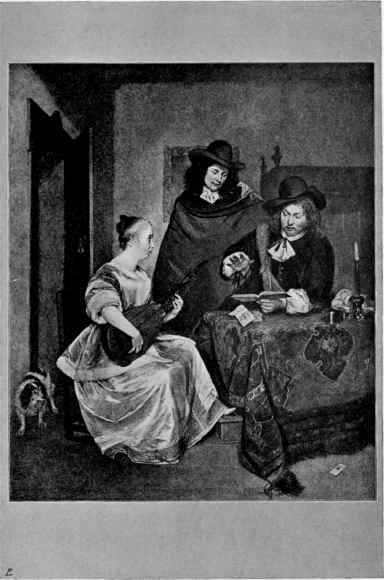
PLATE XXXIX. - The Music Lesson, by Terborch. NATIONAL GALLERY, LONDON.
When a bride went to her new home, she often found that it had been furnished from top to bottom; but this was not always the case. As a rule, wealthy burghers did not do this. The young wife, accompanied by one or two of her near relatives and followed by a couple of servants and a truckman, went about from shop to shop to select what she needed. This was called "ten huisraet vaeren" (going furnishing), and De Vrij devotes a chapter to this pleasant occupation under the title of "De vrou vaert ten huysraet" (the wife goes out to furnish). In his time the old simplicity had vanished in favour of a general luxury hardly equalled to-day. De Vrij, therefore, allows his wealthy lady to purchase "down beds, fine plush and wadded coverlids, costly hangings, large Venetian mirrors, Indian crackle porcelain, lounging chairs, Turkish carpets, Amsterdam gold leather, costly paintings, a silver service, a sacredaan cupboard, an ebony table, a curio cabinet, a napkin kas, a large quantity of napkins, tablecloths and other fine household linen, and a thousand other articles."
Continue to:


My Books

