


Louis XV. Style. Continued
Description
This section is from the book "Furniture", by Esther Singleton. Also available from Amazon: Furniture.
Louis XV. Style. Continued
M. de Champeaux has discovered that there were two ebenistes of the name of OEben - Jean Francois and Simon - that both were probably ebenistes du roi; that the OEbens were from Flanders or Germany; and, like Riese-ner, belonged to a little colony of German artisans who were attracted by the Austrian Queen and who settled in the Faubourg Saint-Antoine.
OEben was a pupil of Boulle and devoted himself chiefly to marquetry-work. His assistants, Caffieri and Duplessis, executed the metal ornaments. OEben's work was greatly liked by Madame de Pompadour. He died about 1756, and his widow married his foreman Jean Henri Riesener. OEben was responsible for the magnificent bureau du roi, which was finished by Riesener (see page 145).
Among the other designers and cabinet-makers, we may cite Nicholas Pineau, whose ornate pieces were often made by J. Dubois, Nicholas Petit, L. Boudin, Pierre Pionnier, Etienne Levasseur, the Migeons (father and son) and Sul-pice, Loriot and Arnoult, famous for the mechanical devices they added to their tables, chairs, etc.
Nor must we forget the splendid lacquer-work of the Martin family. The Martins perfected a varnish so beautiful and so much like Oriental work that even Voltaire remarked:
"Et ces cabinets ou Martin A surpasse l'art de la Chine"
1 Andre Saglio. 6l
One of the Martins received more than 10,000 livres for his work in the Cabinet de la Dauphine; and some of the magnificent boulle-work which Louis XIV. had had executed for his son was destroyed to make room for decorations in the Martin style on a green background.
In 1756 Martin worked in Versailles and was ordered by the King to paint Madame Victoire's room. The style was so much to the taste of Madame de Pompadour that she employed him at the Chateau de Bellevue under a salary and the long list of lacquered works that he produced there included commodes, bureaux, encoignures and tables.
Soon furniture painted in the "Vernis Martin" style in which the whole piece was decorated instead of being merely ornamented with panels, became the rage.
The Martin family was large. Robert (1706-1765) had four sons, two of whom, Jean Alexandre and Antoine Nicholas, followed their father's profession. Jean Alexandre Martin was one of the artists who decorated the Palace of Sans Souci, thus carrying his style into Prussia.
Carriages, sedan-chairs and sleighs were also decorated by the Martins; and, like every other piece by the Martins, bring enormous prices to-day.
In the reign of Louis XV. there was a great fancy for silver ornamentation, as well as gilded bronze; beautiful silver girandoles and lustres were made; rock-crystal was also used; and the passion for the porcelain of Saxony, Sevres and Vincennes, as well as Oriental ware, did not abate in the least. Plaques were now often introduced into furniture. The tops of tables, commodes and bureaux were fitted with slabs of rare and beautifully colored marbles, as in the preceding reign; the chairs and sofas were covered in exquisite Gobelins, Beauvais and Aubusson tapestry; handsome mirrors adorned the panelled walls above the console-tables; the window-curtains were cut and hung in spirited and charming folds, and gathered up into choux or knots; and colors were lighter and gayer than in the days of Louis XIV. Rich and heavy reds, greens and blues gave place to pale yellow, rose, delicate green and light blue.
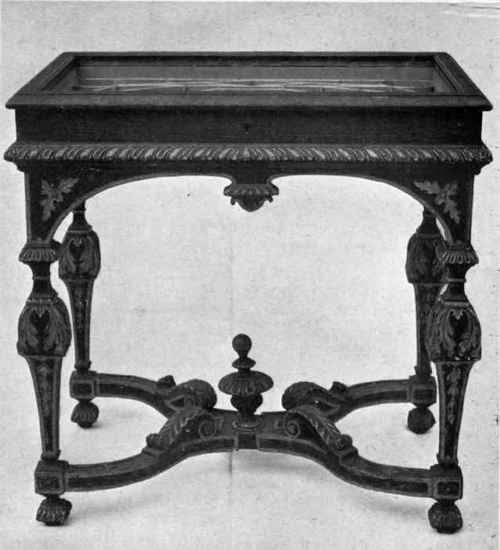
Plate XXVIII - Show-Table. William and Mary Metropolitan Museum
On Plate XXXI. typical examples of this period are shown. The beautiful encoignure of black and gold lacquer, or rather gold figures on a black background, is signed J. Dubois. The chutes, leaf-shoes and frames of the panels of floral and rocaille designs are bronze. A Louis XVI. clock stands on the marble top.
The lady's table on the same plate is a dainty work of colored marquetry and ivory, forming pretty pictures that decorate all four sides. One of the three drawers is fitted up as a desk. A shelf between the legs is another convenience. The chutes and feet are of bronze and the open-work rails are copper.
The chair shown on Plate XXXII. reveals the Louis XV. Style at its height. The curves are graceful and the frame is not excessively decorated. This piece, which is in the Metropolitan Museum, is covered with tapestry.
Continue to:


My Books

