


Chapter VIII. George Hepplewhite. 1786
Description
This section is from the book "The Practical Book Of Period Furniture", by Harold Donaldson Eberlein And Abbot McClure. Also available from Amazon: The Practical Book Of Period Furniture.
Chapter VIII. George Hepplewhite. 1786
WE shall not speak of a Hepplewhite period of furniture, but of a Hepplewhite style. There was no Hepplewhite period, for the date of Hepplewhite's prosperity and influence was synchronous with the prominence and popularity of several other important cabinet-makers or designers. There was, however, a well-defined Hepplewhite style which enjoyed great favour and vogue and exerted a powerful and lasting effect upon English and American mobiliary development.
The eighteenth century is unique with regard to the making and makers of furniture. Before that time the maker's name was not associated with the product of his design or labour; in fact, his name was not likely to be known beyond the limited circle in which he lived and moved and had his being. Likewise, since the close of the eighteenth century, the name of this or that cabinet-maker or designer has been of no particular significance, with one or two exceptions, as signalising any special mobiliary style. During that charmed period, however, the very heyday of cabinet-making, from the time that Thomas Chippendale impressed his personality upon the British public, and supplied his patrons with his own adaptations and renderings of divers antecedent and contemporary styles, the names of four or five cabinet-makers stand forth preeminently as masters in their line. The designs of each are characterised by certain distinctive traits that in many cases serve to fix unmistakably their authorship or, at any rate, the authorship commonly attributed to them.
In this small company of "joyners" the name of Hepplewhite occupies a place of distinguished honour. His designs were widely copied by contemporary cabinet-makers and he, in turn, doubtless made large use of types that were current at the period and which he had no hand in originating. Indeed, the indebtedness of Hepplewhite and several of his contemporaries to ideas supplied in the first place by the Brothers Adam, is very considerable. It is impossible to say beyond peradventure that such and such pieces were made in the Hepplewhite shop in Redcross Street. Even if one had grounds to make such statements, they would have a merely antiquarian interest; for the purpose of identifying styles and assigning them to a popularly accepted name, it is quite immaterial whether Hepplewhite himself conceived the furniture designs generally accredited to him, or merely appropriated the work of others, adding some individual touches of his own, or perhaps not, as the case might be.
Key Plate X. Hepplewhite Style, C. 1765-1795
Materials Usually Mahogany and Satinwood See Text Pages 201-224
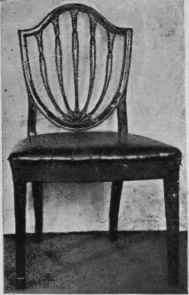
Fig. 1. Shield Back, Converging Bars, Tapered Legs, Spade Feet, no Stretchers.
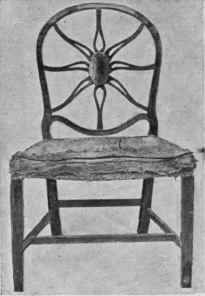
Fig. 2. Hoop Back, Wheel Instead of Bars or Splat, Drop Seat, Grooved Legs, Stretchers.
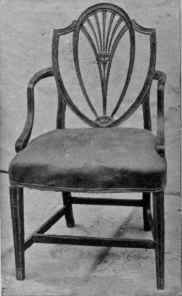
Fig. 3. Interlacing Heart Back, Single-Curve Arm Supports, Tapered, Grooved Legs, Stretchers.
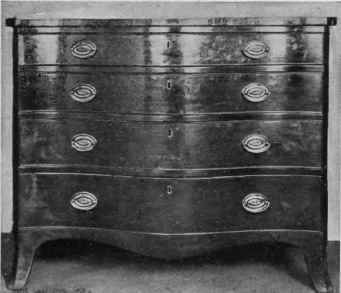
Fig. 4. Serpentine Front, French Feet, Shaped Apron, Cock-beaded Drawers.
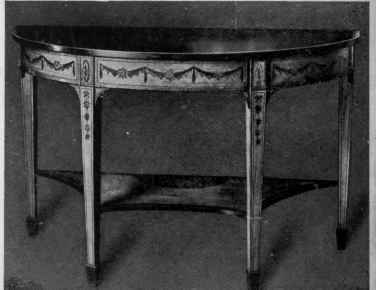
Fig. 5. Painted Satinwood, Half-Round Pier or Console Table, Tapered Legs, Spade Feet.
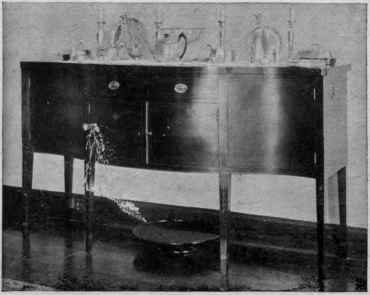
Fig. 6. Serpentine-Front Sideboard, Tapered Legs, Spade Feet.
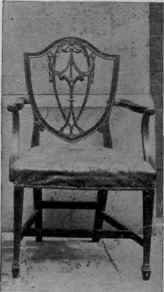
Fig. 7. Shield Back, Fretted Splat, Shaped Arms, Spade Feet.
When we speak of Hepplewhite furniture, therefore, we really mean furniture of the type to which, in the course of years, the patronymic of that designer has become attached; his name represents for us not so much a personality as a fashion.
Of the personal history of George Hepplewhite, of Cripplegate, we know extremely little. By some he is believed to have been apprenticed to the cabinetmaker Gillow, of Lancaster, though of this conclusive evidence seems lacking, and when we have recorded that he conducted his business in the parish of St. Giles, Cripplegate, and that he died in 1786, we have said all that may be said with any degree of certainty.
After his death, his business was carried on by his widow, Dame Alice Hepplewhite, under the title of "A. Hepplewhite & Co.," and it was under her management of the concern that "The Cabinet Maker and Upholsterer's Guide" was published, first in 1788 and then again in 1789 and 1794, giving furniture designs put forth by the establishment and presumably drafted by Hepplewhite himself or under his direction. In the editions of 1788 and 1793 of the "Cabinet-makers' London Book of Prices and Designs of Cabinet Work" we also find ten designs signed by Hepplewhite.
The Hepplewhite style represents a combination of influences, all of which are clearly traceable in one form or another. The Brothers Adam, as we have seen by their designs, infused into the British public a taste for clasic forms and classic ornament. They went directly to classic sources for their inspiration, as we have also seen, and did not acquire it filtered through a French medium. This pure classic spirit exerted a marked influence on the work of Hepplewhite, who, by the bye, executed many commissions for the Adams and more than once had to modify their designs to render them practical and susceptible of workmanlike execution in wood. The Adam strain of influence is observable in matters of ornamental detail rather than in form.
Then, again, another marked manifestation of classic influence came through the French channel of the Louis Seize style, which affected both form and detail. It was the Louis Seize style that influenced both Hepplewhite and. Sheraton, but the latter used it far more as a source of inspiration than did the subject of this chapter. Indeed, it would not be far wrong to say that Hepplewhite occupied a middle ground in design between the Brothers Adam and Sheraton.
Occasionally the inspiration and result - and we are tempted to believe the model, also - were identical in the case of Hepplewhite and Sheraton. One of the few exceptions to the rule given in the Introduction to this book, that pieces of furniture are readily to be ascribed to their respective styles, is here to be noted: in a few designs, particularly of chairs and settees, and a few only, Sheraton copied Hepplewhite or Hepplewhite copied Sheraton, or both copied the Louis Seize style so effectively, that for once it is, in these particular cases, almost impossible to differentiate. In the matter of sideboards both followed the lead of Shearer and designed pieces in practically the same style, but Sheraton carried the sideboard to a fuller development than did Hepplewhite.
One essential item of contrast, however, will always serve to differentiate clearly the individual styles of Hepplewhite and Sheraton, no matter how many points of resemblance they may display in other respects - Sheraton admired and emphasised the straight line in every possible place, while Hepplewhite, on the contrary, was a faithful exponent of the curvilinear tendency that became so popular in the late seventeenth and early eighteenth centuries. In his chairs, sofas, and sideboards, curving lines were everywhere noticeable, and though straight lines were by no means absent, particularly in some of the cabinet-work, the vertical and horizontal angularity that distinguished so many of Sheraton's designs were not a preponderating influence. Sheraton's work also exhibits a greater slen-derness and narrowness throughout. Some of the Hepplewhite work, particularly his chair-backs, were of great refinement and grace but, notwithstanding some indebtedness to Continental models, there always remains that fine English characteristic of sturdiness which alone among English furniture designers Sheraton abandoned for French refinement and delicacy.
Continue to:


My Books

