


George Hepplewhite. 1786. Continued
Description
This section is from the book "The Practical Book Of Period Furniture", by Harold Donaldson Eberlein And Abbot McClure. Also available from Amazon: The Practical Book Of Period Furniture.
George Hepplewhite. 1786. Continued

PLATE XXV. HEPPLEWHITE PAINTED SATINWOOD WRITING TABLE.
By Courtesy of Messrs. Hale and Kilburn, Philadelphia.
During the period of Hepplewhite's greatest activity, the architectural influence of the Brothers Adam was paramount. The classic style, as they interpreted it, attained the widest popularity, and the prevailing interior decorations consisted largely of urns, reeding, wreaths of flowers, festoons of drapery or husks caught up by rams' heads, fan ovals, swags and drops of bell flowers and knots of ribbon. The Adelphi supplied inspiration to other architects who copied their style with varying success. It was natural, under the circumstances, that there should be a demand for furniture for these houses corresponding with the general mode of architectural decoration, and Hepplewhite and his contemporaries, following closely the lead of the Brothers Adam, but also adapting and originating a great deal of design upon their own initiative, supplied that ever-increasing demand. Along with this pronounced classic tendency in much of Hepplewhite's work, one can detect, at the same time, a strong undercurrent both of French tradition and design, particularly noticeable in his adaptations of Louis Seize models, already alluded to.
His great and lasting popularity and his influence on the furniture designs of our own day are probably attributable to the fact that, in addition to the grace and lightness of his creations, he always manifested a thoroughly practical and English intention in whatever he made, although so many of the additional embellishments to his structural forms were borrowed directly from Louis Seize originals.
A great quantity of chairs, settees, and much of the general Hepplewhite work were wrought in mahogany, for its sterling qualities were too well known for it ever to be displaced from popular favour, but the Hepplewhite style has always been properly regarded as the real pioneer exponent and populariser of the values of other and lighter ornamental woods for cabinet-work. The Brothers Adam, it is true, did employ these woods in the furniture they designed, but the Hepplewhite style made such free and constant use of them that the, credit for their prevalence must be assigned to that quarter.
The Hepplewhite mode emphatically and consistently demonstrated the value of inlay and colour for purposes of adornment in distinction from carving which had reigned supreme all during the Chippendale period (Key XI, 5, and XII, 2). Satinwood, tulip, amboyna, sycamore, rosewood, and many more besides were extensively used, sometimes in combination with mahogany, and sometimes not, but almost universally with charming effect. The decorative warmth and variety of colour thus achieved made an addition of no mean importance to the varied scope of English furniture possibilities.
Key Plate XI. Hepplewhite Style - Continued
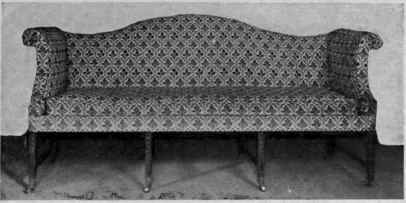
Fig. 1. Upholstered Sofa, Shaped Top and Rolled-over Arms, Tapered Legs.
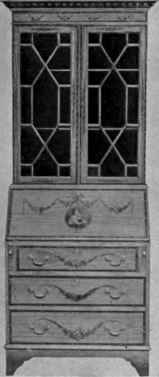
Fig. 2. Painted Satinwood Bureau Bookcase, Rectilinear Tracery.
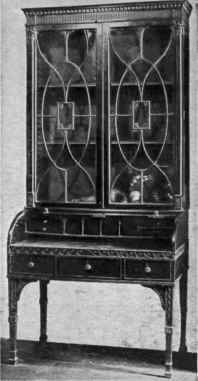
Fig. 3. Secretary Cabinet, Carved Mahogany, Flowing Tracery, Adam Influence.
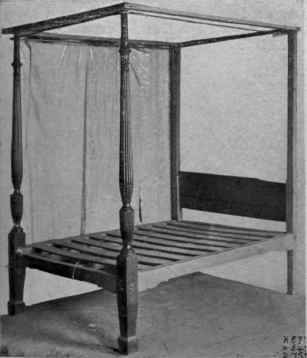
Fig. 4. Legs Square Tapered, Block Feet, Posts Reeded Vase Shape.
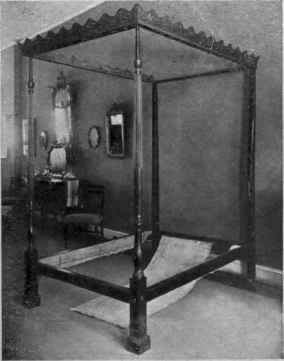
Fig. 5. Painted and Shaped Tester, Reeded Tapering Posts on Vase Base, Square Legs, Block Feet.
The whole Hepplewhite influence was for grace, lightness, and beauty of contour, and in most instances artistic results were reached. Indeed, the services which both he and Sheraton rendered can scarcely be overestimated for, with the furniture that both of them designed, there was developed a sense of grace, buoyancy and freedom that had never before existed in English interiors; and this same spirit, reflected on our side of the Atlantic, has given us some of our choicest heirlooms.
Nevertheless, however much we may admire Hepplewhite and his work, it must in fairness be admitted that his achievements varied greatly in the degree of merit they possessed. Some of his performances seem almost inspired and then again they sink suddenly to the verge of banality. This unevenness of his genius has been said to be partly due to a lack of the innate sense of fitness that Chippendale enjoyed and partly to a lack of the knowledge of design that Sheraton customarily displayed. Whatever may be the ultimate cause for his inequalities and occasional lapses, it is a satisfaction to realise that the majority of his designs, and the bulk of the work he either executed or inspired can take rank very far above the level of the commonplace.
One reason why Hepplewhite exercised such a powerful and widespread influence on the development of English furniture was that he took a large-minded view of things, was less pedantic in his attitude than most of his predecessors and contemporaries, was less harsh in his criticisms of them and their work, and was willing to publish his designs freely without any desire "to reserve any benefit accruing from them to himself." The working cabinet-makers, therefore, "throughout the Kingdom copied the designs in every way, sometimes succeeding in imparting to their work as much refinement and dignity as was expressed in the original, but in many other cases falling far short of the conception."
His book containing three hundred furniture designs was unquestionably a most valuable addition to the literature of cabinet-making, and although a critical examination of its contents suggests, perhaps, that he was inferior to Chippendale in a sense of proportion, facility of adaptation and inventive fertility, and also that he was not so skilful as Sheraton in the massing of his ornament, we cannot help feeling, at the same time, that he was more fecund in mobiliary expression and more flexible and free in his conceptions than the Brothers Adam, notwithstanding their inspiring influence, by which he, along with others, profited so greatly.
Continue to:


My Books

