


Jacobean Period. 1603-1688. Part 10
Description
This section is from the book "The Practical Book Of Period Furniture", by Harold Donaldson Eberlein And Abbot McClure. Also available from Amazon: The Practical Book Of Period Furniture.
Jacobean Period. 1603-1688. Part 10
Human Figures, masques, fruit and grotesque animals, though used in redundant and heterogeneous profusion in Elizabethan work, became less prevalent in Jacobean furniture carving and the human figure in contemporary costume ceased to be used as a decorative device after the time of Charles I:
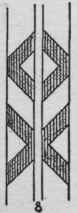
Lozenge. The lozenge pattern began to appear conspicuously about 1625 and continued in favour during Cromwellian and even later times. In heraldry and in symbolic decoration the lozenge has always been regarded as appertaining especially to women (Fig. 9):
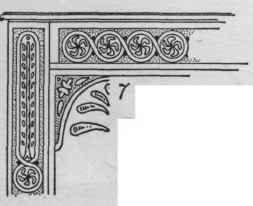
Laurelling. The laurel leaf was a common motif for carving on rails, friezes and posts in cabinet work (Fig. 14; 7; corner post).
Besides the preceding types, especially named as being of usual occurrence in the carving of the period, there were others frequently met with, such as the palmated chain pattern (Fig. 13; 5), the pomegranate, the sunflower, in Welsh carving the dragon and in both English and Welsh work sundry other devices too numerous to be rehearsed, but all partaking of the same general character and treatment as those aforementioned, so that sufficient has been said for purposes of identification.
In dealing with applied ornament the favourite forms to be noticed are:
Pendants, which usually went in pairs (Figs. 8, 9 and 10; posts and uprights) and were generally used to embellish posts or stiles in cabinet work:

1



6

9

12
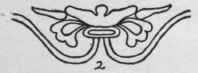
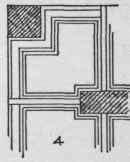
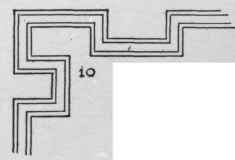
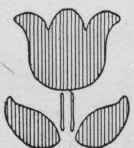
Fig. 14. Additional Characteristic Forms of Jacobean Decoration. 1. Moulded Grapevine Carving. 2. Floral Ornament. 3. Cabochon and Cartouche Ornament. 4. Panelling of Applied Moulding. 5. Incised Conventional Tulip. 6. Double Interlacing Lunette Pattern. 7. Guilloche Ornament in Frieze; levelling on corner stile. 8. Common Zig-zag Inlay Border Pattern. 9, 10, and 11. Typical Applied Panel Forms. 12. Ordinary Forms of Tulip.
Split Baluster, quite similar in character, except that the large pear-shaped part is bottom-most:
Maces ok Cannon, used for the same purpose as the above:
Notching, a form (Fig. 15 and Glossary) that came in towards the close of the Stuart regime:
Oval Bosses, Lozenges and Pears, which were most frequently employed to adorn the friezes of cabinets (Figs. 1 and 15, and Glossary) and cupboards and usually in combination with strapwork. This form of decoration was known as "jewelling." The diamond or lozenge not much used till Cromwellian period. Other applied forms also were known and the writers have seen one little chest covered with an aggregation of applied curlicues that looked like bacilli under a microscope:

A

B
Fig. 15. A, Notching; B, Pear Drop.
Geometrical Designs. In panelled decoration, which, like the applied ornament, was mainly attached by the aid of the glue pot, the forms were wholly of geometrical design, and contorted into innumerable shapes (Fig. 14; 4, 9, 10 and 11, and Figs. 6 and 1) so that the cabinet makers of the period would seem to have sat up nights devising what new and unheard-of effects they might achieve. If not always beautiful, their results were at least ingenious. Inside these panels, formed by mitred and glued-on moulding, were often found other raised and bevelled panels of divers shapes:
Balusters in turned work were usually of an approximately pear shape (Fig. 12, A):
Spindles turned were slightly knobbed or nulled:
Stretchers turned were nulled or heavily knobbed:
Balls or Bulbs turned mid-high the legs of tables in the "melon bulb" style (Key I, 6, and Fig. 12, B):
Spiral turning (Key I, 5, and Fig. 7) became common after 1665.
In inlay or marqueterie the greatest diversity of patterns prevailed, governed mainly by the conceits of the individual craftsman, who indulged ad libitum in all manner of chequerings, birds, beasts, fruits, flowers and leaves (Fig. 14; 8, and Fig. 13; 3), some approximately natural, others purely conventional, besides cross-banding, feather-edging and herring-boning, examples of which are met with in many forms.
In late Stuart days a type of marqueterie ornament was coming into favour which flourished still more in the reign of William and Mary. Oblong inlaid panels (Key I, 5) often with arc-shaped ends, were filled with natural flower sprays or sometimes acanthus. The "spiky" Dutch acanthus treatment somewhat displaced the earlier flowing English treatment.
In upholstery the designs were in brilliant particoloured cross-stitch embroidery (Key II, 8) with tapestry-like subjects or else brilliant brocades and cut-pile velvets displayed flowers, foliage, fruit and birds.
Continue to:


My Books

