


Jacobean Period. 1603-1688. Part 9
Description
This section is from the book "The Practical Book Of Period Furniture", by Harold Donaldson Eberlein And Abbot McClure. Also available from Amazon: The Practical Book Of Period Furniture.
Jacobean Period. 1603-1688. Part 9
Types Of Decorative Design
Great importance attaches to the types of decorative design as well as to the sundry sorts of decorative processes employed. It is by carefully heeding just such small details that we shall learn most about furniture and become able to establish relationships and approximate dates. In carving whether "modelled,"' "flat" or "scratch" the most favourite and frequently recurring types of design were as follows:
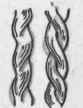
Guilloche, which (Fig. 13; 3 and 7; Fig. 14, 7) is an ornamental pattern of enrichment in the form of two or more interlacing bands or ribbons so braided or intertwined as to repeat the same figure in a continue J series of circles. The circles, furthermore frequently enclose rosettes, paterae, or other decorative details:
Diaperwork, which is a decorative pattern (see glossary), especially of a geometrical character consisting of interlaced circles, etc., in a simple figure often repeated. It is generally used in friezes or as a decoration for flat surfaces:
Strapwork, an ornament of an architectural origin (Fig. 13; 8 and Fig. 1, frieze) consisting of narrow fillets or bands folded and crossed or interlaced in sundry patterns and repeats:
Cabochon and Cartouche. Similar in a measure to strapwork is cabochon and cartouche work (Fig. 14; 3) in which there is an alternating succession of cartouches and decorated or bossed roundels:
Lunettes or half-circle patterns (Fig. 14; 6 and Fig. 11) more or less elaborate and floriated and often repeated in a long line were much favoured:
Tulip. The tulip either (Fig. 14; 12 and 5) natural or conventionalised was a frequent motif of Jacobean ornament:
Heart. A conventionalised heart-shaped device (Fig. 10) lent itself to agreeable treatment in repeats as a frieze and is often met with in pieces of the forepart of the seventeenth century:
Rose. Quite apart from political considerations which made it a popular decorative detail in Tudor times, the rose (Fig. 11 and Fig. 13, 2 and 7) proved itself so valuable as a species of ornament that it always remained in high favour and is repeatedly found under varying modified but always recognisable forms:
1

2.

3

4

5

6

7

9
11

12
13
14

15

16
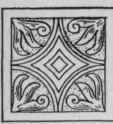
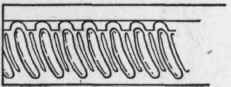
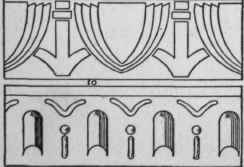
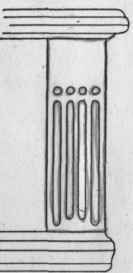
Fig. 13. Characteristic Forms of Jacobean Ornamentation. 1. Quartered Tulip. 2. Rose and Conventional S. Scrolls. 3. Ordinary Patterns of Jacobean (early) Inlay and Marqueterie. 4. Conventional Foliage Border. 5. Palmated Strapwork. 6. Channelling. 7. Carved Guilloche Panel and Gouged Pilasters. 8. Strapwork. 9. Nulled Cornice. 10. Egg and Dart Moulding. 11. Channelling. 12. "Cup and Cover" Bulbous Table Leg; Gadroon Cover, Fluted Cup. 13. Reeding (raised from surface). 14. Spiral Turning. 15 and 16. Specimens of Jacobean Pillar Turning.
Acanthus. The popularity of the acanthus leaf (Fig. 5, legs) as a decorative pattern is due not only • to its inherent grace and beauty but also to its flexibility and the ease with which its expression may be adapted to the needs of the carver or decorator. Owing to this circumstance we find it in endless variety of forms:
Foliated and Floriated Scrolls were especially affected (Fig. 13; 2 and 4, and Fig. 14; 1) in the adornment of crestings for chair backs and for filling in narrow panels:
Channelling, a system of parallel, vertical or horizontal grooves or channels cut or gouged into the surface (Fig. 13; 6 and 11) of a frieze or other woodwork:
Reeding, a series of parallel lines of small convex or beaded moulding (Fig. 13; 13) or wood carved in relief. Being raised from the surface, it is the exact reverse of fluting which is sunk:
Fluting. Vide supra (Fig. 13; 12; lower part of bulbous turning):
Grapevines for both fruit and foliage (Fig. 14; 1) were a much used device for the enrichment of narrow panels and also for rails and posts or stiles:
Gadroons. The word gadroon or godroon comes from the French godron, a plait or ruffle. It is a ruffle (Fig. 13; 12 (upper part), and Glossary) or fluted ornament occurring in a considerable diversity of forms and in surfaces both straight and circular in contour. Often used in edges of table tops and is found in both concave and convex forms:
Nulling, made up chiefly of beading, cabling and hollows, is often used to ornament the bulbous legs of Jacobean furniture as well as in other places (Fig. 13; 9 and Fig. 9; apron below cornice):
Continue to:


My Books

