


Slat-Back Turned Chairs
Description
This section is from the book "Colonial Furniture In America", by Luke Vincent Lockwood. Also available from Amazon: Colonial Furniture In America.
Slat-Back Turned Chairs
The second type of turned chair has a much longer history and is found late in the eighteenth century; in fact, it probably suggested the so-called ladder backs to the cabinetmakers of the Chippendale school. One reason for its popularity over the spindle type was because a series of slats in the back are more comfortable than the spindles. We will trace the development of the slat-back turned chairs consecutively, although it will result in a disarrangement of the chronological order.
Figure 418 shows an early example of the slat-back chair. It will be seen that there are three slats across the back instead of turned rails. These are mortised and tenoned into the back posts and the space between is filled with spindles of similar turnings to those found in the Elder Brewster chair (Figure 415). On each slat is also an insert of small spindles. The arms have a flat surface instead of being turned and the bracing is very elaborately turned. This chair is in the Bolles Collection, owned by the Metropolitan Museum of Art.
Figure 419 shows another early slat-back chair from the Bolles Collection. The slats are cut in the early form with quarter-round curves at either end. The turnings are about the size and form of the early Carver-type chairs.

Turned Chair, first quarter seventeenth century.
Another slat-back chair is shown in Figure 420 and is the property of Mr. H. W. Erving, of Hartford. There are four slats across the back and the piece is more ornately turned, which would indicate that it is of a later date. There is a flat arm and below that is a turned support.
Figure 421 shows still another variety of the slat-back turned chairs in the Blaney Collection, the unusual feature being that the back is narrower at the top than at the bottom, like a ladder, and the turned supports of the arms are raked. The upper turning in the front under the seat is in what is known as the sausage form.

Figure 418. Turned Chair, first quarter seventeenth century.

Figure 419. Turned Slat-Back Chair, 1625-50.
The earliest rocking-chair that the writer has found is shown in Figure 422. It will be seen that the turnings are almost identical with those shown in Figure 419, and, as in that chair, there are three slats. The rear legs at the back are widened out and a groove is cut in them to hold the rocker, showing that this chair must have originally been made for a rocking-chair and not cut down as have been many of the stationary chairs. It seems strange that so few early rocking-chairs should be known, because the principle of the rocker was well known and used on the cradles of the earlier period, but rocking-chairs are scarce prior to the type which is shown in Figure 425. This chair is the property of Mr. G. H. Buek and is in the "Home Sweet Home" cottage, East Hampton, Long Island.
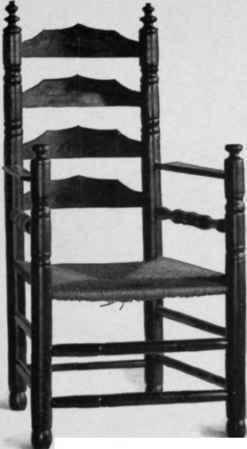
Figure 420. Turned Slat-Back Chair, 1650 1700.

Figure 431. Turned Slat-Back Chair, 1675-1700.
Figure 423 shows a slat-back chair in the writer's possession. It has a turned upper rail and two slat backs. All of the turnings, including the arms and the top rail, are in the knob pattern which is rather unusual.
Slat-back chairs are found with two, three, four, five, and six slats. The slat varies considerably between those found in New England and those found in or about Philadelphia. The reason for the difference is traceable to the section of England from which the colonists came. New England was settled by persons mostly from the east of England, many of whose ancestors had come from Holland, while Philadelphia was largely settled by people from Surrey, and the same difference in type of slat-back chairs is noticeable there as here.

Figure 422. Turned Slat-Back Rocking Chair, 1650-1700.

Figure 423. Turned Slat-Back Chair, 1675-1700.
Figure 424 shows three slat-back chairs of the type commonly found in New England. There was hardly a household that did not own one or more, and many of them have survived to this day, cut down, with short rockers attached. The one on the left is a four-back and the centre one, a child's chair, is a two-back and at the right is a three-back. The mushroom knobs as a finish to the arms are characteristic.
Figure 425 shows two examples of slat-back rocking-chairs in the possession of the writer. These are the earliest type of rocking-chairs which are known in this country next after the early turned style shown in Figure 422. The distinguishing feature of these pieces is the short arm, the support for which, instead of being an extension of the front legs, is a spindle which extends through the seat rail into the upper side stretcher. The first one has slats cut in waving lines and the other one has a simple slat cut in long ovals.

Figure 424. Turned Slat-Back Chairs, 1700-25.
Figure 426 shows a New England slat-back with five slats which is in the Bolles Collection. It will be noted that the arms have changed from the turned type to the type found on the better quality of chairs of the day. The slats have oval tops and straight edges below. At the top is a turned ball and on the stiles between each slat is a turning, and the same turning appears on the front legs.
Figure 427 shows a very good example of a five-slat-back chair without arms, the property of Mrs. A. S. Chesebrough, of Bristol, Rhode Island. The stiles are turned between each slat and also on the legs between the stretchers. The chair is very similar to that shown in the preceding figure.

Figure 425. Turned Slat-Back Rocking-Chairs, 1725-50.

Figure 426. Turned Slat-Back Chair, 1725-50.
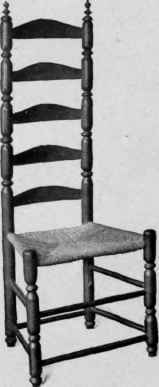
Figure 427. Turned Slat-Back Chair, 1725-50.
Figure 428 shows another slat-back chair, with five slats, of the New England type. The slats are cut in cyma curves. There is no turning on the back posts except the finials. The front legs extend to the arms, however, and are turned in the vase, ring, and bulb pattern, as are also the two front stretchers.
Slat-back chain are found both with and without arms, but the former are more common.
We will now consider the Pennsylvania type of this chair which is well exemplified in Figure 429. The distinguishing features of this type from those found in New England are that the back is simply turned without a break, while in the New England type a bulb is usually turned between each two slats, and the slat of this type always has the high curve at the centre and is more concave. The arms are always cut in on the under side, as appears in this piece, and the front legs always terminate in the same peculiar-shaped ball, the rear legs merely tapering. In New England the five-slat-back chair is not common, while in the Pennsylvania type it is the most common. This chair is the property of Mr. Frank C. Gilling-ham, of Germantown.
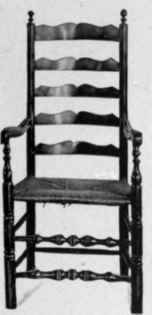
Figure 428. Turned Slat-Back Chair, 1725-50.
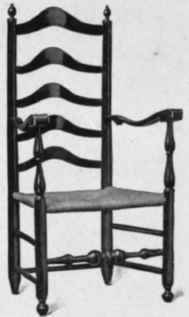
Figure 419. Turned Slat-Back Chair, Pennsylvania type, 1725-50.
A very interesting variation of the Pennsylvania type of slat-back in the possession of the writer is shown in Figure 430. The back is very similar to that shown in the preceding figure except that it has nil instead of five slats. A skirt hides the front of the rush seat and is cut in the double ogee curves found so commonly on the high-boys and chairs of the early eighteenth century. The legs are cabriole and terminate in angular Dutch feet, a form of foot commonly found south of New York. The old style of double bracing shows on the side, while the front has but the single turned brace. This is the only specimen of a slat-back chair with cabriole legs which has come under the writer's observation, and it is an interesting transition piece between the early and late styles.
These chairs are referred to in the inventories as follows: At Plymouth, 1643, "2 flag bottomed chairs & 1 frame for a chair"; Salem, 1673, "3 turned chairs"; Boston, 1698, "5 straw bottomed chairs"; 1699, "I great turned chair"; New York, 1685, "9 Mat bottomed chairs"; 1680, "a high Matted chair & an elbow matted chair"; 1692, "12 chairs latticed with reeds"; Philadelphia, 1709, "2 turned chairs, one armed"; and at Yorktown, Virginia, 1667, "5 old bulrush chairs."
Continue to:


My Books

