


XI. Clocks
Description
This section is from the book "Colonial Furniture In America", by Luke Vincent Lockwood. Also available from Amazon: Colonial Furniture In America.
XI. Clocks
WE do not consider that clocks technically should be classified as furniture, and still, as there is hardly a collector who does not possess at least one specimen, we think it may be well to give a brief sketch of the subject, having reference more especially to such pieces as have been in the country from colonial times, confining ourselves to clocks in household use, and not speaking of the early clocks in various towers and churches. It is not our intention, in the limited space that can be given to the subject in a general book on colonial furniture, to state more than the leading points which one should know to enable him to buy intelligently, and we would refer the reader for fuller description and information to the excellent books heretofore published exclusively on this subject.
This country was just being settled when the Clockmakers' Company was founded in London, in 1631. This company had for its object the regulation of the clock trade, and, in order to prevent persons from being cheated or deceived by unskilled makers, the members were given the right of search and confiscation of clocks and watches which had "bad and deceitful works." This company seems particularly to have directed its energies against the Dutch, in whose ability as clockmakers, whether justifiably or not, the English had little confidence.
The most important work which this company accomplished was the training of men for the art. There was a carefully arranged apprenticeship, and after serving his turn each apprentice had to make his masterpiece before he was admitted as a workmaster; and therefore the possessor of a clock bearing the name of a member of the guild may rest assured that the piece is at least well made.
At the time our history begins there were two general styles of clocks in use, one which was run with weights, and the other with a spiral spring. The former variety was the older, although, so far as this country is concerned, it was contemporaneous, and of necessity was a stationary clock, while the latter was easily carried about and was often called a portable or table clock.
Clocks are seldom mentioned in any of the records in this country prior to 1700, and were always valued at a fairly high price - the lowest 6s. and the highest £20. Descriptions are seldom given, so it is largely a matter of surmise in what style the earliest clocks were.
Thus, at Boston, in 1638, we find " 1 clock 18s"; in 1652, " 1 brass clock £2," and again "one clock in case £6"; at Salem, in 1660, a clock valued at £2; at New York, in 1689, "one Pendula Clock £6"; and at Boston, in the inventory of Sir William Phips, a very wealthy man, we find, in 1696, a clock valued at £20 and a repeating clock at £10; at New York, in 1691, we find a "diamond watch" mentioned without valuation given, which shows a luxury quite up to date.
The earliest clock mentioned, in 1638, could have been either a lantern clock, described below, or a portable clock; but as the inventories several times refer to brass clocks when describing the lantern variety, the one mentioned in 1638 was probably a portable one, after the fashion of the one shown in Figure 822.
This style of clock came into use about the beginning of the sixteenth century, and this particular clock was made by Jonathan Loundes, a famous clockmaker, of Pall Mall, London, who was admitted to the Clockmakers' Company in 1680. It will be seen that the face has the oval top. This style was introduced by Tompion, who died in 1713, and only appears on his later clocks.
The style, however, became very popular in the reign of George I, which began in 1714, and we should place the date of the clock somewhere between 1710 and 1720. The face has not the applied spandrels in the corner, as is usual, but is engraved with an urn at the top and oval figures surrounded with wreaths in the four corners. The case is in the typical style of the portable clock and is japanned. It belongs to the Long Island Historical Society.
Figure 823 shows a portable clock of the Chippendale period, the property of Mr. Richard A. Canfield. The top is domed, and at each corner and on the top is a brass urn with flames. Around the base of the top, on the sides, and in the spandrels above the glass of the doors is elaborate lattice-work. The corners of the case are chamfered and the surfaces are reeded and fluted. The case stands on ogee bracket feet and the skirt is cut in cyma curves. The dial has an oval top in which are two small dials, one regulating the time and the other containing the second-hand. In the spandrels about the main dial are applied brass mounts in Chippendale scrolls. The clock also has a calendar attachment. The works are by James Tregent, of London, a noted clockmaker, who was also watchmaker to the Prince of Wales.
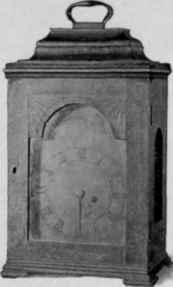
Figure 822. Portable or Table Clock, 1710-20.
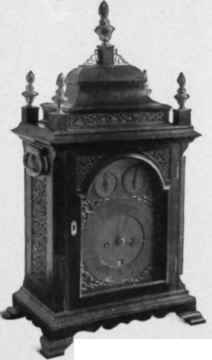
Figure 823. Portable or Table Clock, 1750-60.
Figure 824 shows another portable clock of a later date made by Isaac Fox, of London, who was admitted to the Clockmakers' Company in 1772. The top is domed in the usual manner, but the round dial indicates that it belongs to a late date.
The clock next found in the inventories is in 1652- "I brass clock £2." This undoubtedly refers to such a clock as is shown in Figure 825.
Such clocks are known by the following names: "chamber," "lantern," "bird-cage," and "bedpost," all but the last name probably referring to its shape, and the last referring either to its shape or to its being at times fastened to the bedposts; for, as they were often fitted with an alarm attachment, they must have been designed for sleeping-rooms as well as other parts of the house. This style of clock came into existence in England about the year 1600. These clocks were set upon brackets, as shown in this illustration, with weights hanging below, and were wound up by pulling down the opposite end of the cord holding the weights. The face was usually a little larger than the rest, and the centre of the dial was often beautifully etched. The bell at the top was sometimes used for an alarm only, and sometimes to strike the hour as well.
Continue to:


My Books

