


Chapter X. Thomas Sheraton. 1750-1806
Description
This section is from the book "The Practical Book Of Period Furniture", by Harold Donaldson Eberlein And Abbot McClure. Also available from Amazon: The Practical Book Of Period Furniture.
Chapter X. Thomas Sheraton. 1750-1806
WE have said in the chapter on Hepplewhite that it would not be right to speak of an "Hepplewhite Period." It would be quite as incorrect to speak of a "Sheraton Period" and for precisely the same reason. While Sheraton was putting forth his books of designs, which were extensively made use of, not only in England but also on the Continent, the furniture designed and made by his contemporaries was also holding a large share of the popular esteem. Nevertheless, during the last decade of the eighteenth century and for the first few years of the nineteenth we must regard Sheraton's as the paramount influence that dominated the style of English and, of course, of American furniture of the best type.
Thomas Sheraton was born at Stockton-on-Tees in 1750 and migrated to London in 1790, dying there in 1806. Although a carver and cabinet-maker by trade, it is quite probable that during his life in London he actually produced little if any furniture, as his time was too much taken up by his various occupations as Baptist preacher, tractarian, drawing-master, designer and publisher, to bestow any large amount of attention upon the manufacture or superintendence of cabinetwork. The greater part, therefore, if not all, of the furniture made in his shop was in all likelihood produced before he moved up to London. For this reason we must consider him, at least during his later years, a designer rather than a maker. It is perfectly reasonable to suppose, however, that many of the designs he afterwards published had been executed and their excellence proved previously. Certain it is that the directions laid down for workmen in the pages of the "Drawing Book" show that the author possessed a thorough mastery over the minutest practical working details of his trade.
Sheraton published his "Cabinet Maker and Upholsterer's Drawing Book" first in 1791 and then again in 1793 and 1802. The "Cabinet Maker's Dictionary" followed in 1803 and in 1804 was begun the "Cabinet Maker, Upholsterer and General Artist's Encyclopaedia" but never finished. He was the last of the great furniture designers of the eighteenth century and "lived to see all beauty vanish from English furniture" 1 in the deluge of vulgar ugliness and banality that poured in as a consequence of aping French Empire styles, a source of inspiration not to be commended at its best.
Key Plate XII. The Sheraton Style, C. 1780-1806
Materials Usually Mahogany and Satinwood See Text Pages 235-261
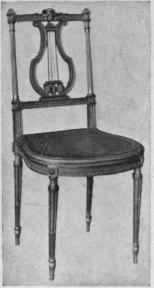
Fig. 1. Square Lyre Back, Straight Top-rail, Rounded Seat, Round Fluted Legs.
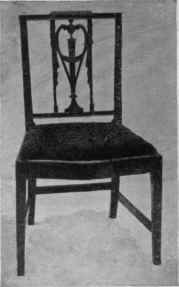
Fig. 2. Vase Back, Straight Raised Top-rail, Tapered Grooved Legs, Shaped Seat-rail.
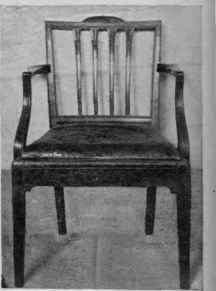
Fig. 3. Square Barred Back, Straight Raised Top-rail, Curved Arm Supports.
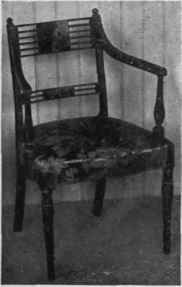
Fig. 4. Straight-Panelled Top-rail, Downward-Curved Arms, Reeded Vase, Baluster Arm Supports.
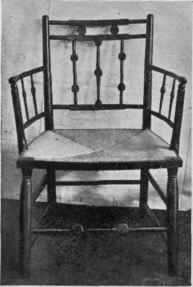
Fig. 5. Turned and Painted Rush Bottom, Canted and Spindled Arms.
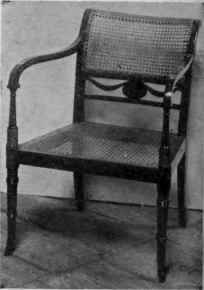
Fig. 6. Caned Work, Down-Curve Arms, Baluster Supports Extended from Legs, Splayed Feet.

Fig. 7. Settee, Reeded-Vase, Baluster Arm Supports, Round Reeded Legs.
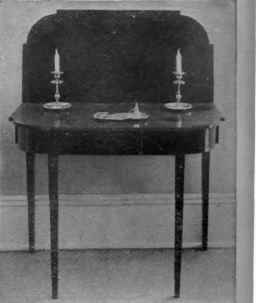
Fig. 8. Sprung Front, Flap-Top Card Table, Straight Tapered Legs.
The representative Sheraton type of furniture, as we are accustomed to understand it, was based entirely on his first book and richly deserves all the distinction and originality he claims for it. In his later books there is a marked and rapid deterioration in the quality of the designs given. Whether it was because Sheraton was failing in inspiration, or because he was trying to accommodate his designs to a popular taste that clamoured loudly for the latest French forms, it would be hard to say. It was probably the latter, for one who had produced types of such artistic excellence a few years before could scarcely sink to such depths of impoverished invention independently of some extraneous cause. This inference is supported by the pathetic laments he utters, as early as 1802, that "a clumsy four-footed stool from France will be admired by our connoisseurs in preference to a first-rate cabinet of English production" or that the British public has brought to pass this deplorable state of affairs by "foolishly staring after French fashions" instead of giving "suitable encouragement to designers and artists" in England. "Instead of this," he says, "when our tradesmen are desirous to draw the best customers to their warerooms, they hasten over to Paris, or otherwise pretend to go there, plainly indicating either our own defects in cabinet-making, or extreme ignorance, that we must be pleased and attracted by the mere sound of French taste."
1 Clouston: Chippendale.
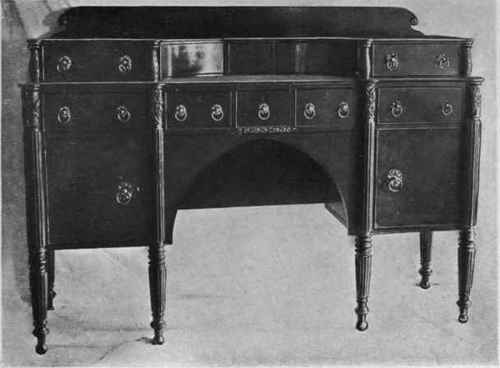
MAHOGANY LATE SHERATON SIDEBOARD (American) By Courtesy of Miss Mary H. Northend, Salem, Mass.
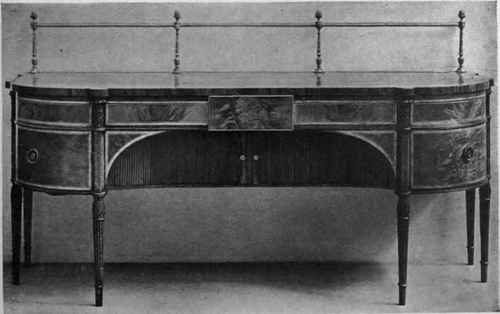
INLAID MAHOGANY SHERATON SIDEBOARD WITH TAMBOUR WORK AND METAL GALLERY By Courtesy of Messrs. Maple & Co., Tottenham Court Road, London.
PLATE XXXI.
So bad were his later designs, so jejune in character and so impregnated with a debased French feeling that it seems almost unfair, and is certainly prejudicial to a clear understanding of types, to attach Sheraton's name to them. We shall, therefore, pass them by with scant notice in this chapter and reserve them for consideration in the pages devoted to the English Empire style where they properly belong.
Sheraton's "Drawing Book," the publication upon which his claims to a distinctive style are wholly based, was a most important and valuable addition to the literature of cabinet-making. Unfortunately a fair-minded reader cannot fail to be annoyed and repelled by the disparaging and acrid attitude he assumes towards the designs and achievements of his predecessors and contemporaries, of whom he speaks uncharitably and contemptuously. Chippendale's designs he brands as "now wholly antiquated and laid aside;" Manwar-ing's book contains nought "but what an apprentice boy may be taught by seven hours' proper instructions;" for some of Shearer's work he did, indeed, express measured admiration and proved the sincerity of his admiration by adopting and really improving some of his designs; but of Hepplewhite, the designer between whose plans and his own there was the closest similarity, a similarity positively perplexing at times, he says, while grudgingly conceding that a few of the designs in his book "are not without merit," "if we compare some of the designs, particularly the chairs, with the newest taste, we shall find that this work has already caught the decline, and perhaps, in a little time will suddenly die in the disorder." This of a volume published but five years before his own and said of a man whose work and the enduring favour it has enjoyed have proved the error of Sheraton's judgment!
Continue to:


My Books

