


The Brothers Adam. C. 1762-C. 1792. Part 4
Description
This section is from the book "The Practical Book Of Period Furniture", by Harold Donaldson Eberlein And Abbot McClure. Also available from Amazon: The Practical Book Of Period Furniture.
The Brothers Adam. C. 1762-C. 1792. Part 4
Tables
The typical Adam table was rectangular, semi-circular or semi-oval. Wall tables were also made with serpentine fronts. The legs were straight and either square or round and almost invariably tapered. They were very generally fluted or reeded. The square legs ordinarily terminated in spade or block feet, while the round legs terminated in some sort of moulded or carved ornament, often a rendering of the water leaf motif. The underframing was straight and decorated with swags and drops (Fig. 1, A), fluting (Fig. 1, A, B and C), circular or oval paterae (Fig. 1, A, B and C), urns, wreaths or some of the other forms of ornament of classic provenance which appeared with the Adam influence (Plate XXII, p. 190).
Chests Of Drawers
Chests of drawers did not differ materially from those previously made, except in more chaste and well-considered proportion, adherence to horizontal and vertical lines, small size and refinement of cornices and mouldings and the application of typical decorative detail.
Console Cabinets
In this particular form of furniture the Brothers Adam were practically pioneers. Though similar pieces of furniture had been made before their influence was appreciably felt in matters mobiliary, they really developed and brought to perfection this article of necessity for polite and elegant households. The console cabinet was placed between windows or doors and was regarded as essential to any symmetrical scheme of furnishing. Above it was usually hung a handsome mirror and perhaps a pair of ornate sconces to match it. The lines of the console cabinet were conspicuously vertical and horizontal, while the front, usually with doors rather than drawers, was often semi-circular or semi-oval (Key X, 5) in form. Sometimes, where the cabinet was designed to fill a long space, the body would be rectangular and the middle section would have a semi-circular or semi-oval bay. Short tapering legs, square or round, supported these cabinets, which were nearly always highly decorated. Other cabinets, not of the console type (Plate XXII, p. 190), were supported on tall legs.
Secretaries, Bookcases And China Cupboards
These articles of furniture (Fig. 2) so exactly coincide with the corresponding pieces made by Hepple-white, who executed many of the Adam commissions anyhow - the Adams, be it remembered, never made a stick of furniture themselves - that, for the sake of convenience and brevity, they will be treated in the Hepplewhite Chapter.

PLATE XXIII. ADAM GILT MIRROR AND CONSOLE TABLE.
By Courtesy of Messrs. Hale and Kilburn, Philadelphia.
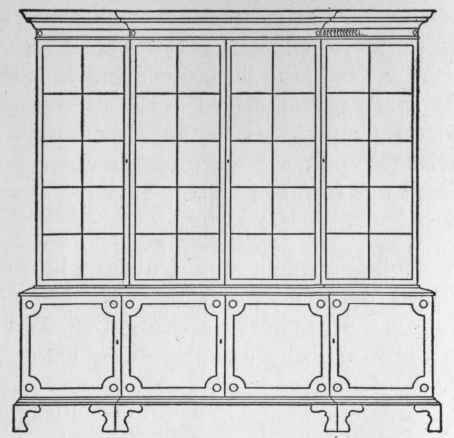
Fig. 2. Bookcase of Characteristic Adam Contour.
Sideboard Tables And Pedestals
The development of the sideboard, furthered by Shearer and Hepplewhite and reaching perfection in the designs of Sheraton, was greatly advanced by the Adelphi. They did not make the sideboard as we now know it but enhanced the importance and grace of the sideboard table, which they flanked at either end by square pedestals of corresponding design, surmounted by graceful urn-shaped knife boxes (Plates XXI, p. 186 and XXIV, p. 198; Key X, 4). They also frequently put a wine cooler, or cellarette to match, underneath the table. At the back of the table, against the wall, they likewise added a metal, usually brass, rail or rails supported on uprights and sometimes further adorned with attached candlesticks. The tables were long and narrow, with four or more legs, according to length, and of the type already described in the section on tables. The pedestals supporting the knife urns were used as receptacles for sundry dining-room accessories and the whole front was formed of a single door.
Continue to:


My Books

