


William And Mary. 1688-1702. Part 5
Description
This section is from the book "The Practical Book Of Period Furniture", by Harold Donaldson Eberlein And Abbot McClure. Also available from Amazon: The Practical Book Of Period Furniture.
William And Mary. 1688-1702. Part 5
Cabinets
Cabinets were nearly always in two parts, upper and lower. Closely related to the highboy was the cabinet set on a stand, and the fashion for cabinets of this sort seems to have been of Italian origin. The tops were usually straight and there was often a bold ovolo frieze immediately below the cornice. The front, composed of two doors (Plates V, p. 82, and VII, p. 90), being opened, disclosed tiers of drawers, sometimes built about a small central cupboard and sometimes there were also pigeon-hole recesses. Some of the cabinets were without doors in front and displayed all the small drawers. When the cabinets were "oyster" veneered (Plate V, p. 82), inlaid with marqueterie or lacquered, both the outer and inner sides of the doors were decorated, as were also the fronts of the inner drawers and cupboard. The division between the cabinets and stands was clearly defined by mouldings and cornice, and the stands were much like tables, with or without drawers in the underframing, and had five or six legs, which were spiral-turned, C-scrolled (Fig. 4, Q), baluster- (Fig. 4, N), spindle- (Fig. 4, P), or cup-turned, flat stretchers concaved, shaped or ogeed and bun, block or inverted-cup feet.
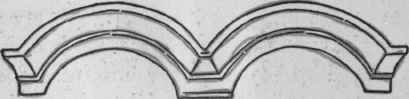
Fig. 6. Characteristic Double Hood of William and Mary Period.
Another form of cabinet, sometimes called a press cabinet, had drawers in the lower part and was virtually a cabinet set on a low chest of drawers. Cabinets of this sort usually had a straight top but were also found with double hooded tops (Fig. 6), the corners and centre occasionally being adorned with vase-shaped finials (Key IV, 2). These cabinets generally stood on bun or straight bracket feet (Fig. 4, B, K, L, S, and T). A variation of this form of cabinet had doors in the lower portion as well as in the upper.

PLATE VI. WILLIAM AND MARY OYSTERED AND INLAID CABINET ON STAND WITH "TRUMPET TURNED" LEGS.
By Courtesy of Messrs. Cooper & Griffith, New York City.
The most elaborate lacquered cabinets, as in the Carolean period, had straight tops, without cornice or mouldings, intricately chased and fretted brass mounts and were usually set upon ornately carved and gilt stands, not at all like the plainer table stands of other cabinets.
Cabinets meant for the display of china had glass paned doors (Key III, 2), straight or hooded tops and were set on lower and shorter legged stands which, however, resembled the supports of other cabinets and highboys. All the forms of cabinets except the last, which was plain for obvious reasons, were frequently covered with elaborate decoration.
Continue to:


My Books

