


Building Laws And Specifications
Description
This section is from the book "Cyclopedia Of Architecture, Carpentry, And Building", by James C. et al. Also available from Amazon: Cyclopedia Of Architecture, Carpentry And Building.
Building Laws And Specifications
The requirements of the Building Departments of different cities vary considerably as regards detail matters, but are in quite close agreement on points affecting the strength of structures.
The following table shows the requirements of different cities as regards live loads:
Table IX. Building Laws: Specified Live Loads In Different Classes Of Buildings
The loads specified are exclusive of weight of materials of construction.
Class of Structure. | New York, 1900. | Chicago, 1900. | Philadelphia, 1903. | Boston, 1900. |
Load, Pounds per Square Foot. | ||||
Dwellings, Apartment Houses,Hotels, and Lodging Houses........ | 60 | 40 | 70 | 50 |
Floor......... | 150 | 100 | 100 | 100 |
Office Buildings - above First Floor.... | 75 | 100 | 100 | 100 |
Schools - except Assembly Halls.......... | 75 | 80 | ||
Assembly Halls.......... | 90 | 100 | 120 | 150 |
*Stores for Heavy Materials; Warehouses and Factories; Drill Sheds. . . | 150 | 100 | 150 | 250 |
Roofs............... | 50 | 25 | 30 | 25 |
*Minimum loads as above. Buildings used for special purposes to have loads specified accordingly.
Table X indicates allowable unit-stresses.
Table X. Allowable Unit-Stresses For Steel And Cast Iron, As Specified By Building Laws Of Different Cities
Stresses are for Medium Steel unless otherwise noted.
New York, 1900. | Chicago, 1900. | Philadelphia, 1903. | BOSTON, 1900. | |
Pounds per Square Inch. | ||||
Extreme fibre stress-Bending. | ||||
Rolled steel beams and shapes.... | 16,000 | 16,000 | 16,000 | 16,000 |
Rolled steel pins, rivets . . | 20,000 | 22,500 | 22,500 | |
Riveted steel beams - Compression..... | 12,000 | |||
Riveted steel beams - Tension net section... | 14,000 | 15,000 | ||
Cast iron - Compression .. . | 16,000 | 10,000 | 8,000 | |
Cast iron - Tension. . . . | 3,000 | 2,500 | 3,750 | 2,500 |
Compression, Direct. | ||||
Rolled steel........... | 16,000 | 16,250 | ||
Cast steel........... | 16,000 | 16,250 | ||
Wrought iron........ | 12,000 | 12,500 | ||
Cast iron (in short blocks) . | 16,000 | 17,500 | ||
Steel pins and rivets (bearing) ..... | 20,000 | 20,000 | 18,000 | |
Wrought-iron pins and rivets (bearing)...... | 15,000 | 15,000 | 15,000 | |
Tension, Direct. | ||||
Rolled steel...... | 16,000 | 15,000 | 16,250 | 15,000 |
Cast steel.......... | 16,000 | 15,000 | 16,250 | |
Wrought iron...... | 12,000 | 12,000 | 12,500 | 12,000 |
Cast iron...... | 3,000 | |||
Shear. | ||||
Steel web plates....... | 9,000 | 10,000 | ||
Steel shop rivets and pins . | 10,000 | 10,000 | 10,000 | 10,000 |
Steel field rivets and pins . | 8,000 | 10,000 | 10,000 | 10,000 |
STeel field bolts...... | 7,000 | 10,000 | 10,000 | |
Wrought-iron web plate . . | 6,000 | 9,000 | ||
Wrought-iron shop rivets and pins..... | 7,500 | 7,500 | 7,500 | 9,000 |
Wrought-iron field rivets and pins...... | 6,000 | 7,500 | 7,500 | 9,000 |
Wrought-iron field bolts . . | 5,500 | 7,500 | 9,000 | |
Cast iron......... | 3,000 | |||
Miled steel*...... | 15,200-58 L R | 15,000 | 14,500 1+ L2/13,500 R2 | 12,000 |
Medium steel*........ | 15,200-58- L R | 15,000 | 16,250 1+L2/11,000R2 | 12,000 |
Wrought iron......... | 14,000-80 -L R | 12,000 | 12,500/1+L2/15,000R2 | 10,000 |
Cast iron........... | 11,300-30 -L/R | 10,000 | 17.500 1+ L2/400R2 | |
Reduced by Gordon's or other approved formulae for varying ratios of length to radius
Table XI gives, in pounds per square inch, the transverse strength of various stone constructions, brick and concrete:
Table XI. Transverse Strength Of Stone, Brick And Concrete
Extreme fibre stress - Bending. | POUNDS PER SQUARE INCH. |
Blue stone flagging | 2,200 |
1,700 | |
900 | |
2,000 | |
Slate | 5,800 |
810 | |
Brick | 725 |
200 | |
Concrete, 1 Port. cem., 3 sand, 7 gravel | 115 |
Where walls are carried by the steel framing at each story, they are generally made 12 inches thick.
The question of height also affects the requirements of fire resistance and prevention. There is considerable variation on these points. Table XII gives the requirements of some cities whose laws are explicit as to the thickness of walls and the proportion of loads on columns and foundations.
Table XII. Thickness In Inches Of Brick Bearing Walls. Chicago Law, 1901
STORIES | BASEMENT | 1st | 2d | 3d | 4th | 5th | 6th | 7 th | 8th | 9th | 10th | ll th | 12 th |
One-story | 12 | 12 | |||||||||||
Two-story | 16 | 12 | 12 | ||||||||||
Three-story | 16 | 16 | 12 | 12 | |||||||||
Four-story | 20 | 20 | 16 | 16 | 12 | ||||||||
Five-story | 24 | 20 | 20 | 16 | 16 | 16 | |||||||
Six-story | 24 | 20 | 20 | 20 | 16 | 16 | 16 | ||||||
Seven-story | 24 | 20 | 20 | 20 | 20 | 16 | 16 | 16 | |||||
Eight-story | 24 | 24 | 24 | 20 | 20 | 20 | 16 | 16 | 16 | ||||
Nine-story | 28 | 24 | 24 | 24 | 20 | 20 | 20 | 16 | 16 | 16 | |||
Ten-story | 28 | 28 | 28 | 24 | 24 | 24 | 20 | 20 | 20 | 16 | 16 | ||
Eleven-story | 28 | 28 | 28 | 24 | 24 | 24 | 20 | 20 | 20 | 16 | 16 | 16 | |
Twelve-story | 32 | 28 | 28 | 28 | 24 | 24 | 24 | 20 | 20 | 20 | 16 | 16 | 16 |
The above table applies to manufacturing and storage buildings.
Table XII, A. Thickness In Inches Of Brick Bearing Walls. Philadelphia Law, 1903
STORIES | 1st | 2d | 3d | 4th | 5th | 6th | 7th | 8th | 9th | 10th | ll th | 12th |
One-story | 13 | |||||||||||
Two-story | 13 | 13 | ||||||||||
Three-story | 18 | 13 | 13 | |||||||||
Four-story | 18 | 18 | 13 | 13 | ||||||||
Five-story | 22 | 18 | 18 | 13 | 13 | |||||||
Six-story | 22 | 22 | 18 | 18 | 13 | 13 | ||||||
Seven-story | 26 | 22 | 22 | 18 | 18 | 13 | 13 | |||||
Eight-story | 26 | 26 | 22 | 22 | 18 | 18 | 13 | 13 | ||||
Nine-story | 30 | 26 | 26 | 22 | 22 | 18 | 18 | 13 | 13 | |||
Ten-story | 30 | 30 | 26 | 26 | 22 | 22 | 18 | 18 | 13 | 13 | ||
Eleven-story | 34 | 30 | 30 | 26 | 26 | 22 | 22 | 18 | 18 | 13 | 13 | |
Twelve-story | 34 | 34 | 30 | 30 | 26 | 26 | 22 | 22 | 18 | 18 | 13 | 13 |
The above applies to exterior and bearing walls of business, manufacturing and public buildings, 75 feet to 125 feet long and 26 feet or less clear span. Hotels and tenements may have the 3 upper stories 13 inches and following down from that in the sequence given above.
Table XII, B
Safe Bearing Values in Tons per sq. ft. on Different Classes of Masonry. | New York, 1900. | Chicago, , 1901. | Philadelphia, 1903. | Boston, 1900. |
Granite (Dressed Joints) in Portland Cement | - | 7 | - | 60 |
Rabble Stonework in Lime Mortar | 5 | - | 5 | - |
Rubble Stonework in Cement Mortar | 10 | - | 10 | - |
Brickwork in Lime Mortar | 8 | 6 1/2 | 8 | 8 |
Brickwork in Cement Mortar | 15 | 9 | 15 | 15 |
Concrete, Portland Cement | 16 | 4 | 15 | - |
- | 25 | 20 | - |
The minimum thickness of curtain walls in Chicago is 12 inches, in Philadelphia 13 inches, and in New York 12 inches for the upper 75 feet of wall, and 4 inches thicker for each 60 feet below. The New York law allows curtain walls to be built between piers or steel columns and not supported on steel girders, provided the thickness is 12 inches for the upper 60 feet and 4 inches thicker for each 60 feet below.
Wind Pressure. The Philadelphia law requires 30 pounds per square foot to be calculated on exposed surfaces of isolated buildings; on office buildings 25 pounds per square foot at the 10th floors, and 2 1/2 pounds less for each story below and 2 1/2 pounds more for each story above, up to a maximum of 35 pounds.
The combined stress in columns resulting from direct vertical loads and the bending due to the above wind pressures is allowed to be 30 per cent above that for simply direct loading by the Philadelphia law, and 50 per cent by the New York law.
In New York no allowance for wind is required if the building is under 150 feet high, and this height does not exceed four times the average width of base. For buildings other than as above, 30 pounds per square foot of wind pressure from the ground to the top is required. The overturning moment of the wind is not allowed to be more than 75 per cent of the moment of stability of the structure.
Reduction in Live Load on Columns, Girders and Foundations. The Philadelphia law allows the live loads used in calculation of columns, girders and foundations for all but manufacturing and storage buildings, to be reduced by the following formula:

and for light manufacturing buildings, by where x = the percentage of live load to be used, and A = the area supported.
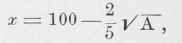
The New York law requires the full live load of roof and top floor, but allows a reduction in each succeeding lower floor of 5 per cent until this reduction amounts to 50 per cent of the live load; not less than 50 per cent of the live load may be used in the calculations. For foundations not less than 60 per cent of the live load may be used.
Where the laws limit the height to about 125 feet, the requirements as regards fire protection and prevention are in general that the floors and roofs shall be constructed of steel beams and girders, between which shall be sprung arches of tile or terra cotta or brick, or approved systems of concrete and concrete-steel. All weight-bearing metal of every description shall be covered with non-combustible materials, generally terra cotta or wire lath and cement.
In buildings of this height the use of wood for top floors laid in wood screeds imbedded in concrete, and of wood for all interior finish, is allowed.
Under the New York City law, buildings above sixteen stories are required to have their upper stories constructed entirely without wood, except that the so-called fireproof wood may be used for interior finish. The floors, however, are required to be of tile or mosaic or other non-combustible material, the wood top floor not being allowed.
Factor of Safety. The foregoing values represent the working values of unit-stresses. They are in all cases a certain percentage of the strains under which rupture would occur. This percentage varies with the different classes of material and the different classes of structure. The quotient of the breaking strain divided by the allowable or safe working strain is called the " factor of safety."
Steel and wrought iron used in ordinary building construction have generally a factor of safety of 4; timber, generally from 6 to 8; cast iron, from 6 to 10; stone from 10 to 15.
Continue to:


My Books

