


Traps And Waste Pipes. Continued
Description
This section is from the book "Plumbing Practice", by J. Wright Clarke. Also available from Amazon: Modern plumbing practice.
Traps And Waste Pipes. Continued
Some sanitary engineers are not content with having the drains trapped off from the public sewer - a thorough air-flush through the drains and an interceptor-trap fixed to receive the waste pipes - but are so alarmed at the idea of sewer-air escaping and passing up the waste pipes into the sinks or other fittings, that they stipulate for the waste pipes to discharge some distance away from the trap. Taking this extra precaution against an unlikely event leads to the evil of a large surface of space being continually splashed with dirty water. In one case four waste pipes (one was from a cistern) discharged into an open channel leading into a gulley-trap 3 feet away. A few leaves had got over the trap-grating, so that all bath and wash-hand-basin waste water that came down, having no other means of escape, overflowed the channel until the surrounding gravel and earth was reduced to a sewage-bog, and this was in a back garden close by the conservatory. Figure 224 is a sketch showing the arrangement. A is a bath-waste; B, waste from safe under water-closet; C, wash-hand-basin waste; and D, overflow from cistern. Smells were noticed in the bed and bath rooms, which led to the above discovery. In this case no traps were fixed on the waste pipes, so there was nothing to prevent smells passing back into the above rooms. In another case a similar arrangement was found, but the precaution had been taken to place a grating over the channel and trap to keep out leaves, etc, but the channel was offensive-smelling by reason of the sides being covered with a greasy-looking matter, the bottom being quite clean down the centre.

Figure 224.
It is an economy and much more sanitary to take all waste pipes into the trap, as shown at Figure 223, but they should be above the water-line, when, to all intents and purposes, they are open to the air, and if ventilated and trapped, as shown there, it may be said that triple precautions are taken to prevent any gases from the sewers passing into the house by means of the waste pipes. It is unnecessary to speak of any other sinks in the basement, as they should be treated in the same manner as the pantry, excepting where a lot of greasy matter passes down the waste pipes. The remarks on scullery-sinks will apply in those cases.
When examining houses (especially those built some years. ago) for smells the source is very often found to be in a cellar. The other day, when looking over a noble earl's house, a wine-cellar was found to have two bell-traps, devoid of water, and air from the drains passing through with sufficient power to blow out a candle. Next door was the beer-cellar (both cellars being nearly in the centre of the house), and another bell-trap was found there; this having been improperly used by the men-servants as a urinal no smell was passing from the drain, but the smell of the other matter was so strong as to make the eyes run with water. I have frequently had to complain of cellar-traps being used for this purpose, and for that reason always advise their entire removal. Whenever there is a complaint of a smell in a butler's pantry or footman's cleaning-room, these being also used as sleeping-rooms, it is frequently found that no proper convenience is provided for the men's use, but a sniff inside the sink generally tells how that trouble is got over.
Under no conditions should any trap be fixed in the paving on the inside of a town house, as they are never used.
Passing from sinks in the basement, the next one for consideration in a large house where there are children will be the nursery scullery, this being sometimes on the second or third floor. These sinks do not require such an elaborate provision for intercepting grease as in the case of those in the ordinary scullery, and they may be treated with regard to trapping, ventilation, and waste-disconnection, much in the same manner as described for the butler's pantry-sink.
It does not matter where the sink is situated - whether at the top or the bottom of the house - it should always discharge into a gulley-trap in preference to being connected directly with the drain, or any soil or other foul pipe. Where a long length of waste pipe is fixed, the ventilation pipe from the trap under the sink is very needful to prevent syphon age of water out of the trap. This ventilation pipe should never be less in diameter than the waste pipe itself, and in some cases it has been found necessary to fix it a little larger, so that there is not the least obstruction to air entering as fast as the rush of water down the waste pipe displaces that contained in it. These ventilation pipes need not necessarily be continued to the roof of the building, but may be continued through the nearest external wall, so long as it is a few feet away from any window. The top end should be a few inches above the level of the top edge of the sink, so as to avoid the first rush of air displaced by the water discharge from carrying a few splashes out of it. In some instances a brass grating has been soldered over the end of this air pipe, or the end has been closed and a few small perforations made in it. Both of these form an obstruction to the free passage of air. It is much better to make two saw-cuts across the end of the pipe, which should be slightly enlarged with a turn-pin, at right angles to each other, and two or more pieces of stout copper wire laid in, as shown at Figure 225, and soldered with a copper-bit. This is to prevent birds placing anything in the pipe to choke it up.
The best kind of sink to use is made of white porcelain or earthenware. This has a clean appearance, or, if dirty, it at once shows the maid's lack of attention. A small bowl should be used for washing up crockeryware so as to avoid risk of breakage as much as possible. It may be said that enclosures to these sinks are a mistake, and on no account should a lid be allowed. It has been found, on opening a lid of one of these places, that it has been half full of dirty crockeryware, plates half full of rejected food, small saucepans of infants' diet, and such-like things, that give off an unpleasant sour odour when neglected. The cocks for supplying hot and cold water should be placed high enough for drawing into a jug. If too low, so that there is a difficulty in getting the jug underneath the nose of the cock, a breakage frequently takes place. Neither is it a good plan to put the cocks at the back side of the sink, unless they are some height above it, but they should rather be at one end, so that hot and cold water can be drawn at the same time into the same bowl, and yet leave as much of the space of the sink for washing-up purposes, without doing any damage, as possible. Sometimes the cocks are fixed clear of the sink to avoid this, but it is not a good plan; and what with leakages and splashings, the surroundings are in a continuous wet condition. These sinks should be moderately deep.
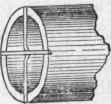
Figure 225.
Continue to:


My Books

