


I. Introduction. Part 3
Description
This section is from the book "Colonial Furniture In America", by Luke Vincent Lockwood. Also available from Amazon: Colonial Furniture In America.
I. Introduction. Part 3
Nothing, perhaps, influenced the furniture of the eighteenth century so much as the introduction of mahogany, the strength of which made possible a quite new method of carving, delicate and lace-like, which reached its perfection in some of Chippendale's models. According to tradition, mahogany, although known since the time of Raleigh, was first made into furniture in England about the year 1720. If this were true, the colonies would have the honour of having discovered its great value for furniture some years before the mother country, for in the Philadelphia inventories, as early as 1708, mahogany is mentioned as made up into furniture, and there are entries at New York which seem to indicate that there was furniture there made of that wood about fifteen years earlier. The tradition of its introduction into England is, however, faulty, for it is now known that furniture was made occasionally of this wood in England during the latter half of the seventeenth century.
In the early years of the eighteenth century a radical change occurred in the form of furniture, and approximately the year 1700 marks the dividing line between ancient and modern forms. Straight lines were melted into curves; rectangular forms, whenever possible, were modified or abandoned. The turned leg was superseded by the cabriole, underbracing disappeared, and the style of carving popular in the last quarter of the seventeenth century gave way to simpler designs. More attention was paid to perfection of form than to ornament. The dominant feature of the new form was the use of the cyma curve as a substitute for straight lines wherever possible. To illustrate: Two cyma curves placed thus  formed the design of the chair backs. A cyma curve thus
  formed the cabriole leg.
Two cyma curves placed thus  formed the scroll top found on high-boys, secretaries, and cupboards. When placed thus
  they formed the familiar outline found on the skirts of high-boys, low-boys, and other pieces. Mouldings, cupboard openings, and the inner edges of mirrors were cut in the same curve.
There was less carved decoration used in this period than in that of Charles II, and it was cut on the surface instead of used to form the outline. The commonest designs were the shell, mascaron, cartouche, swags of flowers, acanthus leaves, and often classical designs. Claw feet of birds and animals grasping balls were popular, and, although these designs were sometimes found in metal work of a much earlier period, they first became popular on furniture at this time. The style came to England from Holland and to this country from both, and is known as the Dutch, Queen Anne, or early Georgian style.
Figure 1 shows the interior of a doll house, the furnishings of which are of this period. There are cabriole leg tables, double chairs and stools, a chest of drawers, a knee-hole dressing-table with dressing-glass, a slant-front secretary with cabinet top, a basin-stand, a card-table, and a fire-screen. There are three bedsteads heavily draped in the fashion of the day; there is a rug on the parlour floor. In the kitchen is a turned chair in the form usually called Carver in this country. It is a significant fact that there are no high-boys. In the American colonies at this time every house would contain several.
The Dutch style was finally superseded by the introduction of the French, rococo, Chinese, and Gothic designs a little prior to the middle of the eighteenth century. The American colonies do not seem to have adopted these designs until somewhat later, and the French form of chest drawers, called commodes, were never popular here.
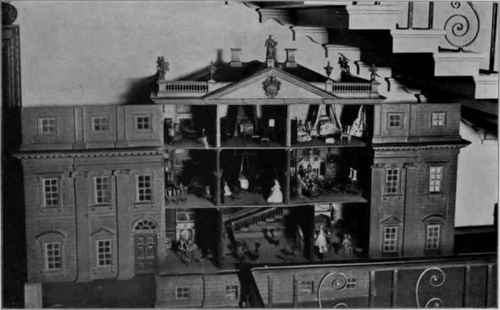
Figure I. Doll House, first quarter eighteenth century.
From this time forward the history of furniture can readily be followed from the published works of architects and cabinet-makers.
One cannot but be impressed by the careful and scholarly manner in which these books were written. It is manifest that the cabinet-maker's profession at that time ranked with that of architects.
One of the first books of design of this period was "The Gentlemen's and Builders' Companion," by William Jones, published in 1739. The following are the principal published designs down to the publication by Chippendale: "The City and County Builders' and Workmen's Treasury of Designs," by Batty and Thomas Langley, published in 1740, which show French influences, and some of the tables are copied from designs by Nicholas Pineau, of Paris; "The British Architect or the Builders' Journal of Stair-cases," by Abraham Swain, published in 1745, which shows the earliest rococo designs; a book by Edwards and Darley in Chinese taste; a book by Thomas Johnson, showing designs in Gothic, Chinese, and rococo taste and making use of foxes and other animals; "A New Book of Ornament," by Mattheas Lock, published in 1752, similar to Johnson's designs, except that he does not make so much use of the figures of animals; "New Designs for Chinese Temples, Triumphal Arches, Garden Seats, Palings, etc.," by William Halfpenny, published in 1750-52; Sir William Chambers's design showing Chinese and rustic taste; and "Gentleman's and Cabinet-makers' Director," by Thomas Chippendale, first published in 1754.
The most prominent of these designers and cabinet-makers was Thomas Chippendale, and his influence on the furniture of England and this country in 1750 to 1780 was probably greater than that of any other, so that the period can properly be called by his name. Very little of the life of Chippendale has been known until Constance Simons published her researches, entitled " English Furniture Designers of the Eighteenth Century."
Continue to:


My Books

