


V. Desks And Scrutoires. Part 14
Description
This section is from the book "Colonial Furniture In America", by Luke Vincent Lockwood. Also available from Amazon: Colonial Furniture In America.
V. Desks And Scrutoires. Part 14
Figure 295 them a knee-hole writing-table, the property of the writer. The top folds upon itself and when open is supported by pulls. There is a long drawer at the top and on each side of the recessed portion are four drawers. In the recessed portion is a cupboard with shelves. The base mouldings are a cove and a fillet and the piece stands on ogee bracket feet. The wood is mahogany with a border of the same wood and a narrow band of ebony about the drawers. The handles are the original. This desk is very similar to the one shown in Figure 253, and the veneered front of mahogany is made in imitation of the veneered walnut front on such a piece. The handles, however, show that it belongs to the Sheraton period. It was found in Philadelphia.
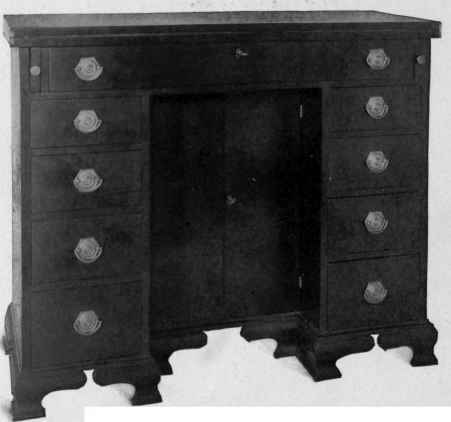
Figure 295. Knee-Hole Writing-Table, about 1790.
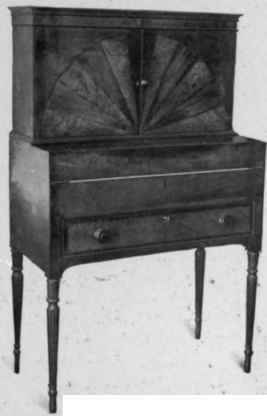
Figure 296. Inlaid Secretary, 1790-1800.
Figure 296 shows a pretty little secretary, the property of Mrs. Thomas G. Hazard, of Narragansett Pier, Rhode Island. It is made in mahogany and satin-wood. At the top is a cupboard concealed behind two doors which are inlaid in broad bands, alternately mahogany and satin-wood, set in fan shape. The front of the lower part folds over on hinges and discloses a desk shelf, and below is a drawer made of satin-wood with a mahogany border. The legs are turned and reeded in the typical Sheraton fashion.
Figure 297 shows a form of desk quite popular about 1800. The upper section contains pigeon-holes covered with tambour slides with alternating strips of mahogany and satin-wood. The writing-table, when open, is supported by pulls. In the lower section are three long drawers with satin-wood panels. A bead moulding is on the edge of the drawers instead of on the frame about them, the method of the earlier period. The legs are tapering, with a square block near the feet, on the surface of which are turned rosettes. This piece is the property of Mr. Francis H. Bigelow, of Cambridge.
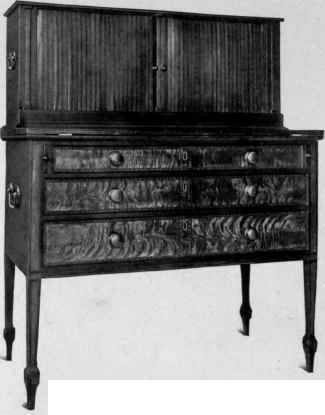
Figure 297. Inlaid Writing-Table, about 1800.
Figure 298 shows another desk of the same general description as that shown in the preceding figure. It is in three carcasses. The cornice moulding consists of a fillet, a cove, an astragal, and a fillet, and above are three acroteriums with urns. The upper carcass has shelves for books and each of the two doors has three lights with rounded tops. Above the doors is inlaid a modification of the meander pattern. The middle section has pigeon-holes and drawers concealed behind three solid doors, and below are three small drawers. The lower section contains the writing-table which opens out and is supported by pulls. Below are three drawers of satin-wood with mahogany. A bead moulding finishes the edges of the drawers. The piece stands on simple turned legs. Such pieces as these are found principally in Now England and closely resemble the sideboards shown in Figures 214 and 215. This desk is in the Bolles Collection.
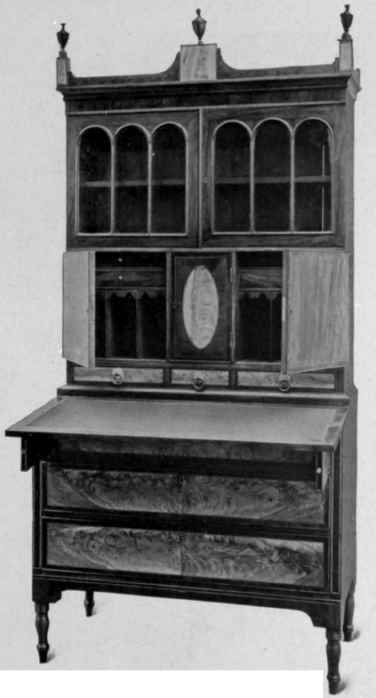
Figure 298. Inlaid Writing-Table with bookcase top, about 1800.
Figure 299 shows a Sheraton writing-table inlaid with satin-wood, ebony, and box. The writing-board is hinged and folds back on itself in the usual manner. At the top are three drawers below which are two recessed sections containing pigeon-holes and drawers covered with tambour slides, and at the centre is a solid door with a medallion inlaid. This piece was purchased in 1810 and is now owned by Miss Mary Bulkley, of Hartford.
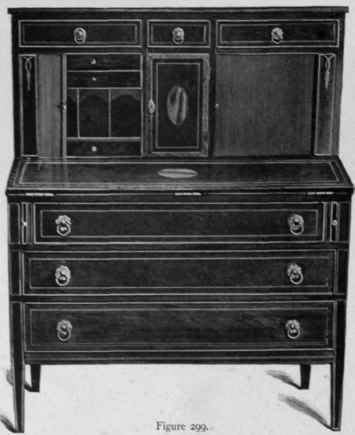
Inlaid Writing-Table, 1810.
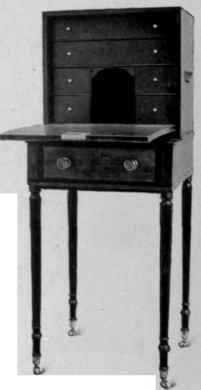
Figure 300 Inlaid Writing-Cabinet, about 1800.
An interesting little scrutoire belonging to Mr. George S. Palmer is shown in Figure 300. The upper section is a box or cabinet, the front of which falls, making a surface upon which to write and disclosing six drawers and a centre pigeon-hole. The lower part is a table with one drawer of mahogany and satin-wood. The piece has tapering fluted legs.
A desk in Sheraton style is shown in Figure 301 and is the property of Mr. Marsden J. Perry, of Providence. It is composed of two pedestals with a desk drawer between. In the upper section of each pedestal is a glass door with an oval centre medallion on which is painted a dancing girl. A looking-glass border is about the medallion, and at the spandrels are painted grapes and leaves. The centre section of each pedestal has cupboards concealed behind doors, inlaid in two medallions of satin-wood and a satin-wood border; the rest of the surface is of mahogany. The lower section of each pedestal is supported by four turned legs, and between these legs are four drawers graduated in width, the smallest being at the bottom, which is finished with a wide cove moulding. Each pedestal stands on short turned feet. At the top are round finials. Between the pedestals is a drawer with four oval medallions inlaid in satin-wood. The front of the drawer falls, disclosing a desk, which contains pigeon-holes, cupboards, and drawers inlaid in a similar manner to the outside. This desk is of American origin, and the theme is taken from Sheraton's design called "The Sisters' Cylinder Bookcase," the difference being that in his design provision is made for two persons to sit facing each other; a cylinder covers the writing-table, the upper section of the pedestals are bookcases with globe terminals, and the feet are more elaborately turned.
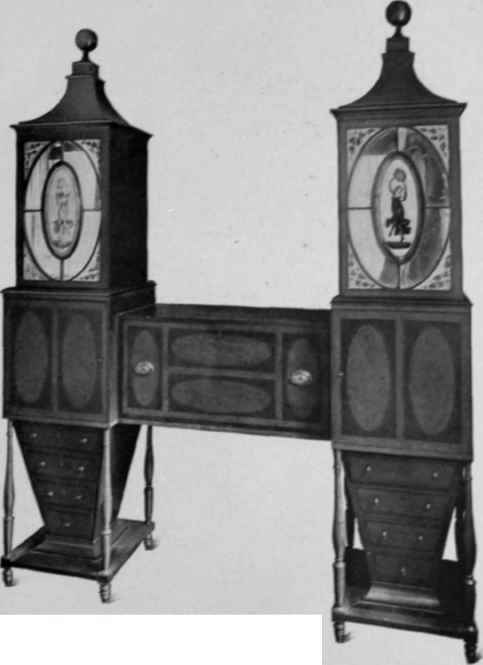
Ialaid Desk, 1800-10.
Continue to:


My Books

