


V. Desks And Scrutoires. Part 4
Description
This section is from the book "Colonial Furniture In America", by Luke Vincent Lockwood. Also available from Amazon: Colonial Furniture In America.
V. Desks And Scrutoires. Part 4
A crude scrutoire of the same period is shown in Figure 242 and is in the Bolles Collection. A number of such pieces have been found in New England and they closely resemble the chest shown in Figure 40. It will be seen that there are but three drawers, although with the use of handles and escutcheons the impression is conveyed of four drawers. The slant top is hinged at the back instead of the front and within is practically a desk-box. One is supposed to write on the slant lid. Single-arch mouldings are about the drawers and the handles are of the early drop variety. The piece stands on four large ball feet.
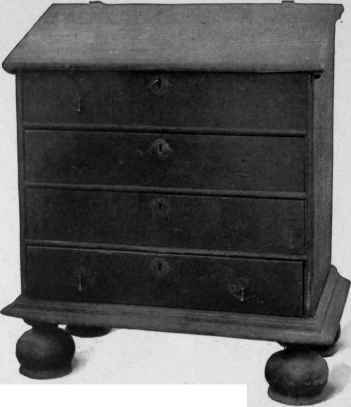
Figure 242. Ball-Foot Scrutoire, 1700-10.
The third type of early scrutoire is shown in Figure 243. This type stands on four turned and underbraced legs and is found in two styles, those where the frame is separate from the desk part, as in this case, and those in which the desk and frame arc of one piece. The frame part of this scrutoire is like the turned tables of the period, with a single long drawer. The desk part sets into the moulding of the frame and is in the usual slant-front type, the lid being supported by pulls. The inside is plain with three pigeon-holes and three drawers. This piece is in the Bolles Collection.
Figure 244 shows the second style of these scrutoires, where the desk and frame are in one piece. It will be seen that the form of construction is quite different.
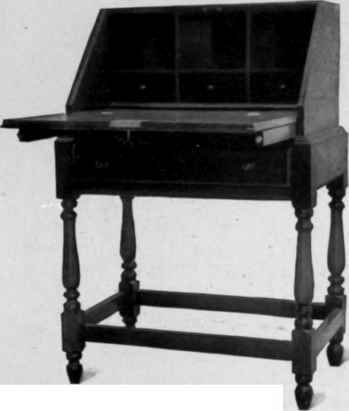
Figure 243. Slant-Top Scrutoire on frame, 1700-25.
The legs are extended to form the frame of the desk part, and this necessitates the cutting out of a quarter section of the front legs where the ends extend into the desk, and the sides are mortised and tenoned into the stiles. There is one overlap drawer below the desk. This piece is made of walnut and the handles are the original. Within are pigeon-holes and drawers cut in double ogee curves. This piece is the property of the writer. Such pieces as these would seem to be referred to in a Salem inventory of 1684, "One scritoire and frame £1. 10s."
It was a natural development when the cabriole-legged tables came into favour that this type of desk should be made in that way. The earliest one that has come under the writer's observation is the child's desk shown in Figure 245. This piece is but three feet high, made of walnut, with the early black and white check inlay on each of the three drawers and on the lid. In the centre of the lid is inlaid a star in the early form, which is the same as that found on the high chest of drawers shown in Figure 94. The frame part has no drawers and stands on four cabriole legs terminating in angular Dutch feet with groovings. The handles are in the willow pattern. This piece is the property of Miss Jane E. Lockwood.
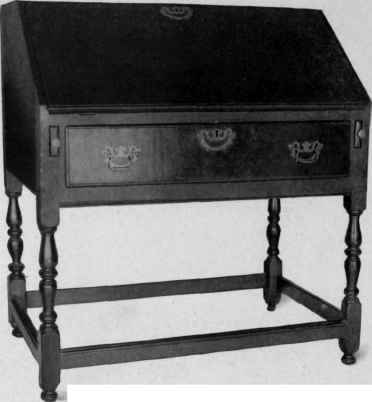
Figure 244. Slant-Top Scrutoire on frame, 1700-25.
One of the plainer varieties of this style is shown in Figure 246. It has but a single drawer, and the hip pieces, which should form a continuous curve from the leg to the lower edge of the scrutoire, are missing, marring the otherwise somewhat graceful effect, and the lower lines, being perfectly straight, make the piece seem even more severe. The scrutoire does not seem to have any slides to support the flap lid when let down, but has a slide, such as is used in other pieces for a candle-stand, directly in the centre above the drawer, which may have been intended to hold the top on a downward slant, as we can see no reason for a candle-slide in such a place. The inside is perfectly plain, in keeping with the exterior, and the brass hinges are, of course, new, having been placed on the outside when those on the inside were broken. The brasses are not original.
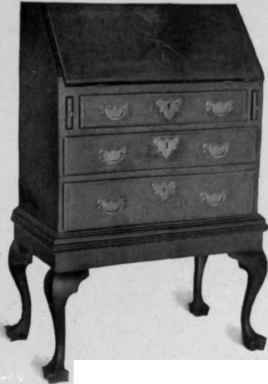
Figure 245. Cabriole-Legged Scrutoire, about 1725.
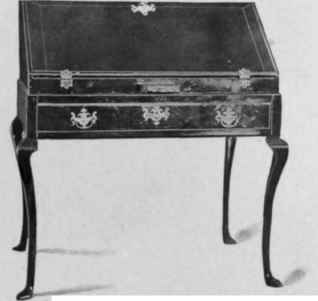
Figure 146. Cabriole-Legged Scrutoire, 1725-40.
Figure 247 shows a cabriole-legged scrutoire, the lower part of which is a lowboy upon which is placed a slant-top desk with one long drawer. The inside is plain, with drawers and pigeon-holes. The legs terminate in the usual Dutch feet. This piece is the property of the writer.
One of the most beautiful scrutoires of this type is shown in Figure 248. It has three drawers in the low-boy part, with the rising sun carved in the centre drawer, and the lower line is practically the same as appeared in the cupboard high-boy shown in Figure 97, but because of the elaborate interior we would date it somewhat later - between 1740 and 1750. The legs are in good proportion, with well-defined shoes at the bottom, and there is a little column finishing each corner. In the lower part of the scrutoire proper are two small square drawers for pens, etc., which on drawing out hold the slant top for writing purposes. The interior contains eighteen drawers set into a frame made of a series of graceful curves, while the upper centre drawer has the carving to correspond with the lower part.
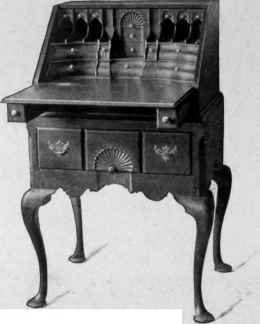
Figure 248. Cabriole-Legged Scrutoire, 1740-50.
This piece is in almost faultless proportions, and has a grace and charm which it would be difficult to improve. It belonged to the late Mr. Walter Hosmer.
Figure 249 shows a variation of this type which was found in Flatbush, Long Island, and clearly indicates that it was made by a Dutch cabinet-maker.
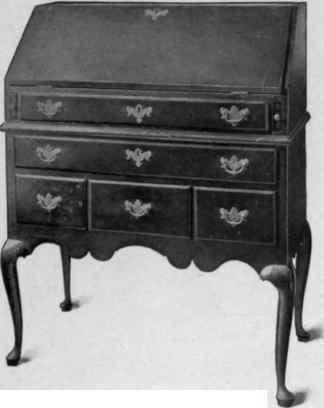
Figure 247. Cabriole-Legged Scrutoire, 1725-40.
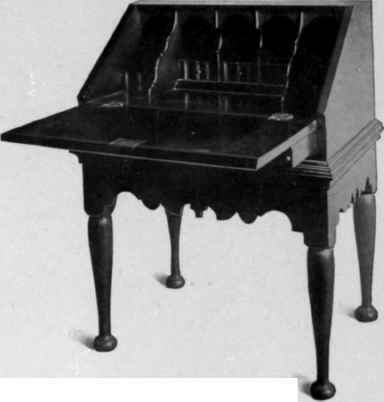
Figure 249. Slant-Top Scrutoire with Dutch turned legs, 1725-40.
Continue to:


My Books

