


V. Desks And Scrutoires. Part 8
Description
This section is from the book "Colonial Furniture In America", by Luke Vincent Lockwood. Also available from Amazon: Colonial Furniture In America.
V. Desks And Scrutoires. Part 8
Figure 263 shows a block-front scrutoire of a little different type. It will be seen that the depressed section is in the same plane as the outer edges, instead of being depressed, and this gives the appearance of a double block. The usual mouldings, a cove, a fillet, a quarter-round, and a fillet, finish the bottom, and the piece stands on ogee bracket feet. The blocking does not extend through the moulding but is finished on the lower drawer. The interior is finished with curved drawers and above the pigeon-holes is cut a fret design. This piece is the property of Mr. Dwight M. Prouty, of Boston.
One of the finest block-front scrutoires known is that shown in Figure 264, the property of Mr. George S. Palmer, of New London. The blocking is of the usual form and extends through the brackets of the feet. On each edge is a reeded and fluted pilaster, and the bird's claw and ball feet are well fashioned, the knees being carved. The most interesting feature, however, is the interior, arranged in amphitheatre fashion. At the base are three drawers curved both horizontally and vertically. Above those are four drawers on each side of the centre curved in the same manner, and above these on each side are four pigeon-holes surmounted by four drawers on which are carved the rising-sun pattern. On either side of the centre are three narrow vertical drawers and at the centre are three drawers with depressed blocking. The cabinet-maker was so full of his design that he overlooked the fact that some portions of the interior projected too much to allow for the lid, consequently the lid on the inside at the two ends has been gouged out.
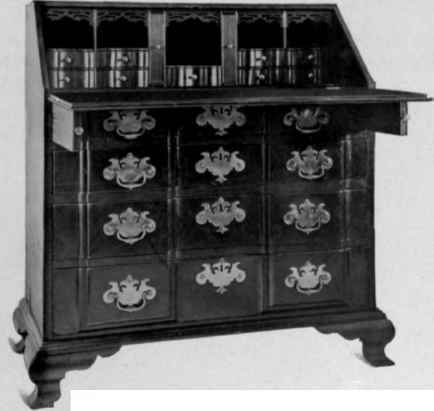
Figure 163. Block-Front, Slant-Top Scrutoire, third quarter eighteenth century.
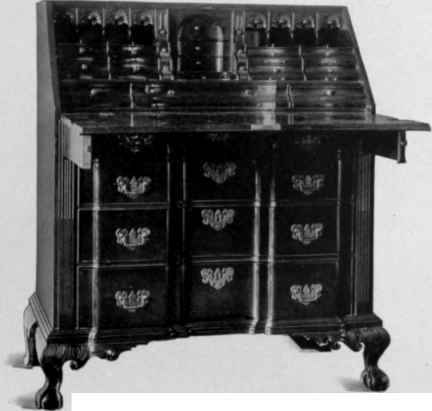
Figure 264. Block-Front, Slant-Top Scrutoire, third quarter eighteenth century.
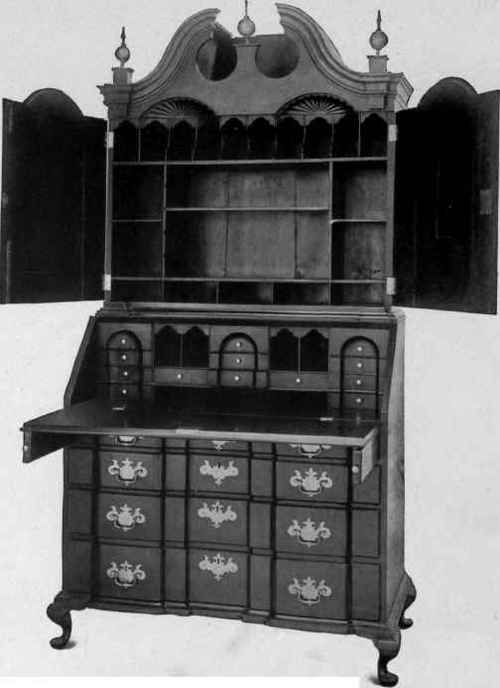
Figure 265. Block-Front, Slant-Top Scrutoire with cabinet top, third quarter eighteenth century.
Figure 265 shows a block-front scrutoire with cabinet top, from the Bolles Collection. The top is scrolled and hooded, and the mouldings of the cornice consist of a quarter-round, a wide fillet, a cove, an astragal, a fillet, and a small cove. There are pilasters on the doors which fit the capitals on the cornice. Behind the rounded section of the doors are carved recessed shells. The interior is composed of drawers and pigeon-holes with depressed blocking. The piece stands on short cabriole legs terminating in Dutch feet. The mouldings at the bottom are the same found in those of the so-called Newport type, a cyma recta and a wide fillet. The blocking on the drawers is narrower than is usual and the drawen overlap.
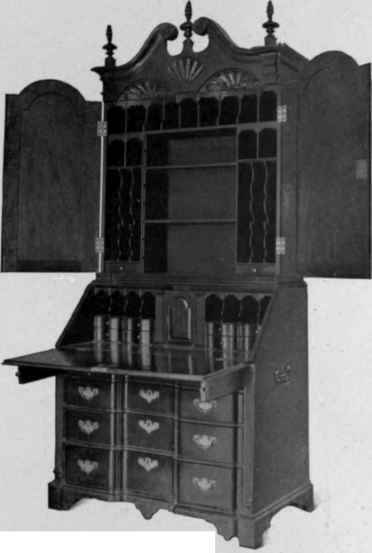
Figure 266. Block-Front, Slant-Top Scrutoire with cabinet top, third quarter eighteenth century.
Figure 266 shows the typical block-front, cabinet-top scrutoire found in northern New England. The cabinet top is tall and is scrolled but not hooded. The mouldings are the same as those shown in the preceding figure, except that the upper fillet is narrow. The pilasters are on the doors connecting with the capitals on the cornice, and there are recessed shells above the pigeon-holes and a fan carving at the centre of the top. The drawers on the interior are blocked and at the centre is a panelled door. Fluted pilasters finish the stiles on either side of the drawers, and the piece stands on straight bracket feet which have been slightly cut off. This piece is the property of Mr. Francis H. Bigelow, of Cambridge.
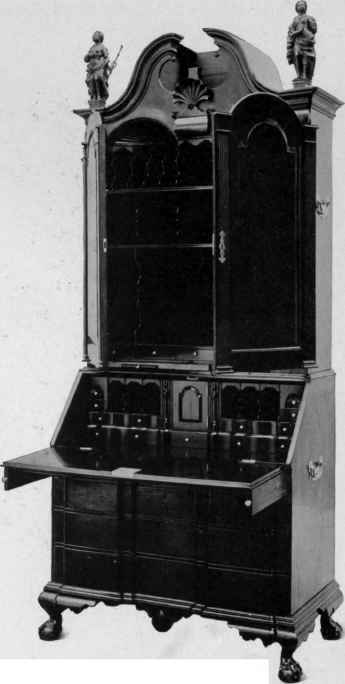
Figure 267. Block-Front, Slant-Top Scrutoire with cabinet top, third quarter eighteenth century.
An interesting block-front scrutoirc from the Bolles Collection is shown in Figure 267. The cabinet section is very tall and the scroll top is hooded. The mouldings consist of a quarter-round, a fillet, a large cove, an astragal, a fillet, and a small cove. The acroteriums are surmounted by two full-length figures of mahogany. At the centre of the top is a carved shell. Behind the curve of the doors are two carved recessed shells and on the doors are fluted pilasters which connect with the capitals on the frame. There are two candle-slides below the cabinet. The drawers in the interior of the desk are curved and blocked, and a small panel like those on the doors is at the centre. The blocking is in the usual form with a bead on the frame about the drawers, and the piece stands on bird's claw and ball bracket feet. The mouldings at the bottom are the usual cove, fillet, quarter-round, and fillet. At the centre of the skirt is carved a shell. This piece represents the best of the northern New England type.
Figure 268 shows a block-front, cabinet-top scrutoire, the property of Mr. H. W. Erving. The top is scrolled and hooded. The mouldings are a quarter-round, a fillet, a cove, an astragal, a fillet, and a small cove. The sides of the upper section have square recessed edges with fluted quarter-columns inserted. In the lower section are four flush drawers without any beading on the edge of the frame. The piece stands on bird's claw and ball feet in front and ogee bracket feet at the back. An unusual feature is the inlay on the rosettes, on the centre acroterium, on the lid. and about the drawers.
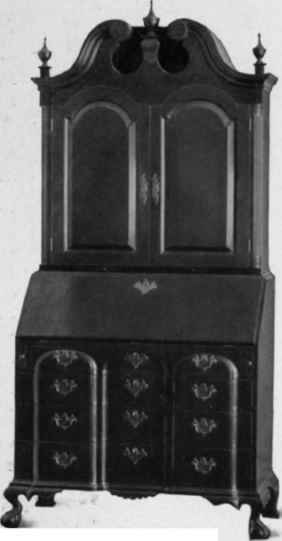
Figure 268. Block-Front, Slant-Top Scrutoirc with cabinet top, third quarter eighteenth century.
Continue to:


My Books

