


VI. Looking-Glasses. Part 2
Description
This section is from the book "Colonial Furniture In America", by Luke Vincent Lockwood. Also available from Amazon: Colonial Furniture In America.
VI. Looking-Glasses. Part 2
In Virginia, in 1678, is mentioned "1 olive wood glass, 1 large walnut tree glass £4 14s"; at Philadelphia, in 1687, "an olive wood diamond cut looking glass."
A number of these olive-wood looking-glasses are to be found in this country, and an excellent example is shown in Figure 310. This piece was found at Portsmouth, New Hampshire, where it had been from colonial times, and it is still in the original condition except for the glass. It is in the characteristic shape of the seventeenth-century looking-glasses, nearly square with an extension top in the form of a half circle at the centre and on either side a fillet and a quarter circle. The mouldings of the frame are also characteristic of the period, consisting of a small ovolo, a broad one, a bead, and a narrow ovolo next to the glass. On the small ovolo the veneer of olive wood is composed of cross-sections. The frame, of course, must have been imported. It is ornamented with exceedingly fine marquetry in shades of brown toned into each other. The design on the frame is of foliated scrolls and flowers, and on the top are foliated scrolls and two birds with beaks together and a crown above. The frame is a little larger than usual, measuring 33 inches by 28 inches exclusive of the top. It is in the writer's possession.
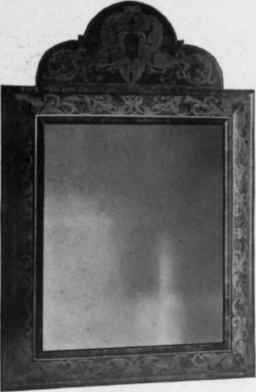
Figure 310. Looking-Glass with marquetry frame, 1690-1700.
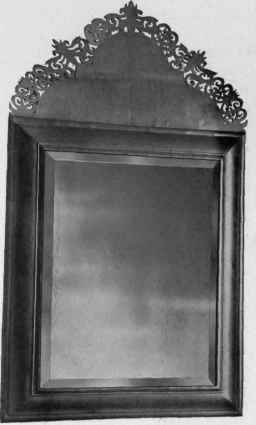
Figure 311. Looking-Glass with walnut frame, 1700-10.
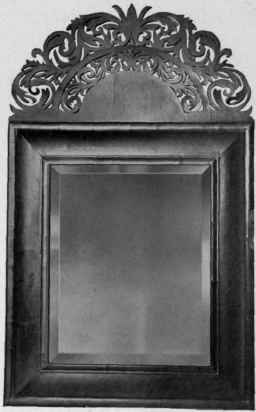
Figure 312. Looking-Glass with walnut frame, 1700-10.
Only a few of these frames have been found in this country. There is a small one at the Whipple house, Ipswich, the top of which is missing, and there are two or three others in private collections. This form of looking-glass was popular in the last quarter of the seventeenth century, and a number of silver frames substantially in this form are known, hall-marked from 1685 to 1701.
Another form of early looking-glass, which was made of walnut, is shown in Figure 311. The mouldings are the same as those in the preceding figure, and the top, except for the fretwork, is also the same. The fret design is in scrolls and fleur-de-lis. The veneer on the small ovolo is applied in the same way a*- in the preceding figure. This form of early looking-glass is more commonly found than the marquetry ones, although all seventeenth-century looking-glasses are scarce. This piece is in the Blaney Collection.
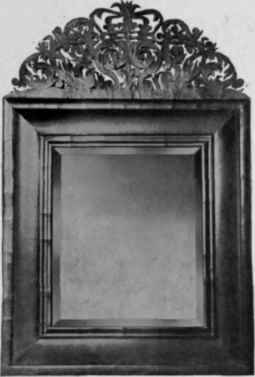
Figure 313. Looking-Glass with walnut frame, about 1710.
Figure 312 shows a small looking-glass of the same type which is in the possession of Mr. Francis H. Bigelow, of Cambridge. The mouldings of the frame are the same as those shown in the preceding figure, but the top has a single circle deeply cut in a double-fret design consisting of foliated scrolls with a fleur-de-lis at the centre.
Still another of these early walnut looking-glasses in the same collection is shown in Figure 313. The mouldings of the frame are the same as in the preceding figure, except that the one nearest the glass is a cyma instead of an ovolo, and this shows it to be of a little later date than the others. The fret design;it the top is quite ornate and consists of foliated scrolls and fleur-de-lis with a crown above.
The second type of early looking-glasses was a pier-glass of which an early example is shown in Figure 314. The edges of the cresting are cut in Flemish scrolls with acanthus-leaf foliations, and at the centre is a plain oval cartouche with an egg-and-dart moulding about it. Just above the frame, on either side, is a long acanthus-leaf scroll extending nearly to the cartouche. The entire background of the cresting is covered with diagonally crossed lines. The urn and flame at the top is an improper restoration, otherwise the piece is in the original condition. The upper section of the frame is cut in cyma curves, and on either side, extending to the straight part of the frame, are carved acanthus leaves. On the frame is carved a design of a shell, with acanthus-leaf streamers separated by an arched band from which is a pendent flower. The glass was originally in two sections and bevelled. The designs above described are the familiar ones of the Marot school to which this particular frame belongs. For the purpose of obtaining different colours the entire surface is covered with gold and silver leaf and Dutch metal. This looking-glass was found in America, where it had been from colonial times. It is the property of the writer.
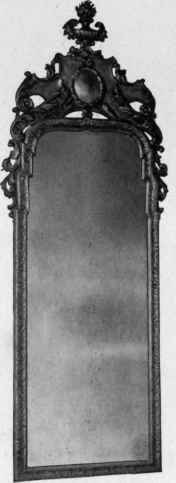
Figure 314. Looking-Glass with gilt frame, first quarter eighteenth century.

Figure 315. Looking-Glass with japanned frame, first quarter eighteenth century.
Such elaborately carved frames were, of course, rare in this country, but the shape was quite common. There are many frames found here with the upper sections curved, and often a cresting of wood cut in the general outline of these carved scrolls was added.
Figure 315 shows such a frame. The top is half-round and on either side is a cyma reversa, Otherwise the frame, which is moulded, has straight edges. It will be seen that the panels of the doors of the scrutoire shown in Figure 241 are in the same outline. The frame is japanned and the mouldings consist of a beading on the outer edge and an ovolo. The design cut on the upper glass consists of leaves and flowers, and the edges following the curve of the frame are bevelled and the lower edge is scalloped and bevelled. It is probable that pier-glasses mentioned in the early advertisements refer to such looking-glasses as this, and it is also probable that the references in Philadelphia to "diamond cut looking glasses" refer to the ornament cut on the upper glass, as in this piece. This style of looking-glass is found also with a cut-work cresting, which in the earlier ones slipped in back of the mouldings but in later ones was part of the frame, the moulding being planted on the cresting.
Continue to:


My Books

