


VI. Looking-Glasses. Part 3
Description
This section is from the book "Colonial Furniture In America", by Luke Vincent Lockwood. Also available from Amazon: Colonial Furniture In America.
VI. Looking-Glasses. Part 3
Another looking-glass of the type under discussion is shown in Figure 316. The frame is walnut and the mouldings are a bead on the outer edge and an ovolo. The upper plate is cut in a leaf design with a star on either side. This frame probably had a cut cresting. The curves in the upper section are very similar to those shown in Figure 314. Both of the last-mentioned looking-glasses are in the possession of the writer.
Two looking-glasses of the same general type but of a slightly later date are shown in Figure 317 and are in the Bolles Collection, the property of the Metropolitan Museum of Art. The cresting on each of these looking-glasses is made separate from the frame. The upper section of each frame is in curves and the cresting on the first one has two scrolls and a central rounded projection. The other one is so crudely cut that it is difficult to determine what it was intended to represent.
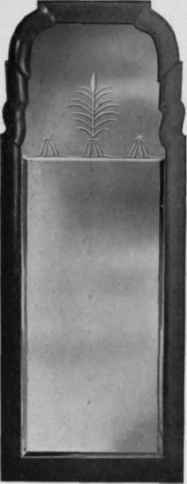
Figure 316. Looking-Glass with walnut frame, first quarter eighteenth century.
Figure 318 shows another early pier-glass with sconces attached. At the centre of the top is carved a shell the edges of which are finished with out-turning acanthus leaves. This shell is supported by two large Flemish scrolls. At the base are two large S scrolls between which is a woman's head with a shell-shaped head-dress. This design was one of the most popular of the Marot school. At the base of the upper scroll and near the base of the frame are spiral-twisted volutes. The frame is gilded throughout. It is in the Pendleton Collection, owned by the Rhode Island School of Design.
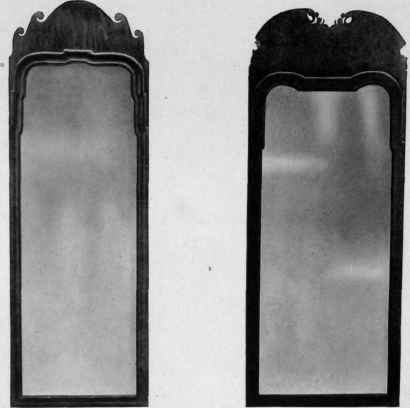
Figure 317. Two Looking-Glasses with walnut frames, first quarter eighteenth century.
During the reign of Queen Anne looking-glass frames more closely followed architectural lines.
Figure 319 shows a looking-glass of the period, the property of Mr. John J. Gilbert, of Baltimore. The cresting is of walnut and gilt. At either side of the centre are cyma scrolls, the inner ends finished with rosettes with pendent leaves. The mouldings of these scrolls are a fillet and a cyma recta enriched with carving in acanthus -leaf design. At the centre is a cartouche bordered with acanthus-leaf designs and spiral volutes in the centre of which is a grotesque mascaron. Below the scroll top are scrolls with acanthus leaves and rosettes. The upper section of the frame is cut in curves and the looking-glass is bordered by a band of glass. At the base are foliated scrolls and at the centre is applied a shell with acanthus-leaf streamers. All of the carved portions are gilded. It was such a looking-glass as this that was the model for many of the so-called cut-work looking-glasses which were popular both here and in England.
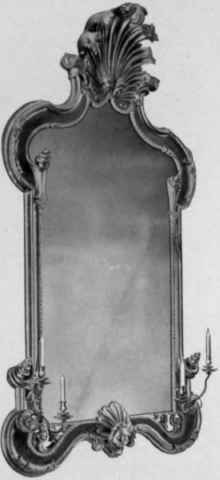
Figure 318. Looking-Glass with gilt frame, first quarter eighteenth century.
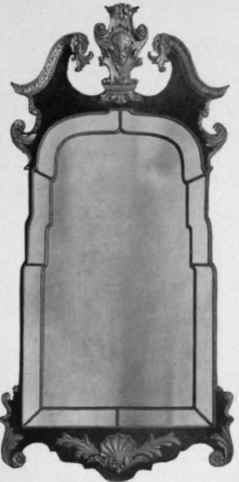
Figure 319. Looking-Glass with walnut and gilt frame, first quarter eighteenth century.
Figure 320 shows a japanned looking-glass, the property of Mr. Francis II. Bigelow, of Cambridge. The cresting, which is simply cut, suggests the preceding looking-glass frame. It has the scrolls on either side and a raised centre with scalloped edges. On the surface of the cresting are a house, birds, and flowers in raised japanning. The upper section of the frame is curved and the frame has a flat strip bordered on either side by a small half-round. On this flat surface is raised japanning.
Figure 321 shows a pier-glass which is at the Van Cortlandt Manor House, Croton-on-Hudson. The frame is very tall. It will be seen that the outline of the cresting is suggestive of that shown in Figure 319 and the edges of the scrolls are slightly carved and gilded. The centre ornament is missing. The upper section of the frame is cut in curves, and down the sides are carved and gilded flowers, fruits, and leaves. There are two glasses, the upper one overlapping the lower one in the usual manner of this period.
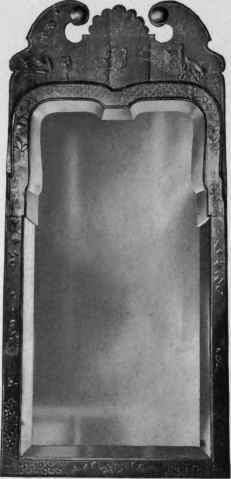
Figure 320. Looking-Glass with japanned frame, first quarter eighteenth century.
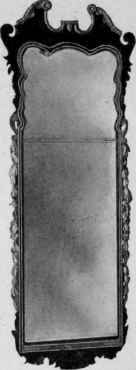
Figure 321. Looking-Glass with walnut and gilt frame, first quarter eighteenth century.
Figure 322 shows another looking-glass in this same general style which is in the writer's possession. The general outline of the cresting is the same, with the scrolls at either side and the centre raised, and at the centre is a circle cut out and filled in with a carved and gilded conventional shell. The upper section of the frame is curved in the usual manner and there is an inner moulding carved in an acanthus-leaf design and gilded. The frame is made of walnut. This style of looking-glass is the one most commonly found of all the early forms.
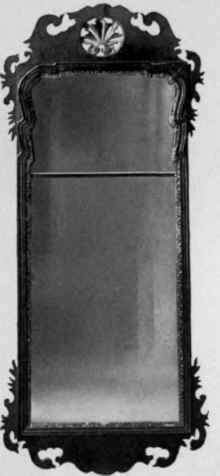
Figure 322. Looking-Glass with walnut and gilt frame, first quarter eighteenth century.
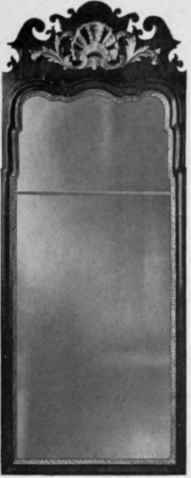
Figure 323. Looking-Glass with walnut and gilt frame, first quarter eighteenth century.
A variation of the preceding form is shown in Figure 323. The cresting is cut with the scrolls and raised centre, and at the centre is applied a carved and gilded shell and streamers. The edges of the frame at the top are curved and there is a carved and gilded border on the inside. This looking-glass is the property of Mr. G. W. Walker, of New York.
Continue to:


My Books

