


VI. Looking-Glasses. Part 4
Description
This section is from the book "Colonial Furniture In America", by Luke Vincent Lockwood. Also available from Amazon: Colonial Furniture In America.
VI. Looking-Glasses. Part 4
A very simple form of the type of looking-glass now under discussion is shown in Figure 324 and is the property of Mr. C. R. Morson, of Brooklyn. The cresting is cut in the form of two shallow scrolls with a suggestion of foliations on either side of the centre. There is a simple curving of the frame at the upper end.
The second type of looking-glass that was popular during this period was one in which the frame was rectangular except for a slight curve in the corners of the top. A very fine example of such a looking-glass is shown in Figure 325 and is the property of the Tiffany Studios in New York. On either side of the top are series of scrolls, the edges carved in an acanthus-leaf design. At the centre is a three-branch cartouche, the edges of which are finished in a manner suggesting acanthus leaves, and on the surface is a rosette and leaves. On either side of the centre are two birds standing on small pedestals and at the centre three rosettes and leaves. On the sides are acanthus-leaf scrolls and on the surfaces are carved leaves and flowers, and there is a pendent flower ornament on either side. At the base are carved acanthus-leaf scrolls and at the centre a shell with streamers. The edge of the frame is carved in acanthus-leaf design and the whole piece is gilded. This looking-glass represents the best work of the period and, as before stated, such ornate mirrors were probably very scarce in this country. The form, however, was very common.
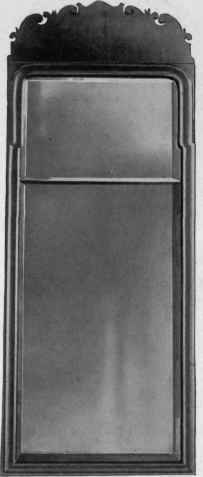
Figure 324. Looking-Glass with walnut frame, first quarter eighteenth century.

Figure 325. Looking-Glass with gilt and carved frame, first quarter eighteenth century.
Figure 326 shows a looking-glass in the Bolles Collection which is of this type and is in a design quite commonly found here. It will be seen that it has practically the same design as that shown in the preceding figure except that instead of being carved the outline is merely indicated in the cutting. At the centre of the cresting is applied a carved and gilded scroll design with leaves and flowers and at the bottom is a conventionalised shell with acanthus streamers. The edge of the looking-glass is straight except for the small curves at the two upper ends, which are the same as those shown in the last figure, and the moulding on the frame nearest the glass is carved in scroll and flower design and gilded.
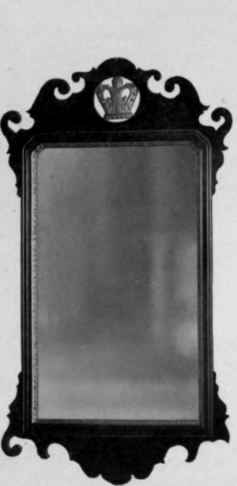
Figure 327. Looking-dluss with walnut and gilt frame, 1725-50.
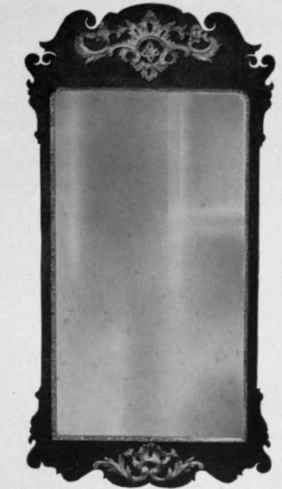
Figure 326. Looking-Glass with walnut and gilt frame, 1725-50.
Figure 327 shows another looking-glass of this same type, the principal dif-ference being in the fact that the centre of the cresting is pierced and a carved and gilded crown is inserted. This general form of looking-glass continued to be used throughout the eighteenth century and the later examples will be shown below.
A different type of looking-glass with the so-called cut-work frame is shown in Figure 328. There are a number of examples found of this style, most of them being rather small. The distinguishing feature is that the cresting is very much higher than is usual, and the cutting is not in an architectural form but seems to be composed of scrolls. At the centre of the cresting is applied a carved and gilded urn and flame with acanthus-leaf streamers, and at the base is a carved and gilded scroll design with streamers. These pieces invariably have an applied carved and gilded ornament which is in the form of scrolls, urns, or cartouches. The sides of these frames are straight and apparently never had cut-work projecting edges. This form of looking-glass also remained popular and was adopted by the later styles, examples of which will be shown below.
Another form of looking-glass frame which was introduced prior to 1750 and which continued popular throughout the eighteenth century was that having a pediment top with architectural outlines.
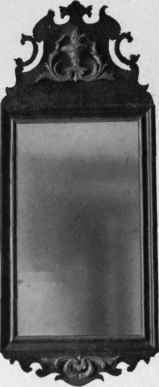
Figure 328. Looking-Glass with walnut and gilt frame, 1725-50.
An early example of such a looking-glass is shown in Figure 329 and is the property of Mrs. John R. Matthews, of Croton, New York. The piece has a scroll pediment, the inner edges of the scroll finished in rosettes similar to the high chests of drawers and the cabinet-top scrutoires of the period, and at the centre is an urn. Below this top is planted a moulding with projecting square corners at the top and scrolled at the bottom, a design which was popular for the mouldings about windows and doors of the houses of the period. On the outer edges are carved pendent fruit and leaves. The glass is in two sections, the upper one curved as in the earlier pieces.
Figure 330 shows another example of a looking-glass with a scroll pediment. The inner edges of the scrolls terminate in rosettes with pendent leaves, and the mouldings consist of a fillet and cyma recta ornamented with acanthus-leaf carving, a fillet, a cove, a corona, a fillet, a quarter-round ornamented with egg-and-dart moulding, a fillet and a small cove, all gilded. At the centre is a cartouche with carved outstanding acanthus-leaf scrolls and on the surface of the cartouche are carved pendent flowers. Below the pediment on either side are two carved and gilded ornament representing rosettes with long pendent leaves, and at the centre is carved a conventionalised shell with streamers ot leaves, flowers, and fruit, gilded. Below this is the moulding which appears in the former figure, with the raised square corners and scroll base, on the surface of which is carved the same design as appears in Figure 314. On the sides are carved pendent leaves, flowers, and fruit. The inner edge of the looking-glass is rectangular and the moulding is carved in acanthus-leaf design. This looking-glass is the property of the Metropolitan Museum of Art.
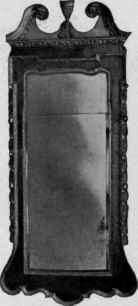
Figure 329. Looking-Glass Frame with scroll pediment, 1725-50.
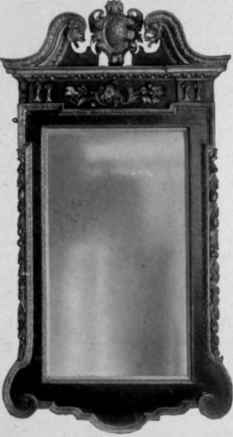
Figure 330. Looking-Glass Frame with scroll pediment, 1725-50.
Continue to:


My Books

