


VI. Looking-Glasses. Part 5
Description
This section is from the book "Colonial Furniture In America", by Luke Vincent Lockwood. Also available from Amazon: Colonial Furniture In America.
VI. Looking-Glasses. Part 5
Another looking-glass with a scroll pediment, the property of the writer, is shown in Figure 331. On either side is the scroll, the inner edges finished with carved rosettes with pendent flowers. The mouldings consist of a fillet and a cyma recta carved in a crude acanthus-leaf design, a fillet, a cove, a corona, a fillet, and a cyma reversa carved in acanthus-leaf design. The mouldings do not carry across the front, but are broken at the centre to admit a carved scroll and foliated design. At the centre is carved a pheasant with wings overt, standing on a rococo scroll base. The frame is bordered with the mouldings described in the preceding figure, and on the outer edges are carved and gilded pendent flowers and fruit. The edges of the mouldings are carved in acanthus-leaf design. This piece shows the Chippendale influence and is somewhat later than the preceding piece.
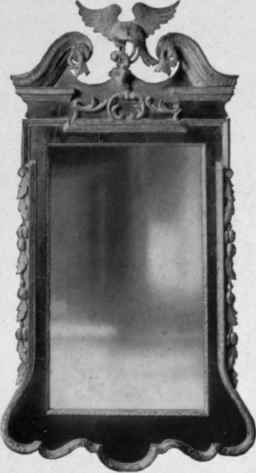
Figure 331. Looking-Glass Frame with scroll pediment, 1750-75.
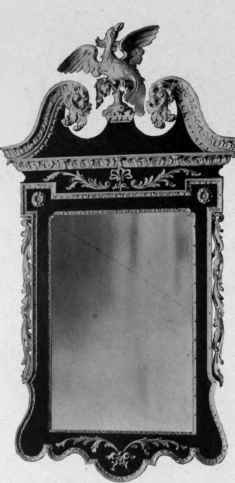
Figure 332. Looking-Glass Frame with scroll pediment.
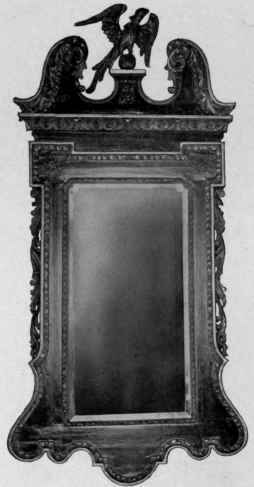
Figure 333. Looking-Glass Frame with scroll pediment, 1750-75.
Figure 332 shows another scroll-pediment looking-glass, the property of Mr. H. W. Erving, of Hartford. The surfaces of the scrolls are elaborately carved, and at the inner ends are rosettes with beautifully carved acanthus-leaf pendants. The mouldings consist of a fillet, a cyma recta with acanthus-leaf carving, a fillet, and a quarter-round finished with an cgg-and-dart moulding on the scroll, and on the moulding extending across the trout is a fillet and a cyma recta carved in an acanthus-leaf design. At the centre is a pheasant with wings extended and head raised standing on a diminutive tree. Below the pediment top is a conventionalised shell with a pendent flower and acanthus-leaf scrolls. The mouldings on the outer edge are the usual kind with the projecting square corners at the top and a scroll below, and in each square at the top is applied a carved and gilded rosette. On each side are carved pendent leaves. At the centre of the base are two acanthus leaves bound together by a flower design. The upper corners on the looking-glass frame are curved in the manner shown in Figure 325.
Another scroll-pediment looking-glass is shown in Figure 333, the property of Mr. Dwight M. Prouty, of Boston. The scrolls at the top are unusually straight up and down and the mouldings are the same as those in the last figure. The inner edges of the scrolls are finished with the usual rosettes with pendent leaves. At the centre is a bird with an eagle's head and a pheasant's tail standing on a ball. The mouldings about the edge are of the same type above described and on either side are carved pendent leaves. At the centre of the squares at the top are carved and gilded stars. This frame has a number of points in common with the preceding one, and especially should be noted the curve of the sides and lower edges which are identical and are different from those shown in the earlier examples.
About 1750 the style of the more elaborate looking-glasses completely changed. Instead of the massive architectural or solid effects of the cresting were substituted light, open, flowing lines in what is known as the Chippendale style. About this time many designers appeared who published designs for looking-glass frames, among then 11. Copeland, who published in 1746; Locke, who published in 1752;
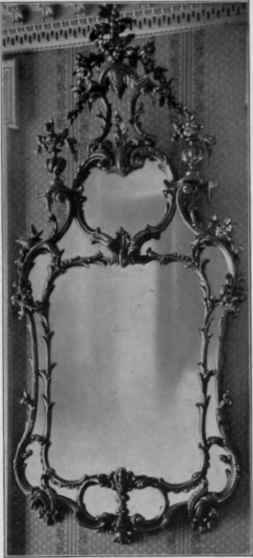
Figure 334 Looking-Glass in Chippendale style, 1750-65.
Johnson, and Chippendale. All of these designers were steeped in the designs of the Louis XV school with rococo ornamentation, or, as in the case of Edwards & Darley, in the Chinese taste. Of all these cabinet-makers the designs of Thomas Chippendale were the most refined, and a splendid example of one of his designs for a looking-glass is shown in Figure 334 and is the property of Mr. Richard A. Canfield. At the top are branches of leaves, fruits, and flowers, supported by a foliated scroll design, upon which is carved the dripping-water effect so popular in this period. This in turn is supported by large foliated C scrolls within which is an oval-shaped looking-glass, and on either side are urns with leaves and flowers. These urns and flowers are supported by the main outlines of the frame, which consist of an elongated double scroll outstanding from which are carved flowers and leaves. The main looking-glass is surrounded by foliated scrolls, and between this frame and the outer frame are inserted sections of looking-glass which tend to give the piece a delicate effect. At the centre of the base are two C scrolls separated by rococo and leaf ornamentation.
An interesting girandole is shown in Figure 335, the property of Mr. H. W. Erving, of Hartford. The upper end of the frame, which is small, is in a rococo design with foliated scrolls and flowers, as are also the sides. Across the base is a scroll design with flowers and at either corner is a sconce holding one candle. This frame has been in this country from colonial times, and represents the better class of looking-glasses of the Chippendale period that were found in this country. It will be seen, however, that the details of the scrolls are not so finely worked out as in the preceding looking-glass which is of English origin. During this period long mantel looking-glasses were popular in England, but only a few examples have been found in this country.
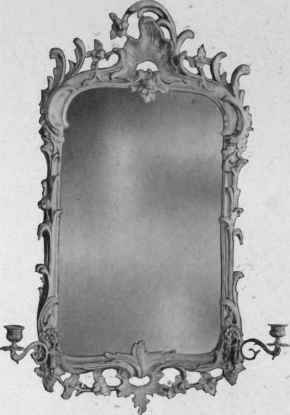
Figure 335. Girandole in Chippendale style, 1750-65.
Continue to:


My Books

