


The Period Of The Cabinet-Makers, 1750-1840. Part 4
Description
This section is from the book "Colonial Furniture In America", by Luke Vincent Lockwood. Also available from Amazon: Colonial Furniture In America.
The Period Of The Cabinet-Makers, 1750-1840. Part 4
Figure 551 shows a chair in the writer's possession in which the splat is cut in another early design. The scroll of the splat appears to commence at the outer ends of the cresting and to carry through to about the centre of the splat in a Flemish scroll which splits, forming a C scroll at the upper end. The illusion is further carried out by having a shell carved at the centre of the cresting, apparently joining the two curves. Below the scrolls are simple concave scrolls. This design is found on some of the late chairs of the Dutch period and was carried through into the Chippendale period. The legs are cabriole, terminating in Dutch feet standing on shoes. The chair is underbraced in the same manner as appears on the chair in Dutch style (Figure 494).

Figure 551. Chair in Chippendale style, third quarter eighteenth century.

Chair in Chippendale style, third quarter eighteenth century.
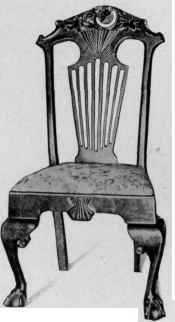
Figure 554. Chair in Chippendale style, third quarter eighteenth century.

Figure 553. Chair in Chippendale style, third quarter eighteenth century.
Another form of splat consisting of a long concave curve is shown in Figure 552. The legs are cabriole, terminating in bird's claw and ball feet, and the piece is underbraced in the earlier style. This chair is the property of Mr. William Meggat.

Chair in Chippendale style, 1750-60.
Another chair having a splat with a long cyma curve is shown in Figure 553. The top rail is almost straight, with scroll ends, and the legs are cabriole, terminating in bird's claw and ball feet.
A form of chair of which several have been found in Philadelphia is shown in Figure 554. The cresting is carved with flowers quite like the design found on rosewood pieces of a much later date. The splat is composed of a series of parallel slats and above is carved a large shell ornament. The legs are cabriole, terminating in bird's claw and ball feet, and at the centre of the rail is carved a shell. The chair is made of Virginia walnut. It is the property of the writer.

Chair in Chippendale style, French taste, 1750-60.
Figure 555 shows an interesting chair in the Bulkeley Collection which came from Philadelphia. The design is one found in the first edition of Chippendale's "Director," but is not found in the third edition. The cresting is carved in scrolls after the French fashion, and the splat, although rather simple, is well carved and finished. The legs are cabriole, terminating in the French scroll foot with carved acanthus leaves. On the scroll and on the knees are carved scrolls and leaves.
Another chair found in Philadelphia is shown in Figure 556 and is the property of Mr. H. W. Erving. The design is that of Plate XV in the third edition of Chippendale's book, except that in the plate the splat is composed of ribbons. The cresting is beautifully carved in rococo pattern, and the splat is composed of a short and long concave curve. Rococo and leaves are the dominant ornamentation and so graceful and light that the splat seems fragile. As a matter of fact, however, the splat is very strong and heavy, the light effect being obtained by cutting away the edges of the back. The stiles are in two cyma curves and are pierced in two places in what would be considered the weak spots of chair construction, but made extra heavy in this case to meet the strain. The rails above the seat are elaborately carved in a rococo design. The legs are cabriole, with French scroll feet, and the legs and skirt are carved in a rococo design, forming a graceful whole. The proportions of this chair, its construction and ornamentation, its lightness, grace, and apparent disregard of the rules of construction, all point to the conclusion that it was made by a master who thoroughly understood his subject. It is the best chair that has been found in this country, and was probably made by Chippendale and imported.
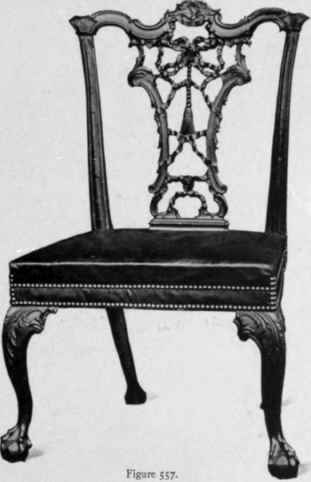
Chair in Chippendale style, ribbon back, 1750-60.
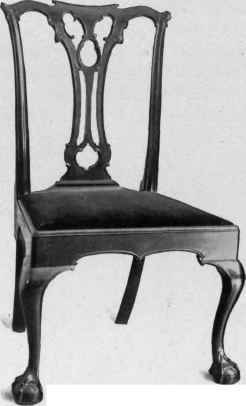
Figure 558. Chair in Chippendale style, Gothic taste, third quarter eighteenth century.
It is a far cry from the simple Dutch splat to the one shown in this chair.
Figure 557 shows a chair, the property of Lord Saint Oswald, of Nostel Priory, which was made by Chippendale and is similar to one of the chairs shown in Plate XV of Chippendale's book. It is in the design known as a ribbon back. A double chair which opened into a day bed is in the same set. This chair is not so graceful as that shown in the last figure. The stiles and cresting are quite plain and the legs are of the usual bird's claw and ball type. The splat, however, is very fine. In outline it somewhat resembles that shown in the last figure, and within the scrolls are carved a bow knot and streamers of ribbons turning around the scrolls to the bottom of the splat, and at the centre is a large tassel supported by a cord.
It is rather interesting to note that Chippendale, in speaking of the ribbon-back chairs, says: "Several sets have been made which have given entire satisfaction. If any of the small ornaments should be thought superfluous, they may be left out without spoiling the design. If the seats are covered with red morocco this will have a fine effect."
Figure 558 shows a chair, the property of Dr. Frank I. Hammond, of Providence, in which the design of the splat is in Gothic style. On either side of the centre of the cresting is a small spiral scroll and at the ends of the crestings are carved acanthus leaves. The edges of the splat are finished in a beaded scroll, as are also the skirt and the sides of the knees. The piece stands on well-proportioned cabriole legs terminating in bird's claw and ball feet. The chair has a reserve of design which makes it very pleasing. The most interesting feature of this chair, however, is the fact that the design is that shown in Plate X of Chippendale's third edition. It also appeared in his first edition. On the back of the seat is pasted the advertisement of the maker, which is shown in Figure 559. The border of the card is engraved in Chippendale scrolls, and the card reads: "James Gillingham, cabinet and chair maker in Second Street, between Walnut and Chestnut Streets, Philadelphia." It is perfectly apparent, therefore, that the maker of this chair was familiar with Chippendale's book, and this may account for the fact that so many beautiful examples in the Chippendale style were found in Philadelphia.

Figure 559. Advertisement on back of foregoing chair.
Continue to:


My Books

