


Queen Anne And Early Georgian. 1702-1750. Part 2
Description
This section is from the book "The Practical Book Of Period Furniture", by Harold Donaldson Eberlein And Abbot McClure. Also available from Amazon: The Practical Book Of Period Furniture.
Queen Anne And Early Georgian. 1702-1750. Part 2
Articles
A catalogue of the articles of usual occurrence embraces chairs, stools, settles, settees or sofas, day-beds, bedsteads, tables, chests and chests of drawers, highboys and lowboys, cabinets, secretaries or bureau-cabinets, bookcases, cupboards, buffets or dressers, mirrors, gueridons or pedestals and clocks. There were also sundry minor pieces which it is not necessary to catalogue.
Contour
A study of the contour of furniture in the Queen Anne-Early Georgian period shows, in the first place, the discontinuance of certain types that had enjoyed high favour in the days of William and Mary. To begin with, the perpendicular legs of chairs, settees, stools, tables and highboys with the inverted-cup turnings, shaped stretchers and bun feet, went quite out of fashion, being superseded by legs of cabriole form (Fig. 1). Backs of chairs, especially the backs of upholstered chairs, which had hitherto risen to a great height, were made lower, as were also the backs of settees. Cornices about the tops of double chests and cabinets lost their prominent ovolo or torus frieze (Fig. 4, A, Chap. III). The single and double hooded tops of cabinet work did not endure much longer but developed a modification that was occasionally met with till fairly late in the reign - a kind of modified ogee superstructure above the double hood motif. Arched serpentine or ogee Cresting of upholstered chair backs also went out of vogue.

PLATE VIII. QUEEN ANNE BLACK AND GOLD LACQUERED CORNER CUPBOARD.
By Courtesy of Mr. Richard W. Lehne, Philadelphia.
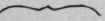
In the heads of door panels and in mirror frames, especially, and also in the backs of chairs, the wave or cyma curve, either singly or in combinations, was an important element of form (Plate IX, p. 112). Mr. Lockwood, in the latest edition of his Colonial Furniture in America - a most useful book - has succinctly dealt with this detail. He says: "Two cyma curves placed thus formed the design of the chair backs. A cyma curve thus formed the cabriole leg. Two cyma curves placed thus formed the scroll top found on highboys, secretaries and cupboards. When placed thus they formed the familiar outline found on the skirts of highboys, lowboys and other pieces. Mouldings, cupboard openings, and the inner edges of mirrors were cut in the same curve."


Although carcase work had hitherto been rectilinear and continued so in the main, we nevertheless find occasional examples of kettle front cabinets and low chests of drawers. The swell of their fronts, corners and sides was less sweeping in curve than the later bombe fronts of the Chippendale period and was apt to be broken into several small curves. They were of distinctly Dutch inspiration. Backs of the better sort of chairs were "spooned" or shaped to accommodate the back of the occupant (Fig. 4, B). Backs of other chairs were straight or had a slight rake. Upholstered easy chairs were apt to have shaped wing head-rests and stuffed-over arms flaring outward (Key V, 4). Chairs began to be made without stretchers early in this period. Although the "square-back" chair came in long before that date (Fig. 7, B), the "hoop-back" chair (Fig. 4, A and B) continued to be made till about the middle of the century.
Cabinet work increased in height with the increasing height of ceilings and was frequently surmounted by pediments, unbroken, broken, rounded, swan-neck or, better still, to invent a term, serpentine or bow, all of them, however, of flatter contour than those occurring in later times. With the increased use of mahogany in the latter part of the period, structure tended to become lighter.
Continue to:


My Books

